
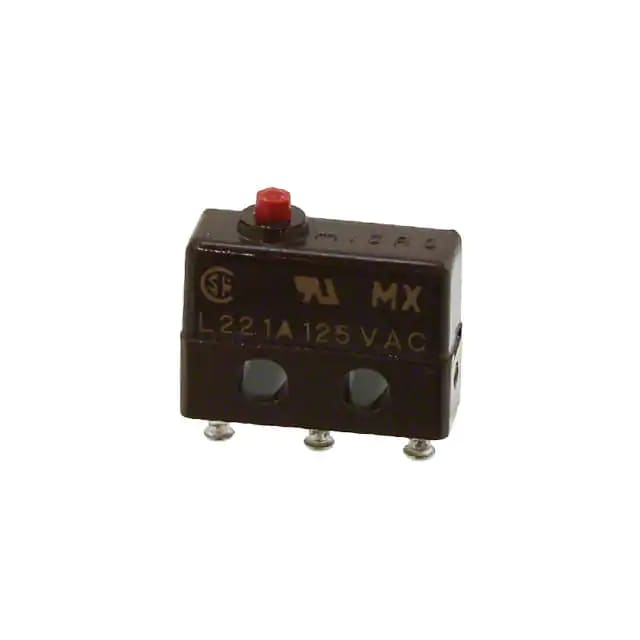
Honeywell 13SX1-T Basic Switch: Compact Design for Precise Snap-Action Control
The Honeywell 13SX1-T basic switch is a compact electromechanical component designed for precise, repeatable switching in space-sensitive assemblies. As part of Honeywell’s MICRO SWITCH SX family, this model belongs to a premium subminiature basic switch platform known for long mechanical life, low operating force options, and reliable performance in demanding operating conditions. When engineers search for a durable Honeywell 13SX1-T basic switch, they are usually looking for a subminiature switch that balances size, accuracy, and service life.
Key Technical Profile of the Honeywell 13SX1-T Basic Switch
Current distributor specifications identify the Honeywell 13SX1-T basic switch as an SPDT snap-action switch with a plunger actuator, solder termination, and a rating of 1 A at 30 Vdc. Additional listings also associate the part with a low operating force of about 0.97 N, which is important in compact mechanisms where excessive actuation force can negatively affect precision or component wear. This specification profile makes the Honeywell 13SX1-T basic switch especially useful in tightly packaged assemblies.
Why the SX Platform Matters
Honeywell describes the SX Series as a premium subminiature basic switch range designed for repeatability, enhanced product life, and application flexibility. The broader series supports multiple actuator and termination styles, offers operating forces as low as 0.147 N, and can provide a mechanical life of up to 10,000,000 operations depending on the listing. Honeywell also highlights gold contact options for low-energy switching and bifurcated gold contact choices for increased reliability in select configurations.
For users evaluating a Honeywell 13SX1-T basic switch, this matters because the part sits inside a family developed for applications where small size does not mean reduced durability. It is a practical fit for control modules, actuator feedback assemblies, aerospace subsystems, compact industrial controls, and specialized switching mechanisms.
Typical Applications
A Honeywell 13SX1-T basic switch is often relevant in assemblies where precise movement triggers a control event. These include pressure switch assemblies, temperature switch mechanisms, compact pushbutton systems, and custom motion-based interfaces. The plunger-style actuator is a strong choice when direct linear movement is available and repeatability is important.
Because Honeywell’s SX platform is used in industries such as aerospace, energy, government, and manufacturing, this switch family is often preferred in projects where proven electromechanical behavior is more valuable than a lower-cost but less robust alternative. For broader product context, more information about Honeywell can help when comparing basic switch families and industrial switch options.
FAQ
What type of switch is the Honeywell 13SX1-T?
The Honeywell 13SX1-T basic switch is a subminiature snap-action switch. It is commonly listed as an SPDT model with a plunger actuator and solder termination.
Why is a low operating force useful?
Low operating force helps reduce stress on the triggering mechanism. In compact devices or precision assemblies, that can improve consistency and help protect surrounding components from unnecessary wear.
Is the Honeywell 13SX1-T suitable for compact equipment?
Yes. The SX family is specifically positioned for applications where space and weight matter. That makes the Honeywell 13SX1-T basic switch a good fit for compact control hardware and tightly packaged mechanical assemblies.
What industries use SX series switches?
Honeywell identifies aerospace, energy, government, and manufacturing among the industries served by the SX series. These sectors typically value repeatability, long service life, and dependable switching behavior.
What should be verified before selecting the Honeywell 13SX1-T?
Check the actuator style, contact arrangement, current and voltage rating, termination method, mounting format, and required operating force. Those details determine whether the switch will perform correctly in the intended mechanism.