
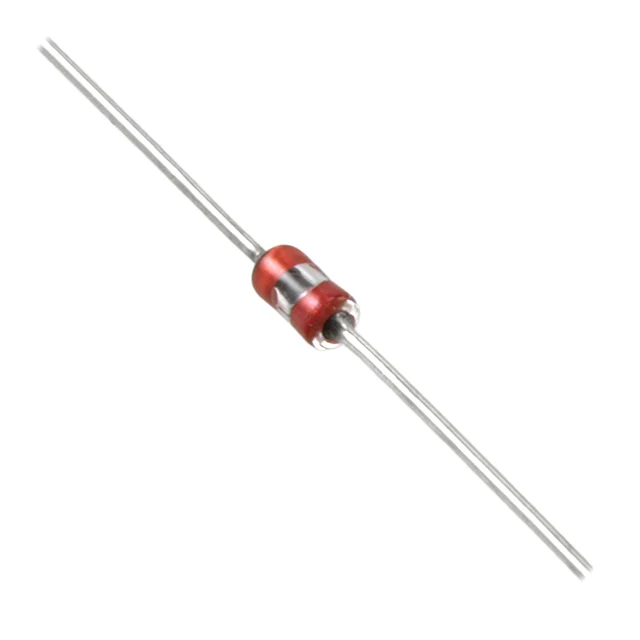
Honeywell 135-104LBF-J01 Temperature Sensor Guide
The Honeywell 135-104LBF-J01 temperature sensor is a practical choice for engineers and maintenance teams that need dependable temperature measurement in compact electronic designs. As part of Honeywell’s established 135 Series, this component is built around an NTC thermistor structure, which means its resistance decreases as temperature rises. That behavior makes it useful in temperature monitoring, compensation circuits, industrial controls, HVAC systems, laboratory instruments, and embedded electronics.
What Makes the Honeywell 135-104LBF-J01 Stand Out?
The Honeywell 135-104LBF-J01 temperature sensor combines a 100 kOhm resistance value with a rugged glass-encapsulated axial format. For designers working with harsh environments or applications that demand long-term consistency, that construction matters. Glass encapsulation helps support durability, while the axial lead style simplifies through-hole installation and integration into conventional PCB layouts.
Another advantage of the Honeywell 135-104LBF-J01 thermistor is its suitability for broad operating conditions. In temperature-sensitive electronics, a stable sensing element can improve control accuracy, circuit protection, and thermal response. That is especially relevant in equipment where overheating, calibration drift, or fluctuating ambient conditions may affect overall system performance.
Common Applications for This Honeywell Temperature Sensor
The Honeywell 135-104LBF-J01 NTC thermistor is often considered for industrial temperature sensing, medical support electronics, appliance control boards, battery pack monitoring, and environmental measurement devices. Because a 100 kOhm thermistor is widely used in control and compensation designs, it also fits projects where engineers need a familiar resistance curve for signal conditioning and thermal feedback.
It can also support designs that require compact form factors without sacrificing reliability. In many field installations, selecting a component with predictable thermal behavior helps reduce service uncertainty over time.
Integration Considerations
When evaluating the Honeywell 135-104LBF-J01 temperature sensor, engineers usually review resistance at 25°C, tolerance, package style, mounting format, and operating temperature range first. These factors influence how easily the sensor can be matched with existing circuits, firmware thresholds, and calibration logic. For design teams comparing multiple Honeywell thermistors, consistency across the 135 Series can also simplify sourcing and platform standardization.
For more technical background, more information about Honeywell can help clarify broader series positioning and compatible sensing solutions.
FAQ
What type of sensor is the Honeywell 135-104LBF-J01?
It is an NTC thermistor used for temperature sensing and temperature-related resistance measurement in electronic systems.
Where is the Honeywell 135-104LBF-J01 commonly used?
It is commonly used in HVAC controls, industrial electronics, instrumentation, appliance boards, and thermal compensation circuits where reliable temperature feedback is required.
Why is a 100 kOhm thermistor important in circuit design?
A 100 kOhm thermistor is a familiar specification in many sensing and control circuits, making it easier to integrate into existing designs, lookup tables, and analog front-end architectures.
Is the Honeywell 135-104LBF-J01 suitable for harsh environments?
Its glass-encapsulated construction supports durability and stable performance, which makes it a strong candidate for demanding operating conditions when properly integrated into the final design.
What should engineers check before selecting this component?
They should review resistance value, tolerance, package style, mounting method, thermal response, operating temperature range, and compatibility with the target circuit or control system.
How does this Honeywell temperature sensor support long-term reliability?
The combination of a proven 135 Series platform and a hermetically sealed sensing structure helps support repeatable measurement behavior in applications where environmental exposure and thermal cycling are concerns.