
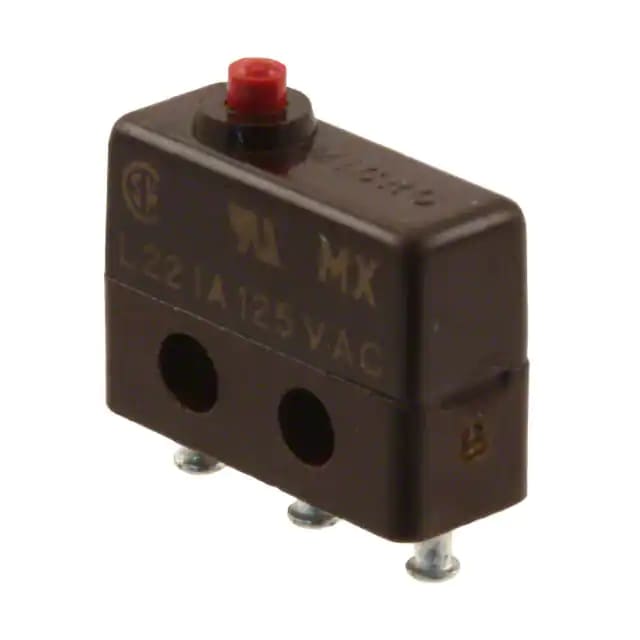
Honeywell 12SX2-T Basic Switch: Technical Overview and Application Guide
The Honeywell 12SX2-T basic switch is a compact electromechanical switch designed for precise low-energy switching tasks where repeatability matters. As part of the Honeywell SX subminiature family, this model combines a space-saving body with a snap-action mechanism that helps engineers maintain dependable switching in tightly packaged equipment. The Honeywell 12SX2-T basic switch is especially relevant in control assemblies, instrumentation interfaces, compact mechanical devices, and aerospace-adjacent applications where a stable switching response is more valuable than oversized current capacity.
What Makes the Honeywell 12SX2-T Basic Switch Different?
From a technical standpoint, the Honeywell 12SX2-T switch is configured as an SPDT snap-action switch with a round pin plunger actuator and chassis mounting format. This version is known for bifurcated gold contacts, which are widely preferred in low-level signal environments because they help improve contact reliability in circuits where current is minimal. That makes the Honeywell 12SX2-T electromechanical switch a practical choice for precision devices, status detection assemblies, and signal-level applications rather than high-load power switching.
Its compact housing is useful when panel or assembly space is limited. Engineers also value this switch family for predictable travel characteristics, controlled operating force, and long mechanical life. In real installations, those details matter because they affect feel, repeatability, and long-term maintenance behavior.
Typical Applications for the Honeywell 12SX2-T Switch
The Honeywell 12SX2-T basic switch can be considered for test equipment, small industrial control assemblies, compact machine subsystems, auxiliary position sensing, and precision mechanical actuation points. In many designs, a switch like this is selected not because it is visually complex, but because it delivers a consistent on/off event within a very small footprint.
Another key consideration is integration flexibility. Designers comparing Honeywell miniature and subminiature switch options often look closely at actuator style, contact material, termination type, and operating force. The 12SX2-T stands out when signal integrity and dependable actuation are more important than carrying heavier electrical loads. For more information about Honeywell, it is useful to review the wider switch portfolio and compare related product families.
FAQ
Is the Honeywell 12SX2-T basic switch suitable for low-current circuits?
Yes. This model is particularly relevant for low-energy switching thanks to its bifurcated gold contact design, which is often chosen for improved reliability in sensitive electrical paths.
What type of actuator does the Honeywell 12SX2-T use?
The switch uses a round pin plunger actuator. This format is common in compact assemblies where direct linear mechanical input is preferred.
Where is the Honeywell 12SX2-T basic switch commonly used?
It is often considered for instrumentation, compact controls, precision assemblies, and applications where repeatable signal switching is needed in a small package.
Why do engineers choose bifurcated gold contacts?
Bifurcated gold contacts are frequently selected for low-level circuits because they help improve switching consistency and contact reliability where electrical loads are relatively light.
Is the Honeywell 12SX2-T a space-saving switch?
Yes. It belongs to Honeywell’s subminiature SX series, which is built for applications where size, weight, and precise switching behavior all need to be balanced carefully.