
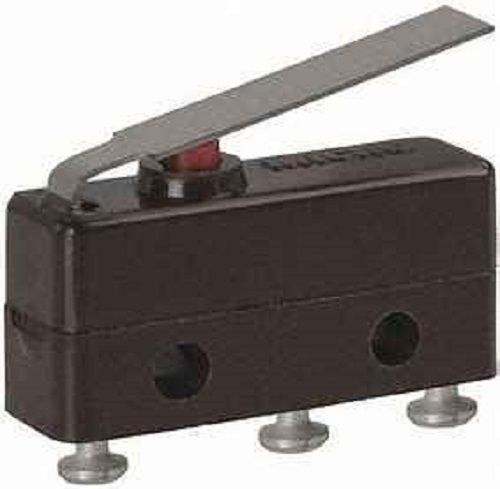
Honeywell 111SM117-H2 Basic Switches: Precision Switching for Tight Mechanical Designs
The Honeywell 111SM117-H2 Basic Switches model is a member of the MICRO SWITCH SM Series and is positioned for compact equipment that depends on repeatable snap-action performance. Technical listings identify the Honeywell 111SM117-H2 basic switches part as an SPDT switch with a straight lever actuator, 5 A rating, 250 V AC / 30 V DC class, and PC pin termination. That combination makes it especially useful in electronic-mechanical assemblies where direct board-compatible or structured terminal integration is part of the design strategy.
Why the Honeywell 111SM117-H2 Basic Switches Model Is Useful
Compact switching components are often selected under space pressure, but performance still matters. The Honeywell 111SM117-H2 basic switches configuration belongs to a family recognized for long mechanical life, precision movement, and dependable switching across harsh temperature conditions. For design teams, that means a smaller switch footprint does not automatically require a compromise in reliability.
Because the H2 variant is tied to a PC pin style termination, it also supports applications where structured electrical integration is important. In many systems, this can help create a cleaner assembly path and more controlled wiring layout.
Technical Features in Context
The Honeywell 111SM117-H2 basic switches micro switch is listed with SPDT contacts, On-Momentary function, 5 A current rating, 250 V AC and 30 V DC voltage ratings, 227 gf operating force, and PC pin termination. Product records also note 0.350 in operating position, 0.150 in pretravel, 0.004 in differential travel, 0.011 in overtravel, 10 million mechanical cycles, and an operating range of -55 °C to 125 °C.
Application Value
The Honeywell 111SM117-H2 basic switches model is relevant in industrial instrumentation, compact controllers, electromechanical sensing points, mechanism monitoring, and embedded equipment where actuation must be repeatable over long service intervals. Engineers looking for PC pin micro switch, SPDT lever switch, or Honeywell basic switch are often solving exactly these design problems.
Another practical advantage is predictable snap-action behavior. In motion-based systems, switch consistency helps reduce false readings and supports better control logic over time.
Selection Notes
The correct switch choice depends on more than rating alone. The Honeywell 111SM117-H2 basic switches product should be evaluated based on actuator contact point, terminal layout, travel profile, and board or assembly constraints. Small geometry differences can have a large effect on how the switch behaves in a finished product.
For more information about Honeywell, comparing other SM Series variants can help determine whether H2, H58, or solder styles are the most suitable path.
FAQ
What type of termination does Honeywell 111SM117-H2 Basic Switches use?
This model is commonly associated with PC pin termination, making it useful in structured electronic or board-related assembly designs.
What contact arrangement is used in Honeywell 111SM117-H2 Basic Switches?
It is listed as an SPDT snap-action switch, which is a common configuration for precise control and sensing tasks.
Why would engineers choose Honeywell 111SM117-H2 Basic Switches?
They often choose it for compact designs that need repeatable switching, long mechanical life, and a practical terminal format for organized integration.
Can Honeywell 111SM117-H2 Basic Switches handle industrial conditions?
Yes. The SM Series is associated with a wide operating temperature range and durable mechanical performance, which supports demanding applications.
What is important to verify before specifying Honeywell 111SM117-H2 Basic Switches?
Confirm actuation force, travel limits, terminal compatibility, installation geometry, and electrical load so the switch fits both the circuit and the mechanism.