
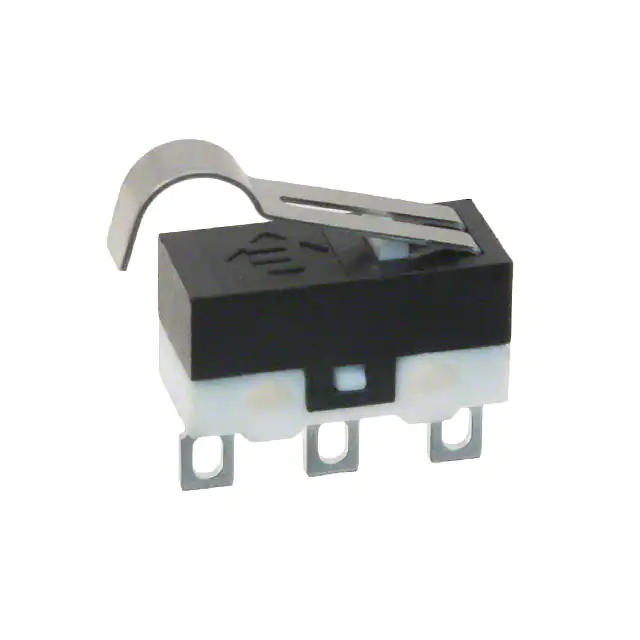
Honeywell 102HS1 Sealed Switches
The Honeywell 102HS1 sealed switches model is designed for applications where environmental protection is not optional. In many industrial and heavy-duty systems, switch failure is not caused by electrical overload alone. It often begins with contamination, moisture intrusion, or long-term exposure to difficult operating conditions. That is why sealed switch technology remains highly relevant, and why the Honeywell 102HS1 sealed switches part continues to attract attention in applications that demand robust electromechanical performance.
Core Value of the Honeywell 102HS1 Sealed Switches Design
The main strength of this product family lies in strong sealing and rugged switching capability. Honeywell HS Series switches are known for applications where maximum sealing and high electrical capability are important, even if the overall form factor is less compact than miniature alternatives. This makes the Honeywell 102HS1 sealed switches model especially appropriate for machinery, outdoor equipment, transport systems, and industrial devices that face severe service conditions.
A sealed switch helps isolate the internal switching chamber from moisture, dirt, and contaminants that can shorten service life. In operations where washdown, splash, dust, or variable temperatures are expected, that protective design can significantly improve long-term reliability. Engineers often prefer a hermetically sealed or highly sealed switch when equipment downtime is expensive and manual replacement is difficult.
Application Benefits
The Honeywell 102HS1 sealed switches configuration is relevant for equipment builders who need consistent switching under stress. These switches are commonly considered for industrial control systems, aerospace-support equipment, off-road machinery, external control assemblies, and process environments where durability outweighs miniaturization.
Another benefit is confidence in product-family performance. Honeywell sealed switch ranges are associated with dependable mechanical response and a design philosophy centered on harsh environments. That helps OEMs and service organizations maintain specification consistency across projects. Instead of selecting a generic switch with uncertain sealing performance, many teams prefer the Honeywell 102HS1 sealed switches reference for traceable design decisions.
Important Selection Factors
Before choosing this type of switch, engineers should review contact arrangement, current and voltage needs, mounting style, actuator style, and environmental exposure profile. A sealed switch is often selected precisely because the application includes water, dust, or mechanical shock. That means the surrounding installation must also support the switch’s protective benefits through appropriate wiring, mounting, and enclosure practices.
For long-term equipment support, exact part-number matching is essential. Sealed switch families can include variations in lever style, terminals, mounting geometry, and switching function. For more information about Honeywell, it is useful to compare product-family resources with the precise application requirement.
FAQ
What is the Honeywell 102HS1 sealed switches product designed for?
It is designed for demanding applications where a durable, environmentally protected electromechanical switch is required.
Why is sealing important in a switch?
Sealing helps protect the switch internals from dust, moisture, splash, and contaminants that may reduce reliability over time.
Is the Honeywell 102HS1 suitable for industrial environments?
Yes. It is well suited to industrial and heavy-duty environments where strong sealing and dependable switching performance are important.
What should be checked before specifying it?
Check the electrical rating, actuator style, mounting details, contact configuration, and the environmental conditions of the intended installation.
How does this differ from a standard basic switch?
A sealed switch is chosen primarily for stronger environmental resistance and improved protection in harsher operating conditions.