
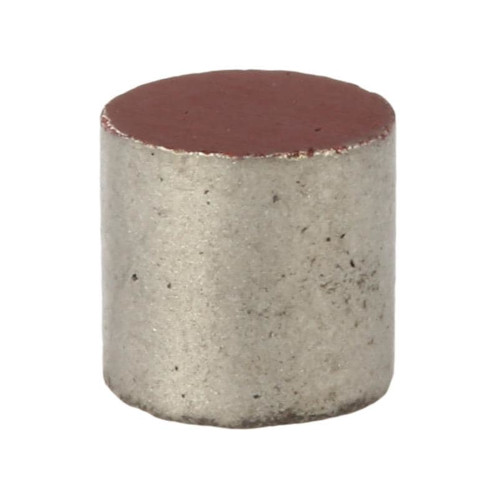
Honeywell 101MG2L1 HCS Magnetics Bar Magnet Guide
The Honeywell 101MG2L1 HCS Magnetics bar magnet is a compact magnetic actuator designed for use with Hall-effect and magnetoresistive sensing solutions. In practical engineering work, that matters because the magnet is not just a passive component. It directly influences switching distance, signal consistency, and the mechanical envelope of the full sensing design. For teams working on position detection, lid closure monitoring, compact motion sensing, or equipment status verification, the Honeywell 101MG2L1 bar magnet offers a small-format option that fits neatly into tight assemblies without forcing a compromise in thermal stability.
According to Honeywell’s MG Series documentation, the Honeywell 101MG2L1 HCS Magnetics model is an Alnico VI sintered bar magnet with dimensions of approximately 9.53 mm long by 3.18 mm wide by 3.18 mm high. It is identified as a bar magnet with the north pole marked in red, which simplifies installation and alignment during prototyping and production. For more detailed brand and product context, more information about Honeywell can be reviewed here.
Technical Overview of Honeywell 101MG2L1 HCS Magnetics
One of the strongest advantages of the Honeywell 101MG2L1 HCS Magnetics bar magnet is its balance between compact size and useful magnetic output. Honeywell positions this model as a fit for sensor evaluation and magnetic system design where mechanical space is limited. The part is built from sintered Alnico VI, a material choice that supports dependable operation across demanding thermal environments.
Typical gauss values published for the model show that the magnetic field remains usable across multiple gap distances. At 0.25 mm, the part reaches approximately 730 G, then around 550 G at 0.76 mm, 410 G at 1.27 mm, 205 G at 2.54 mm, 115 G at 3.81 mm, and 75 G at 5.08 mm. While these are typical values rather than guaranteed switching results, they are very useful during early design selection. In other words, the Honeywell 101MG2L1 HCS Magnetics bar magnet is often chosen by engineers who need a predictable magnetic profile when pairing the magnet with a compatible sensor IC.
Where Honeywell 101MG2L1 Bar Magnets Are Commonly Used
The application range for this model is broader than many buyers initially expect. A small magnetic actuator like this can support door and cover position sensing in appliances, home position verification in medical equipment, access panel detection in industrial enclosures, and simple shaft or rotary speed indication when used with an appropriate sensing element. Because the package is narrow and elongated, the magnet can be embedded into plastic parts, fitted into slim recesses, or placed in guided assemblies where a cylindrical magnet would be less convenient.
That design flexibility is one reason the phrase Honeywell 101MG2L1 HCS Magnetics bar magnet often appears in technical searches related to magnetic sensing, Hall sensor design, compact actuator magnets, and industrial position detection. Engineers are not only looking for a magnet; they are looking for a magnet whose shape supports easier integration.
Why Material and Temperature Matter
The Honeywell 101MG2L1 HCS Magnetics version stands out for its stated operating stability from approximately -40°C to 250°C. That is a meaningful specification in real projects. In industrial machinery, portable equipment, and embedded control designs, components may face elevated temperatures from motors, sealed housings, or ambient process heat. A magnet that drifts too aggressively with temperature can create unreliable switch points and inconsistent sensor output.
Because this model uses Alnico VI and is described by Honeywell as having good physical strength and good resistance characteristics in the series selection context, it is often evaluated where long-term magnetic behavior is more important than the smallest possible package. It is not the strongest magnet in the MG Series, but it can be a very practical choice where temperature resilience and bar-style geometry are priorities.
Integration Notes for Engineers and Maintenance Teams
In a working assembly, magnet selection should never be isolated from sensor selection. The Honeywell 101MG2L1 HCS Magnetics bar magnet should be evaluated together with the sensor’s operate point, release point, mechanical tolerances, and the final air gap. Small changes in bracket thickness, plastic shrinkage, or mounting offset can change the field experienced by the sensor. That is why early-stage testing is essential, even when a published gauss table looks promising.
It is also worth paying attention to polarity marking. Since the north pole is indicated with red, installation becomes more manageable during assembly and service. That may sound minor, but in maintenance-sensitive equipment, clear orientation markings reduce troubleshooting time and help prevent reversed installations.
FAQ About Honeywell 101MG2L1 HCS Magnetics
What type of product is the Honeywell 101MG2L1 HCS Magnetics part?
The Honeywell 101MG2L1 HCS Magnetics part is a compact Alnico VI sintered bar magnet used as a magnetic actuator for Hall-effect and magnetoresistive sensing applications. It is not an active sensor itself. Instead, it works with a sensing device to create repeatable magnetic detection in equipment and control systems.
What are the dimensions of the Honeywell 101MG2L1 bar magnet?
This model is approximately 9.53 mm x 3.18 mm x 3.18 mm. That slim bar format is one of its most useful design advantages because it allows easier integration into narrow housings, compact brackets, and molded plastic parts.
Is Honeywell 101MG2L1 suitable for high-temperature environments?
Yes, it is commonly considered for elevated temperature designs because Honeywell lists a stability range from -40°C to 250°C. Actual suitability still depends on the total application design, surrounding materials, and the sensor being used, but the published thermal range makes it attractive for demanding installations.
How strong is the Honeywell 101MG2L1 HCS Magnetics magnet?
Typical magnetic field values vary by air gap. Published reference values show around 730 G at 0.25 mm and decreasing output as distance increases. The practical switching result depends on the sensor threshold, alignment, and final mounting geometry.
Why would someone choose Honeywell 101MG2L1 instead of a cylindrical magnet?
The main reason is packaging efficiency. A bar magnet can be easier to align in long, narrow, or rectangular spaces. In products where internal volume is tightly controlled, that geometry can simplify the overall design and reduce the need for custom mounting hardware.