
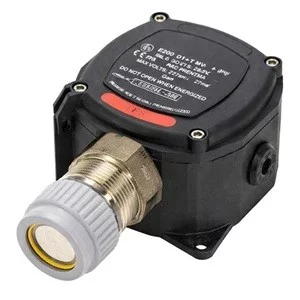
Honeywell PINZ3000 Connector Socket Technical Guide
The Honeywell PINZ3000 connector socket is commonly understood as an accessory used with Honeywell pressure transmitter families such as MIP, PX2, and PX3. In industrial instrumentation, the connector is often just as important as the sensor itself. A well-matched connection interface affects sealing, wiring reliability, maintenance access, and long-term signal stability. That is why the Honeywell PINZ3000 connector socket for MIP PX2 PX3 transmitters deserves careful attention during specification.
Why the Connector Matters
Pressure transmitters are frequently selected based on range, output, and media compatibility, but connection quality is what often determines how well the system performs over time. A poor or mismatched connector can introduce intermittent signals, inadequate sealing, wiring errors, or service difficulties. The role of the Honeywell PINZ3000 connector socket is to provide a practical electrical interface for compatible Honeywell transmitter platforms.
For OEMs and maintenance planners, that means the connector should never be treated as an afterthought. It is a functional part of the measurement chain.
Compatibility with Honeywell Pressure Sensor Families
The user designation for the Honeywell PINZ3000 connector socket links it with MIP, PX2, and PX3 transmitter families. Honeywell pressure product literature for PX2 and PX3 emphasizes the importance of using the correct mating electrical connector and seal, because improper connection practice can compromise ingress protection and electrical reliability. In industrial environments, that is a crucial point.
The PX2 and PX3 families are used in demanding applications and are associated with broad environmental capability, so it makes sense that the mating connection hardware must support that same level of practical durability.
What to Consider During Selection
When choosing a Honeywell PINZ3000 connector socket for PX2 PX3 transmitters, engineers should review connector geometry, wire entry, sealing method, cable diameter, and the exact transmitter configuration. In many industrial systems, the challenge is not basic compatibility but installation reality. Will there be enough space to terminate wiring cleanly? Can the cable route avoid vibration stress? Will the sealing remain intact over time?
These questions matter because connector performance is affected by the actual environment, not only the catalog description.
Installation Best Practices
The broader Honeywell guidance for PX-series pressure transducers highlights the need for the proper mating electrical connector with a seal. That principle is directly relevant to the Honeywell PINZ3000 connector socket. Good installation includes verifying pin orientation, maintaining seal integrity, avoiding undue stress at the cable exit, and ensuring that the connector is tightened correctly without damaging the housing or seal.
Instruments often fail in the field because of connection issues rather than sensing element failure. A careful connector installation can significantly improve long-term signal stability.
Why Search Interest for Connector Accessories Stays High
Search phrases such as pressure sensor connector socket, PX3 mating connector, and Honeywell transmitter connector continue to attract attention because replacement and integration work is constant in industrial maintenance. A sensor may be specified correctly, but the project is not complete until the electrical connection is equally reliable.
For more information about Honeywell, reviewing the broader transmitter and accessory ecosystem can help align connector selection with the intended sensor family.
FAQ
What is Honeywell PINZ3000 used for?
It is used as a connector socket accessory for compatible Honeywell transmitter families, especially where a practical electrical interface is required in industrial installations.
Which product families are associated with PINZ3000?
It is associated here with Honeywell MIP, PX2, and PX3 transmitter use.
Why is the correct mating connector important for pressure transmitters?
The correct connector helps maintain sealing, electrical reliability, signal integrity, and long-term performance in industrial environments.
Can the wrong connector affect ingress protection?
Yes. Honeywell PX-series guidance specifically warns that improper or damaged seals and incorrect mating connection practices can compromise ingress protection.
What should installers verify before wiring?
They should verify compatibility with the exact transmitter configuration, pin orientation, sealing condition, cable diameter, and strain management around the connector.
Is a connector socket a minor accessory?
No. In industrial instrumentation, the connector is a critical part of the total sensing system and can strongly influence reliability in the field.