
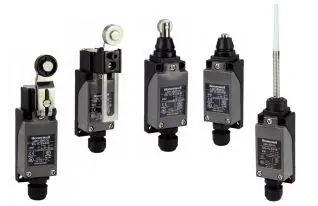
Honeywell SZL-VL-S-E-N-M Miniature Limit Switch Guide
The Honeywell SZL-VL-S-E-N-M miniature limit switch is part of the SZL-VL-S series, a Honeywell family developed for industrial machines that need rugged switching performance in a compact footprint. Distributor references identify this model as an SPDT limit switch, while Honeywell’s SZL-VL-S series literature highlights limited-space suitability, IP67 sealing, and OEM-focused design. For engineers building compact automation systems, the Honeywell SZL-VL-S-E-N-M industrial limit switch represents the kind of component that supports reliable mechanical feedback without demanding excessive installation space.
Why the SZL-VL-S Family Is Still Relevant
Miniature limit switches remain highly useful in industrial design because they give direct contact-based feedback in places where larger switch bodies would be difficult to mount. Honeywell describes the SZL-VL-S series as intended for applications with limited mounting space and notes features such as IP67 sealing and enhanced wiring space. Those characteristics are highly relevant in compact machinery, where not only the switch body but also cable access and sealing performance affect the final design. The Honeywell SZL-VL-S-E-N-M limit switch fits into that broader family strategy.
Technical Value of Honeywell SZL-VL-S-E-N-M
The Honeywell SZL-VL-S-E-N-M SPDT limit switch is associated with a single-pole double-throw configuration, which gives designers flexible signaling paths for machine logic. In practice, that means the switch can support normally open and normally closed behavior within one compact device, helping reduce wiring complexity and component count. The family’s IP67 sealing is also significant because compact switches are often installed close to machine motion, where they may be exposed to dust, splash, and residue. A switch that is mechanically compact but environmentally weak would create unnecessary maintenance risk.
Typical Applications
The Honeywell SZL-VL-S-E-N-M miniature industrial switch can be relevant in compact transfer stations, packaging equipment, machine guards, positioning mechanisms, and OEM automation assemblies with restricted installation space. Search demand for terms such as miniature limit switch, SPDT compact limit switch, and Honeywell SZL-VL-S-E-N-M reflects the steady need for components that solve mechanical feedback problems without increasing machine size. In many OEM projects, the best switch is not the biggest or most complex one, but the one that fits cleanly into the machine and stays reliable over time.
Selection and Maintenance Notes
Choosing the Honeywell SZL-VL-S-E-N-M limit switch involves more than matching a part number. Engineers should verify actuator compatibility, travel direction, mounting access, and environmental exposure. Maintenance teams typically appreciate miniature limit switches when they are installed thoughtfully, because the switching point is easy to understand and troubleshooting remains straightforward. As with any mechanical switch, correct alignment and controlled overtravel are essential to achieving a long and dependable service life.
For more information about Honeywell, reviewing the full SZL-VL-S lineup can help identify the right actuator and connection style for compact industrial equipment.
FAQ
What is Honeywell SZL-VL-S-E-N-M?
It is a miniature industrial limit switch from Honeywell’s SZL-VL-S series.
Does this model use SPDT contacts?
Yes. It is commonly identified as an SPDT limit switch.
Is the SZL-VL-S series suitable for restricted spaces?
Yes. Honeywell presents the series as designed for applications where mounting space is limited.
Why is IP67 important on a miniature switch?
Because compact switches are often installed near moving machine parts and may be exposed to dust or moisture during daily operation.
Where can Honeywell SZL-VL-S-E-N-M be used?
It can be used in compact OEM machines, guards, transfer systems, and automation modules requiring reliable position detection.
What should users verify before installation?
They should verify actuator type, approach angle, overtravel, available wiring space, and environmental conditions.