
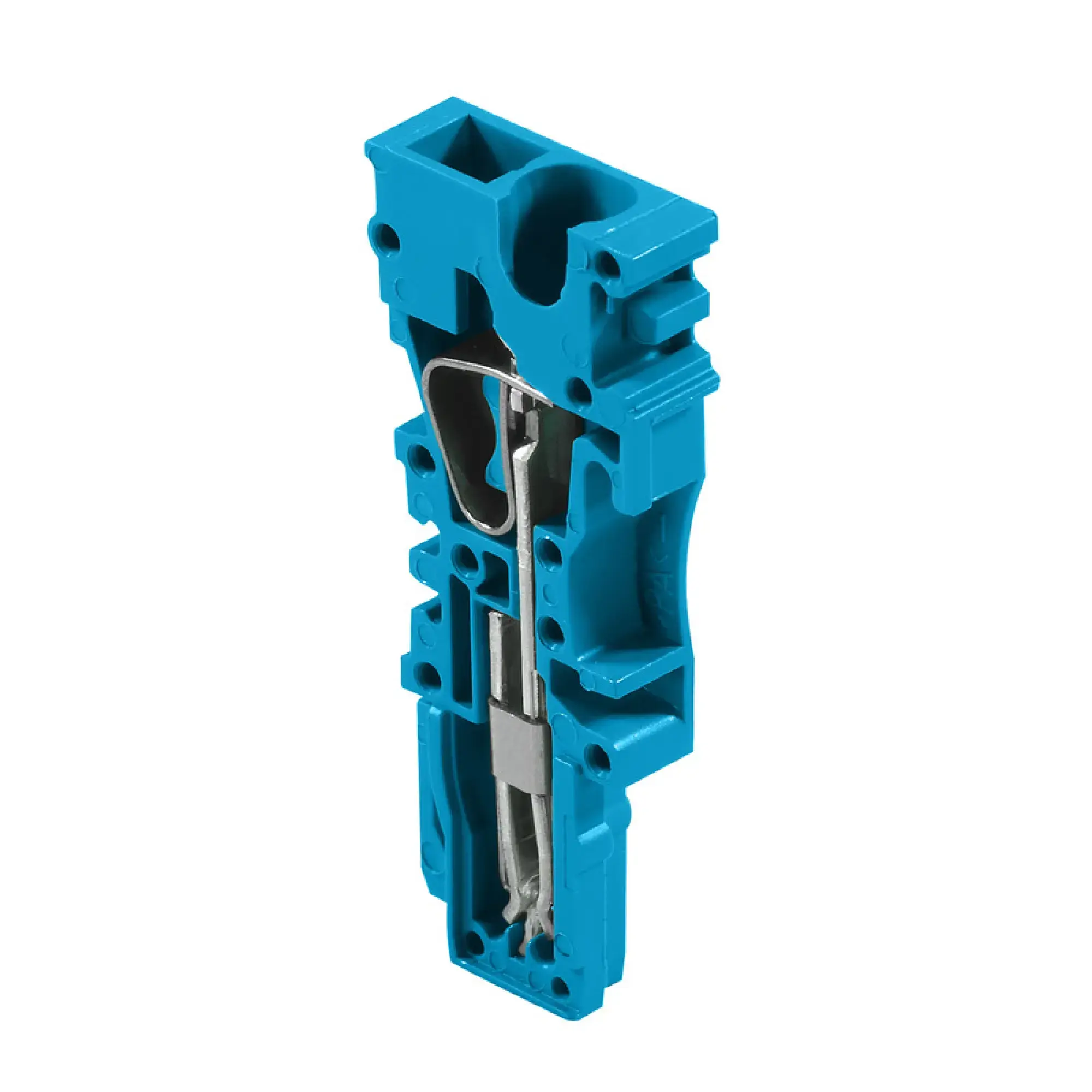
Weidmüller 1009060000 ZP 2.5/1AN/1 BL Connector Guide
The Weidmüller 1009060000 ZP 2.5/1AN/1 BL plug connector is a single-pole Z-series accessory developed for direct mounting in terminal block systems. This part is particularly relevant for users working with installed equipment and product lifecycle planning because its product page notes that it will soon no longer be available. In industrial procurement and technical documentation, early lifecycle warnings like this are highly significant.
The product is listed as a plug for the additional assembly of terminal blocks, designed to be quick and easy to plug in. It is a 1-pole variant with a published TS 35 offset of 32 mm. Product data also shows conductor compatibility from 0.13 mm² to 4 mm², approval-related AWG 26 to 12 support, and certification values such as 20 A / 300 V and 5 A / 600 V in relevant categories.
Why This Part Number Is Important
The Weidmüller 1009060000 connector is important because it combines normal Z-series terminal functionality with a lifecycle note that may affect stocking and project decisions. When a product is marked as soon to be unavailable, engineers and buyers usually need to review future maintenance plans, replacement strategies, and documentation accuracy.
That makes this part especially useful in installed-base support and technical record keeping. It is not only an electrical component reference, but also a lifecycle-management touchpoint.
Technical Characteristics
The product belongs to the broader 2.5 mm² Z-series single-pole family. Comparable family data indicates a 500 V rated voltage and 24 A nominal current, while the specific product page highlights international approval values such as 20 A at 300 V and 5 A at 600 V for certain categories. The conductor range from 0.13 mm² to 4 mm² makes the connector practically useful in many industrial terminal configurations.
The TS 35 offset of 32 mm is also worth noting because mounting geometry matters in terminal system compatibility and cabinet spacing. Even small dimensional differences can be important in dense terminal layouts or when exact replacement is required.
How It Fits in Real Applications
The Weidmüller ZP 2.5/1AN/1 BL is intended for direct mounting and additional terminal block assembly, so it is best understood as a modular cabinet accessory rather than a standalone free-cable connector. It is well suited to industrial control panels, machine cabinets, and retrofits where single-pole terminal flexibility is useful.
Because the product page signals an upcoming availability limitation, it should be evaluated carefully in new design projects that depend on long-term supply continuity.
Weidmüller 1009060000 Lifecycle Perspective
The fact that this product is described as soon no longer available gives it a different planning profile from a normal active accessory. It may still be highly relevant in the short term, especially in maintenance or controlled continuation projects, but it deserves closer supply and replacement review.
Weidmüller 1009060000 For more information about Weidmüller, it is advisable to compare active single-pole Z-series variants before committing to new production use.
Weidmüller 1009060000 FAQ
What is the Weidmüller 1009060000 ZP 2.5/1AN/1 BL?
It is a single-pole Z-series plug-in connector for the additional assembly of terminal blocks and direct mounting.
Is there any lifecycle note for this product?
Yes. The product page states that it is soon no longer available, which makes lifecycle planning important.
What conductor sizes does it support?
The product data shows support from 0.13 mm² to 4 mm², with AWG references extending from 26 to 12.
What approval-related ratings are listed?
The page includes certification-related values such as 20 A / 300 V and 5 A / 600 V in specific categories.
Why does the TS 35 offset matter?
The listed 32 mm offset can affect terminal compatibility, mounting geometry, and exact replacement fit within an existing cabinet layout.
Should this product be used in new long-term designs?
Only after reviewing lifecycle implications carefully. In many cases, an active equivalent may be the safer long-term choice.