
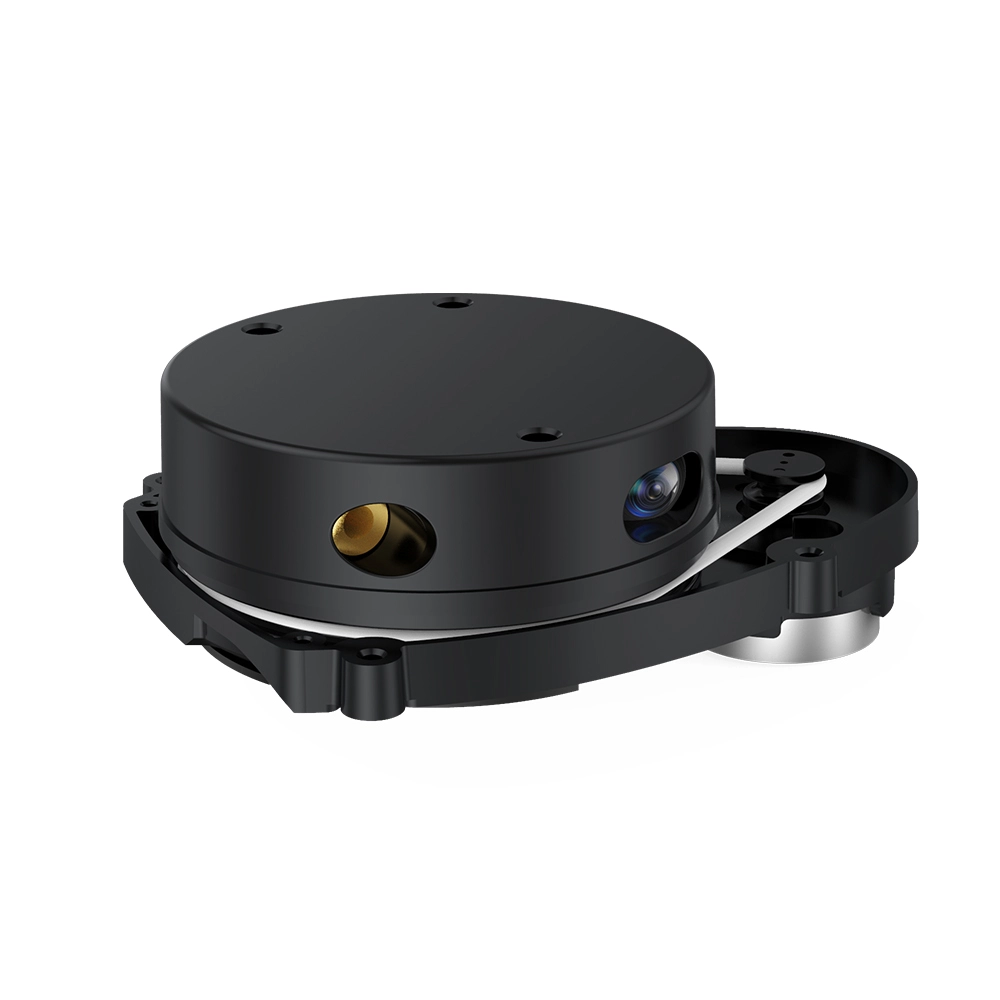
YRD-SENSOR0233 Image Sensor Module: Technical Overview, Performance, and Integration Notes
The YRD-SENSOR0233 Image Sensor Module is positioned for applications where consistent imaging matters under challenging lighting—think glare, shadow transitions, and mixed illumination in industrial, automotive-adjacent, or machine vision style deployments. In many catalogs, “0233” modules are commonly cross-referenced to 2.6 MP HDR families used for 1080p video pipelines. Practically, that means the module is expected to support stable image capture with a balance of sensitivity, dynamic range, and frame-rate headroom.
If your selection process also includes industrial sensing and electromechanical detection, it’s common to see YRD sensor projects paired with limit switches and operator heads in automation panels. For related industrial components, you can review Telemecanique sensor options used across factory environments.
Where YRD-SENSOR0233 Fits in Real Systems
Most image sensor modules are evaluated on outcomes rather than marketing labels: does it deliver usable pixels at speed, does it keep detail in bright+dark areas, and can it be integrated without excessive engineering overhead? The YRD-SENSOR0233 Image Sensor Module is typically considered for:
- Embedded vision where 1080p output is a practical sweet spot for bandwidth and compute.
- HDR inspection where reflective surfaces or uneven illumination can otherwise wash out defects.
- Motion capture contexts where frame timing consistency matters as much as raw resolution.
Core Technical Characteristics
While exact specs depend on the specific YRD implementation (lens stack, ISP choices, board layout), “0233-class” modules are commonly engineered around these expectations:
- Resolution class: ~2.6 MP with a 16:9-friendly active array suitable for 1080p pipelines.
- HDR behavior: High dynamic range operation intended to preserve highlights and shadows in one frame sequence.
- Frame-rate target: 1080p at real-time rates is typically the integration baseline for this class.
- Low-light intent: Sensitivity-oriented design choices (pixel architecture and ISP tuning) to reduce noise and preserve detail.
HDR in Practical Terms
HDR is not only about “seeing in the dark.” In operational environments it’s often about preventing failure modes: glare from metal parts, bright outdoor-to-indoor transitions, and the kind of mixed lighting that makes a normal exposure either clip highlights or crush shadows. A well-integrated HDR sensor module helps stabilize downstream analytics by keeping feature contrast available for algorithms.
Integration Considerations (What Engineers Usually Ask)
1) Data Path and Bandwidth
1080p real-time video is easy to underestimate. Integration success depends on matching the sensor output format to your processing chain. You’ll typically validate:
- Output format compatibility (RAW/Bayer vs processed)
- Lane configuration / throughput capability of your capture interface
- Buffering and frame timing under load
2) ISP Strategy
Many teams choose between on-module ISP (simpler integration) and host-based ISP (more control). Your decision impacts latency, tuning effort, and image consistency. For inspection systems, repeatability often outranks “pretty image” processing.
3) Optics and Mechanical Stack
Two modules with identical silicon can behave differently based on lens quality, focus stability, IR filtering, and enclosure reflections. Treat optics as a first-class requirement: define field of view, working distance, and target contrast conditions up front.
YRD-SENSOR0233 Typical Use Cases
- Machine vision checkpoints: presence/absence, label verification, surface anomaly detection
- Mobile robotics: navigation assistance and object awareness under varying light
- Industrial monitoring: belt tracking, zone observation, safety-adjacent visual confirmation
Operational Reliability Notes
Reliability comes from system-level discipline: stable power, grounded layout, thermal management, and predictable exposure control. For HDR modules, also validate performance in the exact lighting transitions that happen in your facility—especially if you have sunlight bleed-in, rotating beacons, or reflective packaging.
YRD-SENSOR0233 FAQ
Is YRD-SENSOR0233 suitable for 1080p systems?
Yes—this class is commonly aligned to 1080p pipelines, but confirm the exact output modes and frame timing supported by your specific module revision.
What makes HDR valuable in industrial environments?
HDR prevents common failure modes—glare, shadow crush, and inconsistent features—so downstream detection remains stable across lighting changes.
Do I need an external ISP?
Not always. If the module outputs RAW, you’ll likely need host-based ISP or a camera subsystem that supports tuning. If it outputs processed frames, integration can be faster but less customizable.
YRD-SENSOR0233 How should I validate performance before committing?
Test with your real materials, real lighting, and real motion. Short lab tests often miss reflective flare, vibration blur, or exposure oscillation that appears on the production floor.