
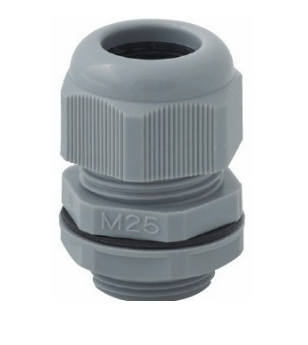
Weidmüller VGM20-MS54ZE BS6.5-15 Metal Cable Gland Technical Guide
The Weidmüller VGM20-MS54ZE BS6.5-15 is a rugged metal cable gland intended for industrial cable entry, sealing, and strain relief. Engineers and buyers frequently search for M20 cable gland, brass cable gland with strain relief, industrial cable sealing gland, and nickel plated cable gland because this category directly influences enclosure integrity and cable lifespan.
What is the Weidmüller VGM20-MS54ZE BS6.5-15?
The Weidmüller VGM20-MS54ZE BS6.5-15 product type cable gland belongs to the VG MS ZE family. Official family references describe the VGM20-MS54 ZE version as a straight M20 cable gland in nickel-plated brass for sealing housings when introducing cables, with integrated strain relief. Public product listings also associate the family with IP65 protection. The requested part-number suffix BS6.5-15 indicates the cable size variant intended for a specified outer diameter range.
This is the type of hardware selected when installers need a defined, durable cable entry point that protects both the enclosure and the cable itself. It is a simple component on paper, but in practice it has major influence over mechanical reliability and environmental performance.
Main technical characteristics
Comparable public family information for the VGM20-MS54 ZE identifies M20 metric thread, straight design, and nickel-plated brass material. The Turkish Weidmüller family listing also notes a size reference with OD min. 6.5 mm and OD max. 12.5 mm for the standard family entry, while the requested BS6.5-15 variant points to a broader upper cable range in the part designation. The same family is described as offering strain relief and used for cable insertion into housings.
Another useful reference from a datasheet index describes the series as using an external concentric strain relief via clamping jaws and a bend-protection mechanism through a trumpet-shaped pressure nut. That type of design is especially relevant where cables are not permanently fixed and may experience movement in practical operation.
Why M20 cable glands are common
The term M20 cable gland is searched heavily because it sits in a very common industrial size range. It is large enough for many control, signal, and power-related cables without moving into more oversized entry hardware. For many panel builders and machine manufacturers, M20 is a familiar and versatile standard.
The Weidmüller VGM20-MS54ZE BS6.5-15 brass cable gland fits that mainstream requirement while adding the robustness associated with metal construction and strain-relief design. This makes it a solid fit for installations that need dependable cable retention rather than a minimal basic entry fitting.
Application areas
Common use cases include industrial control cabinets, machine enclosures, field junction housings, portable industrial systems, outdoor-capable equipment, and mobile-adjacent setups where cables may be exposed to repeated movement or handling. A good cable gland reduces wear at the entry point and helps maintain enclosure performance over time.
Selection considerations
When selecting a gland like the Weidmüller VGM20-MS54ZE BS6.5-15 metal cable gland, users should confirm thread size, cable outer diameter, required protection class, installation torque, and accessory compatibility. Public family listings for related VGM20 models also mention tightening torque figures, underlining that correct installation is part of the performance equation.
FAQ
What is the Weidmüller VGM20-MS54ZE BS6.5-15 used for?
It is used to bring a cable into an enclosure while providing sealing and strain relief, helping protect both the cable and the enclosure entry point.
What thread size does it use?
Public family references identify the VGM20-MS54 ZE as an M20 metric cable gland.
What material is used in this gland family?
Available family data describes it as brass with nickel plating.
Why is strain relief important?
Strain relief reduces the transfer of pulling and bending forces to internal terminations, which supports longer service life and more stable installations.
Is this gland intended only for fixed indoor panels?
No. Family descriptions indicate relevance for more demanding environments and even non-permanently fixed cable situations, depending on the exact application and installation method.
Should the cable diameter range always be checked?
Yes. The exact part variant should be matched carefully to the cable outer diameter and installation requirements using the current datasheet.
For more information about Weidmüller cable gland and cable entry products, reviewing the family range is helpful when standardizing enclosure hardware.