
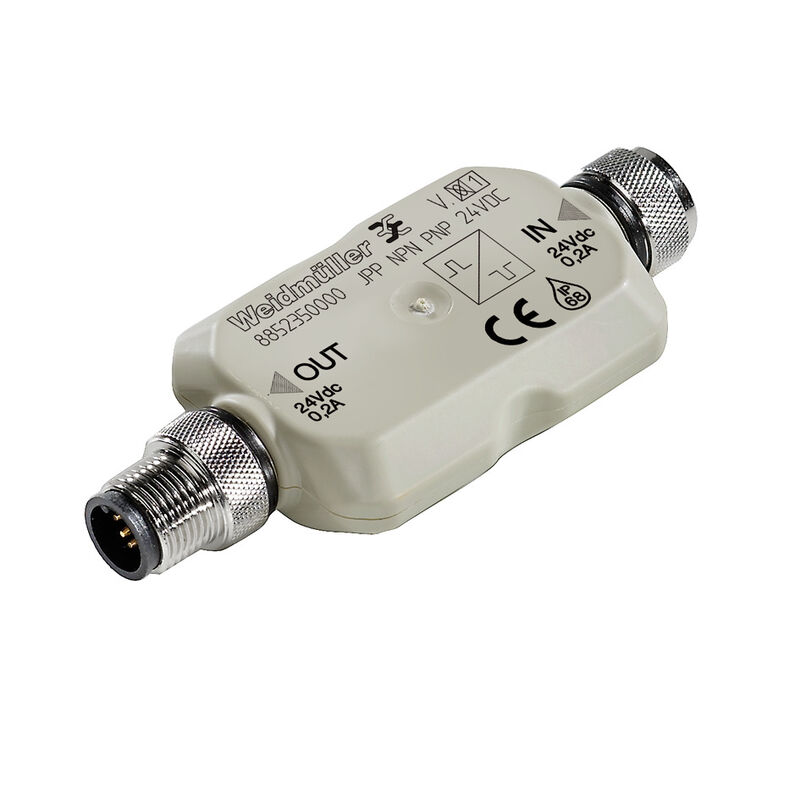
Weidmüller JPP PNP NPN 24VDC Level Converter and Signal Inverter Explained
The Weidmüller JPP PNP NPN 24VDC level converter is built for one of the most practical tasks in industrial automation: converting signals between PNP and NPN logic. That may sound simple, but in mixed installations, signal mismatches between devices can cause commissioning delays, integration problems, and avoidable troubleshooting work. A compact signal inverter designed specifically for this role helps close that gap cleanly.
Why PNP and NPN compatibility still matters
Although many regions and machine builders standardize around PNP sensors, NPN devices are still common in legacy systems, imported machinery, and certain OEM installations. When components with different switching logic must work together, direct compatibility is not always available. The Weidmüller JPP PNP NPN 24VDC signal inverter addresses that issue by converting NPN signals into PNP signals and vice versa.
This makes the device especially useful in retrofit projects, machine expansions, and control cabinet upgrades where the installed base does not follow a single switching logic standard.
Technical profile of the product
The official product description identifies the device as a level converter and JACKPAC IP68 signal inverter. It is intended for 24 VDC systems and is designed to adapt digital signal logic reliably between incompatible device types. The product is listed with 1 pole and as unshielded, which aligns with its focused purpose as a compact signal adaptation component rather than a multi-channel interface module.
Its JACKPAC construction is important because this style is often chosen in machine-level installations where devices may be mounted close to sensors and actuators instead of only inside a panel. The IP68-oriented product family positioning points to strong protection for demanding industrial environments.
Weidmüller JPP PNP NPN 24VDC Where it creates real value
The Weidmüller JPP PNP NPN 24VDC level converter signal inverter is valuable whenever engineers need to preserve existing hardware while integrating newer or different devices. Instead of replacing otherwise functional sensors, PLC inputs, or switching components, the logic difference can be corrected at the signal level. That is often faster, less disruptive, and easier to document.
It also reduces project risk. In retrofit work, the cost is rarely in the converter itself; it is in the downtime caused by incompatible signals discovered too late. A dedicated converter makes the design intent clear and supports more stable maintenance later, because technicians can immediately see that signal inversion is intentional rather than accidental.
Common application scenarios
This product is commonly relevant in mixed-brand automation lines, legacy panel modernization, field signal adaptation, and machine export projects where signal conventions vary by market or installed equipment base. It is also useful in test benches and pilot systems, where engineers often combine devices from different generations.
Another advantage is conceptual simplicity. A dedicated signal inverter is easier to understand in documentation than a workaround built through auxiliary relays or improvised interface wiring. That clarity improves long-term maintainability. For more information about Weidmüller, it makes sense to review the broader signal conversion and interface portfolio alongside this model.
Weidmüller JPP PNP NPN 24VDC FAQ
What does the Weidmüller JPP PNP NPN 24VDC do?
It converts digital switching signals between PNP and NPN logic, allowing devices with different signal conventions to work together in a 24 VDC control environment.
Is the Weidmüller JPP PNP NPN 24VDC only for legacy systems?
No. It is especially useful in legacy retrofits, but it also helps in mixed-brand systems, exported machinery, and pilot installations where signal logic standards differ.
Why would I use a level converter instead of replacing components?
A level converter can reduce cost, avoid unnecessary replacement of working hardware, and speed up integration when the only issue is switching logic compatibility.
Is this product intended for 24 VDC applications?
Yes. The product designation and technical listing identify it for 24 VDC use.
What is the advantage of the JACKPAC design?
The JACKPAC concept supports compact signal handling in automation environments and is well suited for machine-level integration where space and protection matter.
When is signal conversion most often needed?
It is most often needed during machine upgrades, cross-brand integration, import/export projects, and situations where older NPN devices must connect to newer PNP-based control systems or the other way around.