
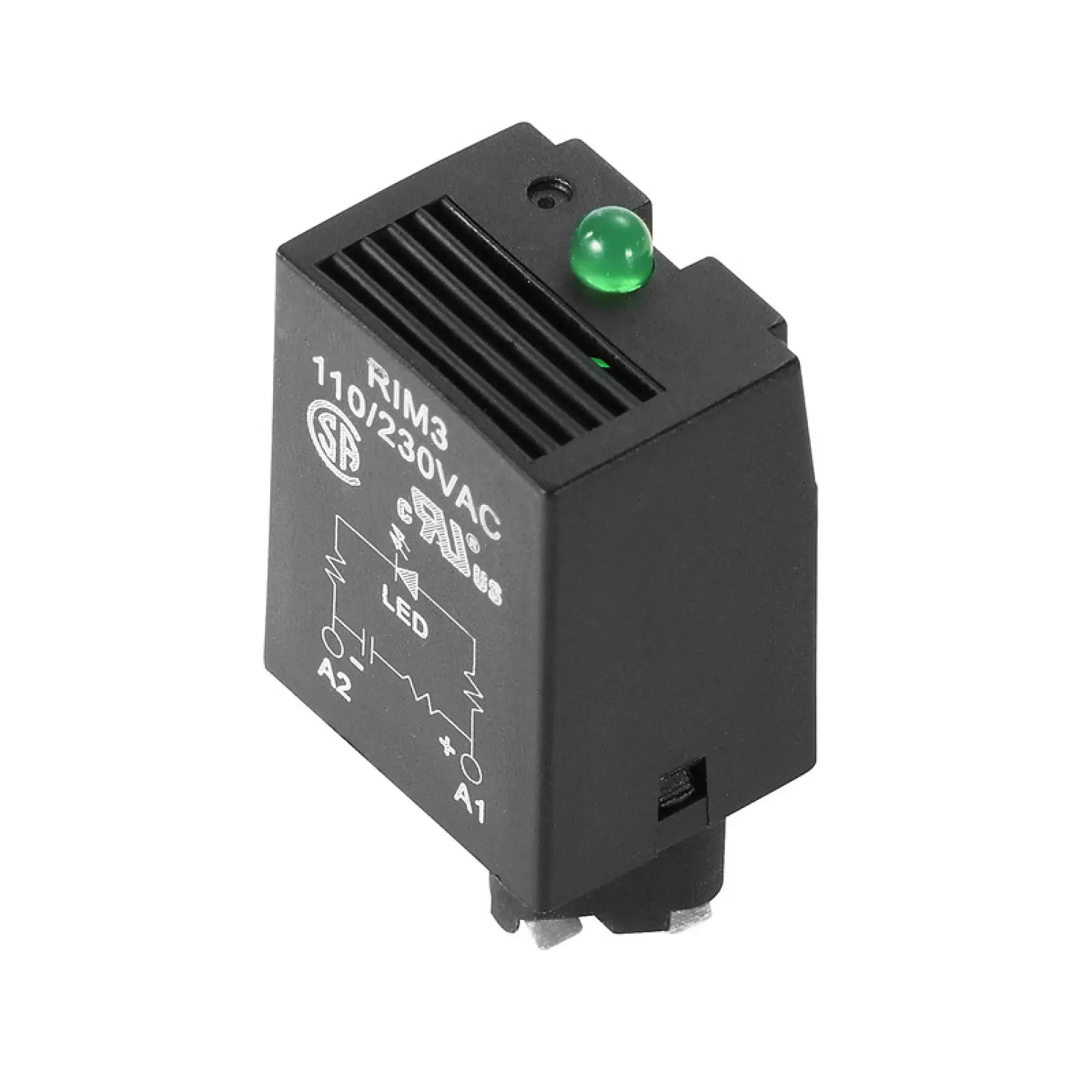
Weidmüller 7760056264 SCM 4CO ECO Socket Guide
Relay sockets are the quiet foundation of serviceable relay architecture. The Weidmüller 7760056264 SCM 4CO ECO relay socket is developed for accepting an industrial plug-in relay and forms part of the D-SERIES ecosystem. For engineers searching for a Weidmüller SCM 4CO ECO socket, 4 CO relay socket, or industrial relay base with screw connection, this model is relevant because it supports a structured, replaceable relay installation inside compact control cabinets.
What Is the SCM 4CO ECO?
The Weidmüller SCM 4CO ECO is a relay socket designed for an industrial plug-in relay with a 4 changeover contact layout. It is described within the D-SERIES DRM range and is associated with a continuous current of 6 A and a screw connection. In real application terms, the socket creates a stable and maintainable interface between the panel wiring and the removable relay element.
This matters because serviceability is often built into the socket choice. A well-selected relay base makes replacement easier, keeps field wiring organized, and supports repeatable assembly quality across multiple panels.
Technical Features in Practical Terms
The Weidmüller 7760056264 relay socket supports finely stranded conductors up to 2.5 mm². For finely stranded wires with wire-end ferrules according to DIN 46228/4, the specified range begins at 0.5 mm² and extends to 2.5 mm². The same range is given for flexible conductors with AEH according to DIN 46228-1. For two clampable finely stranded conductors, the product information indicates a maximum of 1.5 mm². The listed blade size is PH1.
These are highly practical details. They tell the installer what kind of wiring approach fits the socket and help engineering teams decide whether the component matches existing cabinet standards. In larger projects, that consistency reduces assembly errors and improves documentation quality.
Why a 4CO Socket Matters
A 4 CO relay socket becomes relevant when one relay is expected to manage several switching paths at the same time. This is useful in alarm signaling, interlocking, multi-path control logic, and status management where one coil action needs to drive several outputs. The socket itself is not the switching device, but it defines how well the relay can be integrated into the panel architecture.
The Weidmüller SCM 4CO ECO relay socket is therefore best understood as part of a system. It supports removable relay design, cleaner panel wiring, and more predictable maintenance procedures.
Typical Application Areas
This socket is suitable for industrial machine panels, conventional control systems, building management cabinets, and process support installations. Wherever modular relay replacement is preferred over fixed hard-wired relay layouts, a socket like this becomes valuable.
It is also a practical option in projects where relay logic may evolve over time. If the control scheme changes, socket-based design usually makes adaptation easier than reworking direct-wired relay assemblies.
Weidmüller 7760056264 FAQ
What is the Weidmüller 7760056264 SCM 4CO ECO?
It is a relay socket for accepting an industrial plug-in relay in the D-SERIES family, with 4 changeover contacts, 6 A continuous current, and screw connection.
Is this a relay or a relay socket?
This is a relay socket. It serves as the mounting and wiring base for a compatible industrial plug-in relay.
What conductor sizes are supported?
The socket supports finely stranded conductors up to 2.5 mm², and ferruled or AEH conductors from 0.5 mm² to 2.5 mm², with specific limits for two clampable wires.
Why is screw connection still widely used?
Screw connection remains popular because it is familiar, dependable, and easy to standardize in many industrial panel-building environments.
Where is a 4 CO socket especially useful?
It is useful in applications where one relay must control several separate changeover paths, such as signaling, interlocking, or multi-output logic circuits.
Why do maintenance teams prefer socket-based relay systems?
Because the relay can be replaced more easily while the base wiring stays in place, which reduces service time and lowers the chance of rewiring mistakes.
For more information about Weidmüller, you can explore the broader relay interface and socket portfolio.