
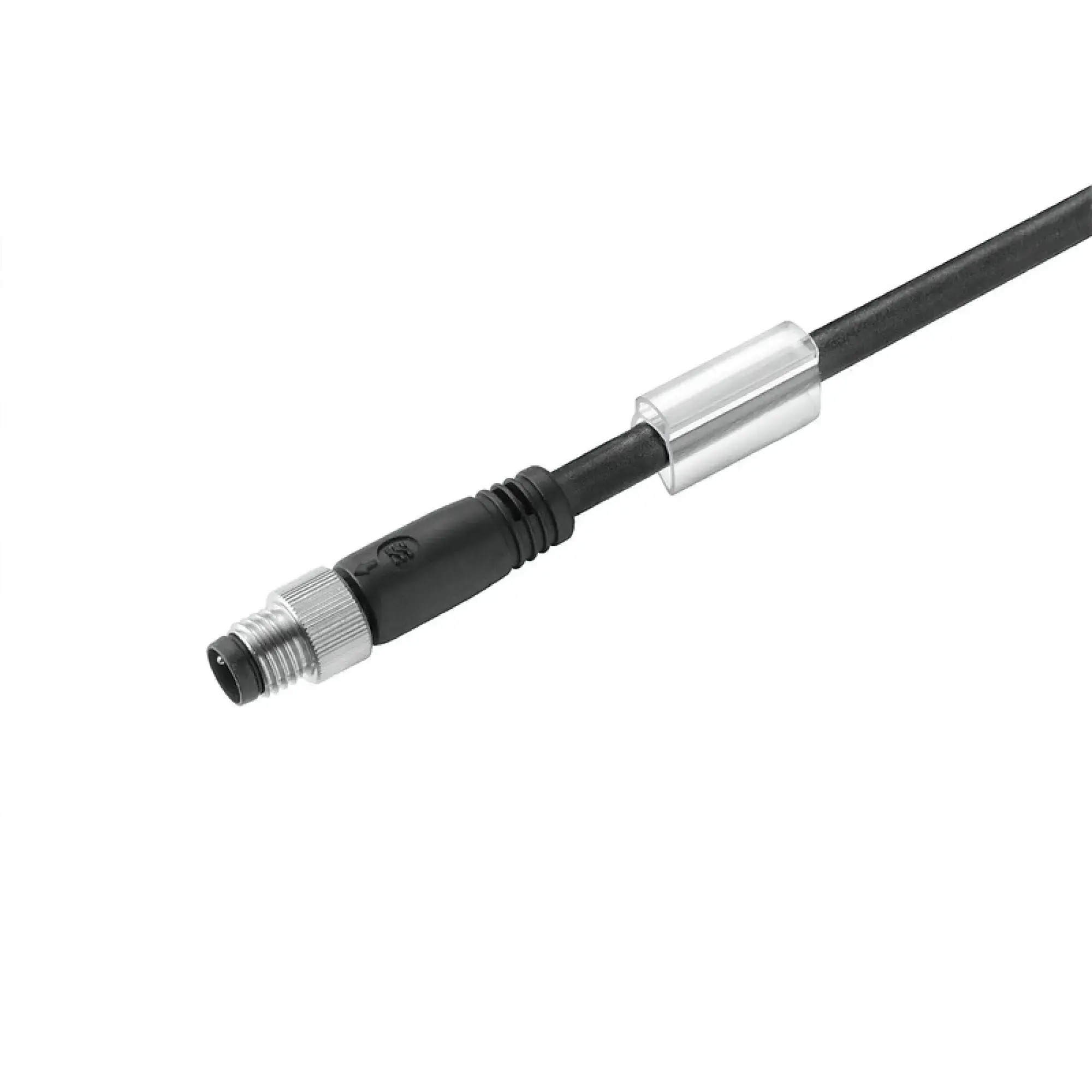
Weidmüller 1906561000 SAIL-M8G-3S10U Sensor Cable Guide
The Weidmüller 1906561000 SAIL-M8G-3S10U sensor cable is a field-level connection solution designed for reliable sensor and actuator wiring in industrial automation systems. In machine installations, a well-specified sensor cable influences not only signal continuity but also routing quality, mechanical durability, and long-term serviceability. That is why compact M8 connection solutions continue to matter in modern automation.
What Is the Weidmüller 1906561000 SAIL-M8G-3S10U?
The Weidmüller 1906561000 is an assembled sensor-actuator cable in the SAIL family, built around an M8 connection concept for compact field devices. A cable of this type is typically used where the device side requires a standardized circular connector and the installation side benefits from a ready-made, industrial-grade cable assembly.
Compared with improvised field wiring, assembled sensor cables provide more predictable connection quality and help standardize recurring installations. This is especially useful in machines that use many similar sensors or small actuators.
Why M8 Sensor Cables Remain Important
The Weidmüller 1906561000 M8 sensor cable is relevant because compact field devices still depend heavily on M8 connectivity. Many sensors operate in tight installation spaces where a larger connector would be impractical. M8 solutions support space-efficient wiring without sacrificing the advantages of industrial circular connectivity.
That balance is important in packaging machines, handling systems, small automation modules, and distributed sensor networks. When the cable is already assembled to a defined quality level, installation becomes more repeatable and easier to document.
Technical Value in Practical Use
The Weidmüller SAIL-M8G-3S10U sensor cable belongs to a product family intended for industrial sensor-actuator wiring. In practical terms, this means a cable built for field reliability, defined connector geometry, and consistent assembly quality. These factors matter because sensor wiring is often exposed to movement, vibration, and repeated maintenance access.
Another important point is standardization. In machine series production, using a defined assembled cable can reduce variation between builds and make spare-part handling easier for service teams. That operational consistency becomes a real advantage over time.
Typical Application Areas
The Weidmüller 1906561000 SAIL-M8G-3S10U cable is commonly considered for:
- Compact sensor connections
- Machine automation field wiring
- Actuator signal connections
- Packaging and assembly equipment
- Conveyor and handling systems
- M8 device interfacing in space-limited layouts
These applications benefit from a cable that is compact, standardized, and easy to integrate into a structured maintenance concept.
Selection Considerations
Before selecting the Weidmüller 1906561000 SAIL-M8G-3S10U, engineers should check connector orientation, pole configuration, cable route, installation space, environmental exposure, and device compatibility. The mechanical side of the connection is just as important as the electrical one in real machine environments.
It is also useful to consider how the cable will be replaced during service. Standardized ready-made sensor cables often help reduce downtime because they are easier to identify and install correctly.
FAQ
What type of product is the Weidmüller 1906561000 SAIL-M8G-3S10U?
It is an assembled industrial sensor-actuator cable based on an M8 connection concept, intended for compact field device wiring.
Why are M8 sensor cables useful in industrial automation?
M8 sensor cables are useful because they provide compact circular connectivity for small field devices, helping engineers save space while maintaining structured and reliable wiring.
Where is this cable commonly used?
It is commonly used in machine automation, packaging systems, conveyors, compact sensor layouts, and other industrial applications where M8-connected devices are installed.
Why choose an assembled sensor cable instead of improvised field wiring?
An assembled cable supports more consistent quality, easier replacement, clearer documentation, and often better long-term maintainability.
What should engineers verify before specifying this cable?
They should verify connector style, cable route, environmental conditions, device compatibility, and how the cable fits into the machine’s maintenance and spare-parts strategy.
For more information about Weidmüller, you can explore the sensor-actuator cabling portfolio.