
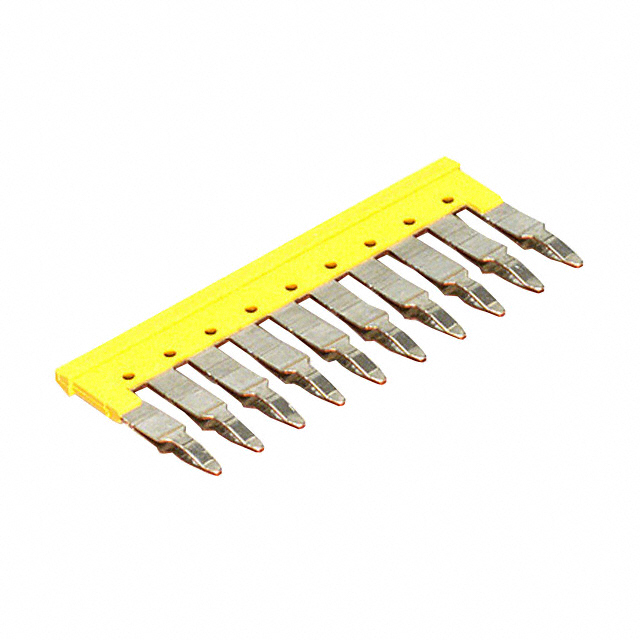
Weidmüller 1758260000 ZQV 4N/10 GE Jumper Bar Guide
The Weidmüller 1758260000 ZQV 4N/10 GE jumper bar is a terminal bridging accessory used to create common potential distribution in terminal block assemblies. In industrial panel engineering, jumper bars are essential for reducing repetitive wiring, improving layout consistency, and making terminal rows easier to understand during service. The Weidmüller ZQV 4N/10 GE jumper bar is one of those highly practical components that can significantly improve both installation efficiency and long-term maintainability.
What Is the Weidmüller 1758260000 ZQV 4N/10 GE?
The Weidmüller 1758260000 is a jumper bar from the W-series, intended for terminal bridging across multiple positions. It is associated with 10 poles and a 32 A nominal current, making it suitable for structured commoning tasks within compatible terminal block systems.
Instead of manually linking adjacent terminals with individual wires, a jumper bar provides a more standardized and visually disciplined way to distribute a common potential. This supports faster panel production and reduces the risk of inconsistent manual bridging.
Why Jumper Bars Matter in Terminal Engineering
The Weidmüller 1758260000 ZQV 4N/10 GE jumper bar matters because terminal blocks are often the backbone of cabinet organization. When common potentials are bridged cleanly and consistently, the entire installation becomes easier to read, easier to test, and easier to maintain.
For panel builders, this means less repetitive conductor handling and improved production speed. For maintenance teams, it means better visibility during troubleshooting. In high-density terminal rows, that clarity can save meaningful time during service interventions.
Technical Characteristics and Their Value
The Weidmüller ZQV 4N/10 GE jumper bar is associated with 10 poles, 32 A nominal current, yellow color coding, and a plugged fixing method. Product information also notes practical considerations related to breaking out contact elements and voltage implications when modified, which highlights the importance of correct application practice.
The yellow color can aid quick visual recognition, especially in organized terminal layouts where different accessory functions need to be identified at a glance. Plug-in mounting also supports faster assembly and cleaner installation than repeated manual wire links.
Typical Application Areas
The Weidmüller 1758260000 ZQV 4N/10 GE jumper bar is commonly relevant for:
- Terminal block bridging
- Common potential distribution
- W-series terminal assemblies
- Industrial control cabinets
- Panel production with repetitive terminal layouts
- Installations where clearer terminal organization is required
These applications all benefit from a modular, readable, and standardized approach to terminal commoning.
Engineering Considerations
Before specifying the Weidmüller 1758260000 ZQV 4N/10 GE, engineers usually check terminal compatibility, current load, number of positions to be bridged, service accessibility, and whether the jumper may need modification in the field. These checks are important because jumper bars should support not just electrical continuity but also practical serviceability.
It is also useful to plan terminal row labeling carefully. Jumper bars perform best when the full terminal arrangement is documented clearly and physically organized in a way that supports rapid understanding.
FAQ
What is the Weidmüller 1758260000 ZQV 4N/10 GE used for?
It is used to bridge multiple terminal points in a standardized way, creating common potential distribution without the need for repeated manual wire links.
Why is a jumper bar better than individual bridge wires?
A jumper bar is faster to install, visually cleaner, and more consistent. It also helps make terminal rows easier to understand during commissioning and maintenance.
Where is this jumper bar commonly used?
It is commonly used in W-series terminal assemblies, control cabinets, industrial panels, and any installation where several terminal points must share a common electrical path.
Why is the yellow color useful?
The yellow color helps with fast visual identification in structured terminal layouts, which can improve readability and reduce confusion during service work.
What should engineers check before specifying this jumper bar?
They should confirm terminal compatibility, number of bridged positions, current requirement, accessibility, and whether any field modification could affect the intended electrical use.
For more information about Weidmüller, you can review terminal and accessory solutions.