
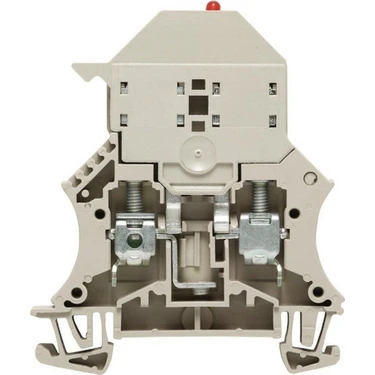
Weidmüller 1111630000 SK DEMO CH20M12 Modular Housing Sample Kit Guide
The Weidmüller 1111630000 SK DEMO CH20M12 modular housing sample kit is designed for engineers who need a practical way to evaluate DIN rail electronics housing before moving into series development. This product belongs to the CH20M family, a modular housing platform built for compact electronics used in control cabinets, interface modules, signal conversion, and industrial control applications. In real development workflows, a sample kit like this matters because enclosure selection influences PCB layout, connection planning, servicing access, and long-term installation reliability.
What the Weidmüller SK DEMO CH20M12 Actually Is
The Weidmüller SK DEMO CH20M12 sample kit is a predefined housing assembly supplied with the parts needed to assess the enclosure concept in a realistic engineering context. According to the manufacturer’s product data, it is part of the modular CH20M system and includes the necessary components for evaluation. The product is associated with a 2.5 mm² clamping range, which is relevant when engineers review conductor accommodation and interface design around the enclosure system.
This is not simply a plastic shell. In product development, housing format affects the mechanical footprint of an electronic module, the available space for components, the way terminals line up with the PCB, and the accessibility of wiring during installation or maintenance. That is why the Weidmüller 1111630000 modular housing sample kit is often valuable early in a project, when design decisions are still flexible.
Why the CH20M12 Platform Is Relevant in Industrial Electronics
The CH20M series is built for modular DIN rail electronics. In practice, that means the housing concept supports applications where space efficiency, scalability, and structured assembly are important. The wider CH20M family is known for flexibility, scalable design, and practical handling features for control cabinet electronics. For engineering teams, that translates into faster validation of board-to-housing fit, easier concept comparison, and fewer surprises later in mechanical integration.
The Weidmüller 1111630000 SK DEMO CH20M12 modular housing sample kit is especially relevant when a project requires a clean enclosure strategy for compact electronics. Typical examples include signal interface boards, monitoring units, compact automation modules, and slim control electronics installed on DIN rail systems.
Technical Characteristics That Matter in Real Design Work
When engineers assess a housing sample, they usually focus on a few practical questions. First, does the enclosure format support the intended PCB contour? Second, does the design provide enough room for component height and terminal placement? Third, can the final device be wired, labeled, and serviced efficiently once installed in a crowded cabinet?
For the Weidmüller SK DEMO CH20M12 enclosure set, the manufacturer notes that circuit board contour information and restricted zone information are available through related connection technology downloads. That point is important because PCB integration is rarely just about nominal width. Clearance, mating interface positions, and terminal geometry all shape whether a board can move smoothly from prototype to repeatable production.
Another useful aspect is the predefined nature of the sample kit. Instead of collecting several housing parts manually, development teams can review the enclosure concept as an assembled, coherent system. That simplifies evaluation meetings, speeds up design reviews, and supports more accurate mechanical decisions.
Best-Fit Use Cases for the Weidmüller 1111630000 Sample Kit
The Weidmüller 1111630000 SK DEMO CH20M12 modular housing sample kit is well suited for development scenarios where compact DIN rail electronics must be tested quickly. It is useful in automation cabinets, building control systems, signal isolation concepts, and custom industrial interface modules. In these environments, a modular housing system helps standardize the device structure while keeping room for project-specific electronics.
It is also helpful for engineering teams that need to compare enclosure platforms before committing to a PCB layout. Housing-first thinking is common in industrial product design because enclosure limitations influence connector placement, wire routing, front accessibility, and thermal assumptions. Using a sample kit early reduces redesign risk.
For more information about Weidmüller, it is worth reviewing the broader product ecosystem around housing, connection, and interface technology.
FAQ
Is the Weidmüller 1111630000 SK DEMO CH20M12 a finished electronic device?
No. The Weidmüller 1111630000 SK DEMO CH20M12 is a housing sample kit rather than a powered electronic module. Its role is to support enclosure evaluation, mechanical planning, and design validation for DIN rail electronics. It helps engineers understand how an eventual PCB-based product may fit and function inside a modular housing system.
Why would an engineer use a sample kit instead of going straight to production housing parts?
A sample kit reduces uncertainty during early design. It allows the team to inspect fit, handling, assembly logic, and integration constraints before committing to a final production architecture. In industrial electronics, that can save time because PCB dimensions, connector geometry, and front access all depend on the housing concept. Evaluating these factors early helps avoid design revisions.
What makes the CH20M12 format useful in compact control cabinet design?
The CH20M platform is intended for compact DIN rail electronics where modularity and structured installation matter. In dense cabinets, device width, terminal accessibility, and service ergonomics become critical. A modular housing system supports better organization, more predictable assembly, and improved consistency across product variants. That is why the Weidmüller 1111630000 SK DEMO CH20M12 modular housing sample kit is relevant well beyond the prototyping stage.
Does the product support PCB-oriented development work?
Yes. The manufacturer specifically references PCB contour and restricted zone information through associated connection technology resources. That tells engineers the housing is intended to be used as part of a proper board-level design workflow, not merely as a generic enclosure. For projects involving industrial electronics, that kind of documentation is highly useful because it supports layout discipline and mechanical accuracy.