
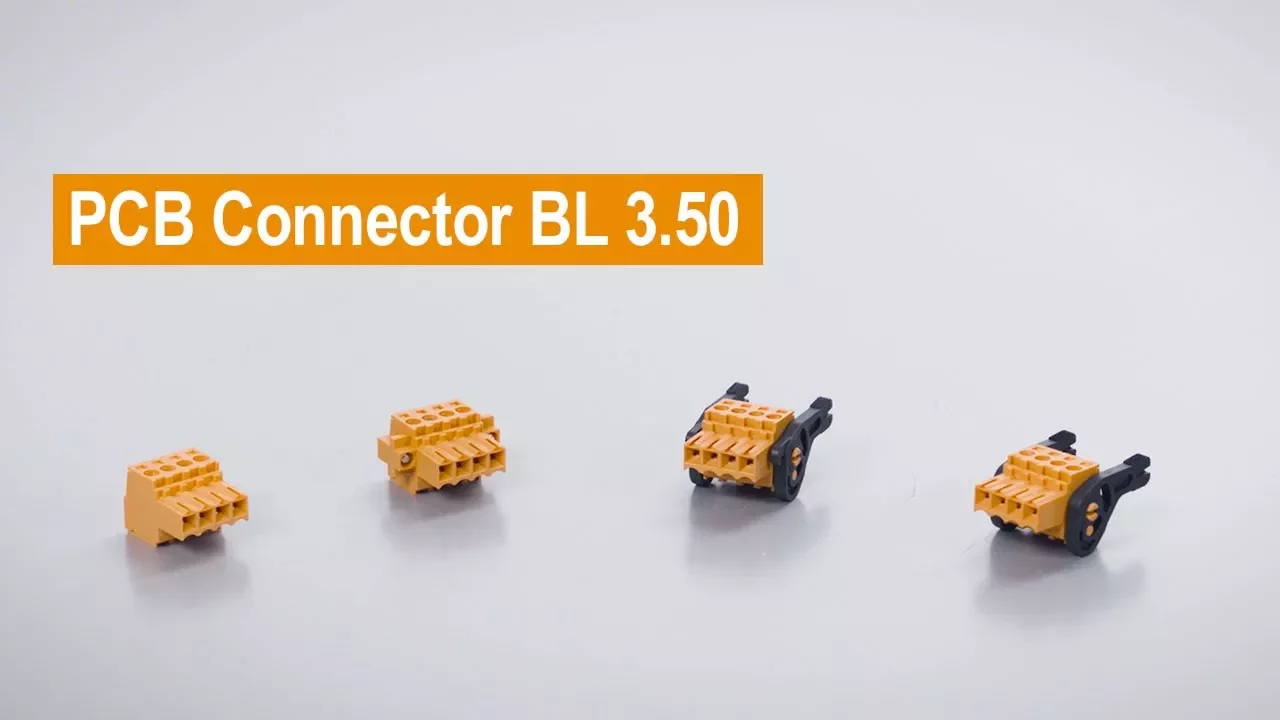
Weidmüller 1007730000 BL 3.50/10/90 SN SW BX PRT PCB Connector Overview
The Weidmüller 1007730000 BL 3.50/10/90 SN SW BX PRT PCB connector is a compact pluggable female connector intended for multi-pole board interfaces in industrial electronics. It is part of a connector class widely used where structured board wiring, modular assembly, and service-friendly replacement are more valuable than fixed one-time terminations. For users searching a Weidmüller 10-pole PCB connector, this part number often appears in legacy documentation and maintenance-oriented sourcing work.
The product description identifies it as a female plug with a 3.50 mm pitch, 10 poles, a 90° design, and clamping yoke connection, accepting conductors up to 1.5 mm². Available product information also states that this product is discontinued, which makes it especially relevant in replacement analysis rather than long-horizon new design planning.
Why a 10-Pole PCB Plug Is Useful
A 10-pole pluggable PCB connector helps group multiple conductors into a single organized interface. In industrial electronics, this supports efficient assembly, controlled routing, and cleaner maintenance procedures. Instead of disconnecting and rebuilding many individual terminations at the board, technicians can manage a more structured connector interface.
The Weidmüller 1007730000 PCB plug connector serves this kind of application well. It is suited to control products, interface boards, compact industrial devices, and systems where cable access and service time affect total lifecycle cost.
Key Technical Characteristics
The connector’s 3.50 mm pitch gives designers a compact footprint, while the 90-degree form supports side-entry cable orientation in enclosure-constrained designs. The clamping yoke connection remains a practical choice where consistent wire retention and conventional assembly methods are preferred.
Series rating data published for this connector family includes IEC current values up to 12 A depending on pole count and temperature, with rated voltages reaching 320 V under certain surge voltage class and pollution degree conditions. Material details for the family include PBT insulation, black housing, UL 94 V-0, and tinned Cu-alloy contacts. These are exactly the kinds of parameters engineers review when matching electrical performance with production and service requirements.
Lifecycle Perspective
The discontinued status of the Weidmüller 1007730000 BL 3.50/10/90 connector is the most strategic detail in its current profile. For new platform development, engineers generally prefer active parts with clear long-term availability. For installed equipment, however, discontinued part numbers remain critical because they preserve traceability in technical files and simplify exact-match maintenance support.
This is a common industrial reality. Equipment lifecycles often outlast active commercial production cycles for individual connector variants. As a result, legacy connector references continue to matter long after a product leaves the active catalog.
Application Relevance
The Weidmüller 1007730000 PCB female plug is relevant in replacement planning, controlled machine refurbishment, and documentation of existing electronics assemblies. It can also serve as a useful benchmark when identifying active substitute families with similar pitch, pole count, and connection orientation.
For more information about Weidmüller, it makes sense to compare active pluggable PCB connector families before selecting a redesign path.
FAQ
What is the Weidmüller 1007730000 used for?
It is used as a pluggable female PCB connector for board-to-wire interfaces in industrial and electronic equipment.
What are the main mechanical details?
The connector is specified with a 3.50 mm pitch, 10 poles, and a 90° orientation. It uses clamping yoke connection and accepts conductors up to 1.5 mm².
Is this product active or discontinued?
The published product page marks the Weidmüller 1007730000 as discontinued.
Why do discontinued PCB connectors still matter?
They are essential for legacy equipment support, service manuals, spare part planning, and controlled replacement work where exact connector family matching is important.
Can this connector still be useful in engineering work?
Yes. Even if it is no longer active, it remains valuable for documentation, troubleshooting, reverse engineering, and identifying compatible or successor connection solutions.
What should engineers do before using it in a new project?
They should review lifecycle, supply continuity, and potential active alternatives. In most new designs, choosing an active equivalent is the more sustainable approach.