
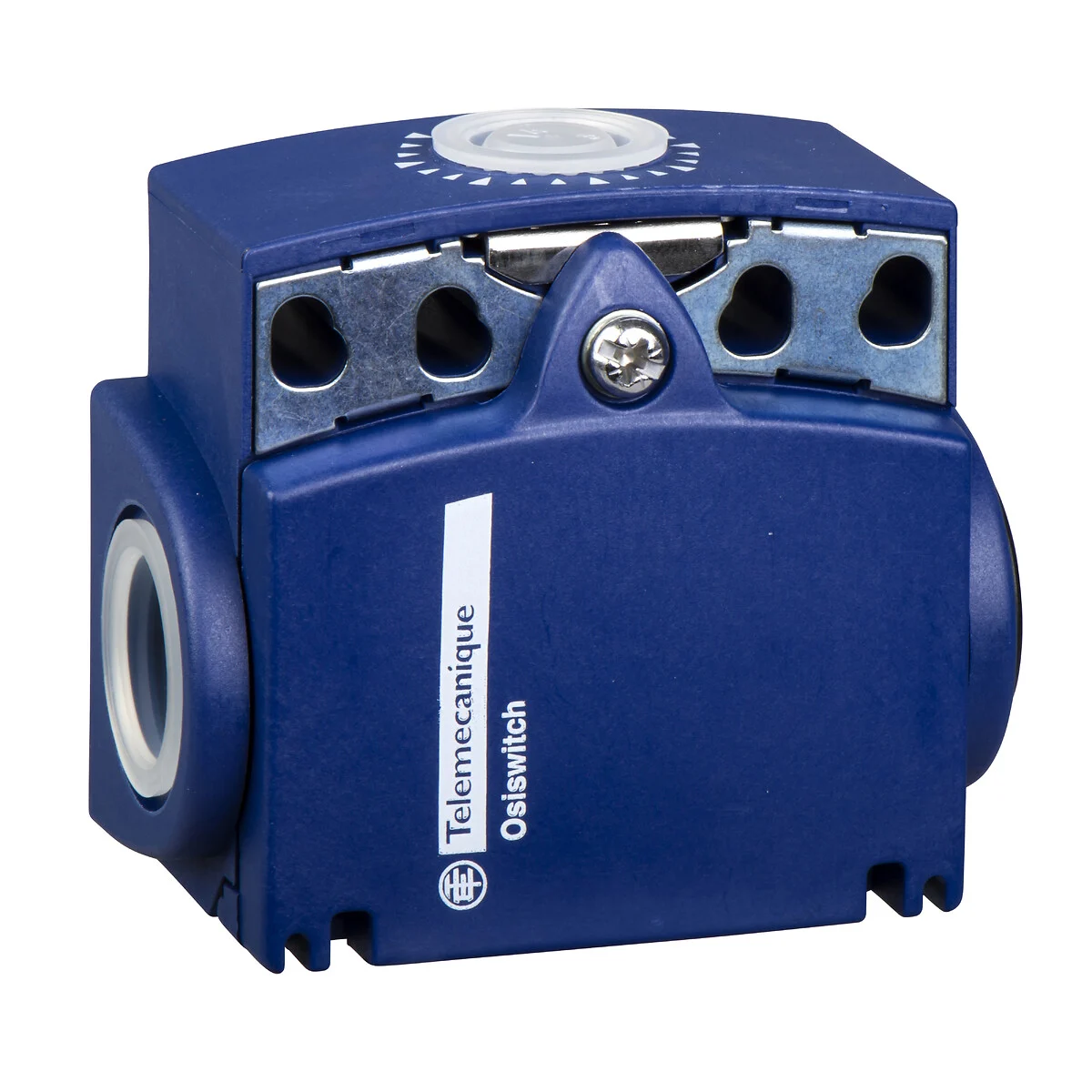
Telemecanique ZCE66 Limit Switch Head: Side Ball Bearing Plunger Mechanics and Industrial Use
The Telemecanique ZCE66 Limit Switch Head is a plunger-style operating head built for XC Standard limit switch assemblies. What makes ZCE66 distinctive in the field is its side ball bearing plunger approach, which is often chosen when a machine’s actuation geometry benefits from smooth rolling contact rather than sliding friction. In production lines, that difference is not cosmetic—it can directly affect repeatability, mechanical wear, and the stability of the switching point over time.
Because limit switches are frequently deployed as “ground truth” signals (the machine is physically here or not), teams often standardize their spare parts across a single family. For the broader portfolio used in industrial settings, you can also review Telemecanique sensor options commonly stocked for maintenance.
What ZCE66 Is in the XC Standard Architecture
ZCE66 is an operating head, not a full switch by itself. It mounts onto compatible limit switch bodies to create a complete unit. The operating head defines how the switch is actuated—plunger, lever, roller, rotary—and therefore defines how the machine’s motion should meet the switch.
Key Technical Characteristics (Field-Relevant)
- Product type: Limit switch head (ZCE family, XC Standard)
- Actuator style: Side ball bearing plunger, spring return
- Motion type: Linear actuation via plunger
- Use with: XC Standard compatible bodies (commonly XCKD/XCKP/XCKT/XCMD ecosystems)
- Temperature intent: Common industrial operating ranges depending on full assembly
Why Ball Bearing Plunger Matters
Many machines actuate a switch using a cam or ramp. If the contact point is a simple plunger tip, the cam can rub against it—creating friction, wear, and sometimes metal dust. A ball bearing plunger is designed to roll, not scrape. That can:
- Reduce wear on both the switch actuator and the machine cam
- Improve repeatable switching over many cycles
- Lower the risk of stick-slip behavior that causes inconsistent actuation
Selection Guidance: When to Choose Telemecanique ZCE66
In practical design reviews, Telemecanique ZCE66 is usually considered when:
- You have ramped or cam-driven actuation and want a rolling contact point.
- The switch is in a location where mechanical wear is expensive (hard-to-access stations).
- The process demands repeatability rather than just “it switches sometimes.”
Installation and Commissioning Notes
1) Align the Contact Geometry
Ensure the cam meets the plunger in a way that encourages rolling, not sideways forcing. Side-loading can reduce life and can cause inconsistent return behavior.
2) Set the Switching Point with Real Tolerances
Commissioning should consider vibration, thermal expansion, and mechanical play. Set the actuation point so that worst-case tolerances still provide decisive actuation.
3) Protect Against Overtravel
Even rugged industrial heads can be damaged by repeated hard overtravel. Mechanical stops can protect the assembly and preserve long-term stability.
Telemecanique ZCE66 Common Applications
- Conveyor end stops with cam ramps
- Packaging machines where timing depends on consistent actuation
- Transfer lines requiring durable mechanical feedback
FAQ
Is Telemecanique ZCE66 compatible with all XC bodies?
It is designed for specific XC Standard body families. Always confirm compatibility in the technical documentation for your exact body reference.
What’s the advantage over a standard plunger head?
The side ball bearing plunger provides rolling contact, typically reducing friction and wear during cam or ramp actuation.
Can I replace a different ZCE head with ZCE66?
Sometimes, if the body compatibility matches and the mechanical actuation geometry supports it. Validate mounting, switching point, and approach direction before standardizing the change.
Does the head determine electrical rating?
No. Electrical ratings are primarily defined by the switch body/contact block. The head defines the mechanical actuation method.