
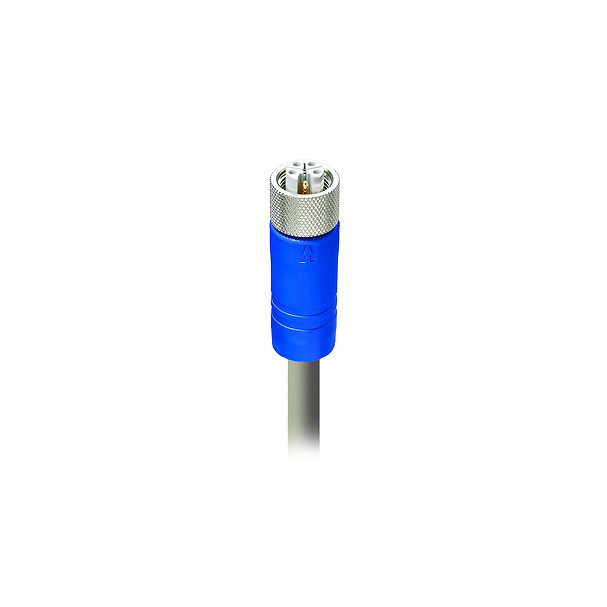
Telemecanique XZCPK75DL2 IO-Link Master Power Cable
The Telemecanique XZCPK75DL2 IO-Link Master power cable is designed for industrial automation environments where stable power transmission, clean connectivity, and durable cable construction are essential. This model is a single-ended pre-wired L-coded power cable with a straight female connector, 5-pin configuration, PUR cable jacket, 1.5 mm² conductor section, and 2 meter cable length.
In modern machine cabling, IO-Link master installations often require compact, reliable, and clearly specified connection components. The XZCPK75DL2 supports that need by combining a robust industrial cable structure with a practical straight connector format. Its PUR cable material is commonly preferred in demanding environments because it offers strong mechanical resistance and dependable performance in areas where movement, abrasion, and industrial handling may occur.
Key Technical Overview
This cable is built as an IO-Link Master single-ended pre-wired power cable. It uses a female straight connector with 5 pins, including a 4+FE arrangement. The cable has a 2 m length and a 1.5 mm² conductor cross-section, making it suitable for installations where short, direct power connectivity is required between control equipment and field-level automation components.
Where This Cable Fits
The Telemecanique XZCPK75DL2 is especially relevant in industrial control panels, machine automation systems, IO-Link master power connections, sensor-actuator networks, and factory cabling layouts that require a durable pre-wired cable. Its 2 meter length helps reduce unnecessary cable loops in compact machines while still allowing enough flexibility for practical routing.
Why Connector Format Matters
A straight female connector is often selected when the cable path has enough clearance and the installation benefits from a direct connection line. In comparison with angled versions, a straight connector can simplify identification, installation, and replacement in many machine layouts. The 5-pin design also supports structured wiring where power and functional grounding requirements must be clearly managed.
Material and Installation Benefits
The PUR jacket is a meaningful detail for users comparing industrial cables. It helps the cable withstand typical automation conditions better than lighter-duty jacket materials. For maintenance teams, the pre-wired structure also saves preparation time, reduces wiring inconsistency, and supports repeatable installation practices across multiple machines or production cells.
Practical Selection Notes
Before selecting the Telemecanique XZCPK75DL2 IO-Link Master power cable, users should confirm connector orientation, pin configuration, cable length, conductor section, routing distance, and environmental exposure. This model is best suited when a 2 m PUR cable with a straight female 5-pin L-coded connection matches the IO-Link master hardware requirement.
For broader Telemecanique product context, see Telemecanique information.
FAQ
What is the Telemecanique XZCPK75DL2 used for?
It is used as an IO-Link Master power cable in industrial automation systems. Its purpose is to provide a ready-made connection between compatible equipment and the power side of an IO-Link master setup.
What type of connector does XZCPK75DL2 have?
It has a straight female connector with a 5-pin 4+FE arrangement. This format is useful where a direct connector orientation is preferred and the system requires an L-coded power cable layout.
How long is the Telemecanique XZCPK75DL2 cable?
The cable length is 2 meters. This makes it suitable for compact machine installations, control cabinet connections, and short-distance field cabling where excess cable should be minimized.
What cable material is used?
The cable uses PUR material. PUR is widely valued in industrial environments because it offers strong durability for many automation applications where mechanical stress may be present.
Is XZCPK75DL2 suitable for every IO-Link system?
Not automatically. Compatibility depends on the IO-Link master connection type, pin layout, voltage and current requirements, cable routing conditions, and installation environment. Always compare the machine documentation with the cable specification before use.