
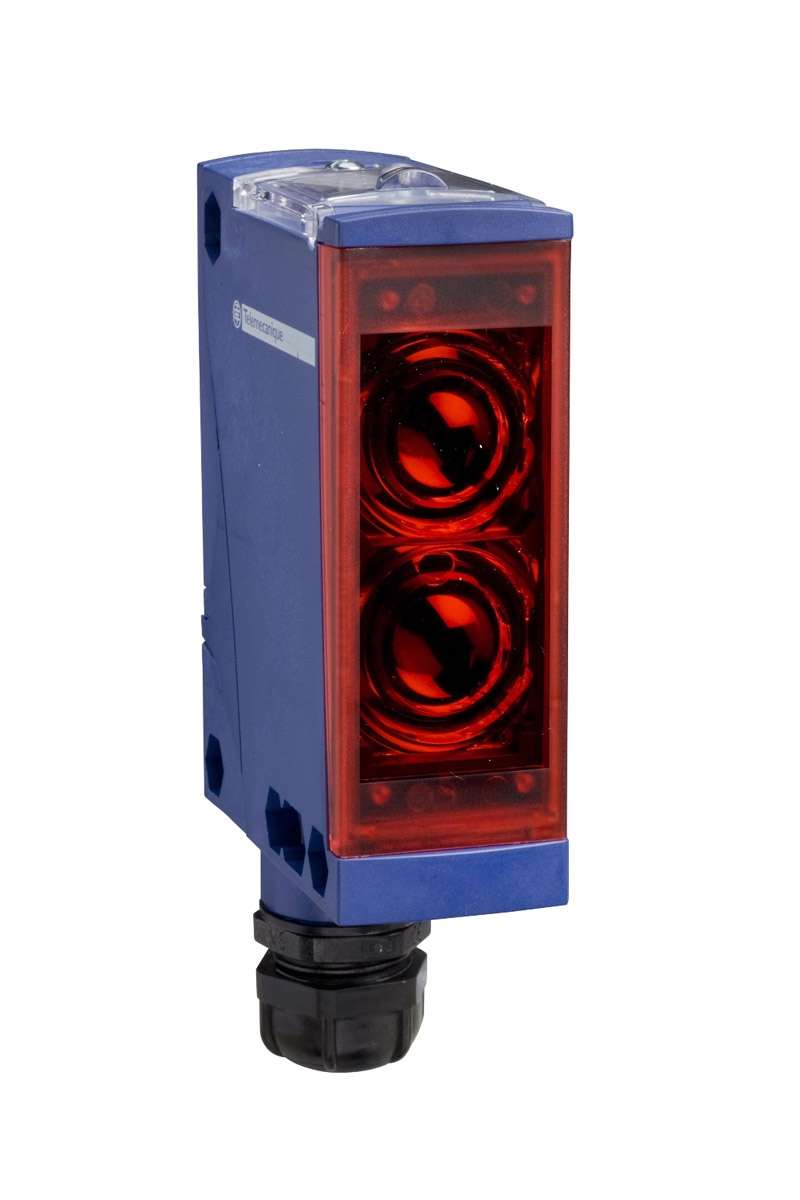
Telemecanique XUX5ARCNT16 Diffuse Photoelectric Sensor: AC/DC Flexibility with 1 C/O Relay Output
The Telemecanique XUX5ARCNT16 diffuse photoelectric sensor is engineered for industrial stations that need the simplicity of diffuse detection plus the integration flexibility of a wide AC/DC supply and relay-style output. In many brownfield facilities, power distribution and control standards vary across lines. A sensor that supports 24…240 VAC/DC can reduce design constraints during retrofits, while a 1 C/O changeover output helps interface with both PLC inputs and legacy control circuits.
Confirmed characteristics from official datasheet sources
Datasheet text specifies XUX5ARCNT16 as an XUX compact 92 × 71 photoelectric sensor with a diffuse detection system, nominal sensing distance Sn 2.1 m, 24…240 VAC/DC supply, terminals, and a discrete output function 1 C/O.
Technical snapshot
- Brand + code + type: Telemecanique XUX5ARCNT16 diffuse photoelectric sensor
- Detection system: Diffuse
- Nominal distance: Sn 2.1 m
- Supply: 24…240 VAC/DC
- Output: 1 C/O relay-style changeover
- Connection: Terminals
Where AC/DC wide supply becomes a strategic advantage
In practice, wide-supply sensors are chosen when the machine builder wants to avoid creating separate variants for different plants, or when an existing line uses AC power distribution near the sensing points. The Telemecanique XUX5ARCNT16 diffuse photoelectric sensor supports that operational reality by accepting 24–240 VAC/DC, which can simplify spares strategy and reduce the chance of incorrect voltage selection during maintenance.
Diffuse sensing with relay output: what to govern
Diffuse sensing depends on reflected light intensity. That is a fundamental behavior regardless of output technology. What changes with relay output is the electrical interface: a relay introduces contact behavior that must be managed through duty cycle discipline. If the sensor output is used to directly switch loads, contact wear can become a lifecycle concern. In most modern designs, the relay output is used as a signal (to PLC input or control logic) while actuators are switched by dedicated outputs. This architecture helps keep the Telemecanique XUX5ARCNT16 diffuse photoelectric sensor operating within a stable electrical stress envelope.
Commissioning approach: target variability and background governance
Diffuse sensors must be commissioned using a “worst-case optics” mentality. Validate detection on the darkest or least reflective product, and confirm that reflective backgrounds do not produce false positives. If a background surface is unavoidable, consider mechanical baffles or repositioning to reduce background return. The objective is not maximum sensitivity; it is stable discrimination between “target present” and “target absent.”
Because this model is often used in retrofit contexts, also validate that lighting changes (sunlight through doors, high-bay LED flicker reflections) do not impact detection. Even if the sensor is robust, the station environment can change. Embed the commissioning logic in a standardized checklist so the Telemecanique XUX5ARCNT16 diffuse photoelectric sensor is repeatable across lines.
Mechanical integration: protect the sensing face, stabilize the bracket
Dust and film on the sensing face reduces the return signal margin. Preventive cleaning cycles should be defined according to process risk (packaging dust, wood fibers, lubricant mist). Bracket rigidity remains critical: micro-movement can shift the aim point and change what the sensor “sees.” Cable routing should be strain-relieved so it does not twist the terminal area over time.
For cross-family reference, consult Telemecanique sensor.
FAQ
- What detection system is XUX5ARCNT16?
It is specified as a diffuse photoelectric sensor. - What is the nominal sensing distance?
Sn 2.1 m is listed. - What supply range is supported?
24…240 VAC/DC is specified. - What does 1 C/O mean?
A changeover relay contact, allowing NO/NC behavior via common wiring. - What causes most diffuse sensing instability?
Changes in target reflectivity, background reflectivity, or lens contamination—managed through commissioning and cleaning routines.
Entity recap: The Telemecanique XUX5ARCNT16 diffuse photoelectric sensor provides Sn 2.1 m diffuse detection with wide 24…240 VAC/DC supply and 1 C/O relay output on terminals, supporting retrofit-friendly industrial architectures.