
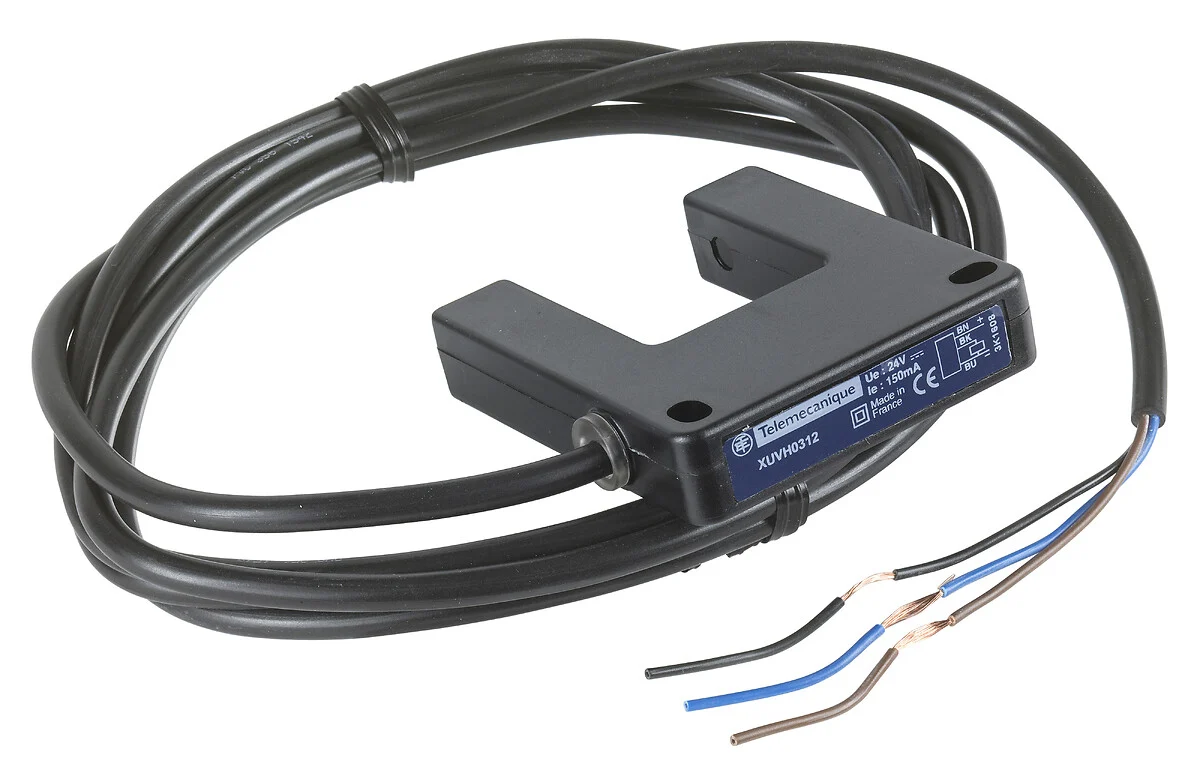
Telemecanique XUVH0312 UV Sensor Technical Guide
The Telemecanique XUVH0312 UV sensor is an industrial ultraviolet detection sensor developed for applications that require recognition of UV-reactive materials, fluorescent marks, adhesives, labels, coatings, or verification processes in automated production systems. UV sensors are widely used in industries where standard optical sensing methods may not provide enough contrast or accuracy.
Telemecanique Sensors has long been associated with industrial automation sensing technologies, and the XUV series is designed specifically for ultraviolet detection tasks. In production environments where invisible markings, transparent coatings, or fluorescent indicators are involved, UV sensors can provide a more dependable solution than traditional photoelectric sensors.
How the XUVH0312 UV Sensor Works
The Telemecanique XUVH0312 UV sensor emits ultraviolet light toward the target surface. Materials or markings treated with fluorescent compounds react to the UV illumination and become detectable by the sensor. This allows automated systems to identify labels, adhesives, inks, or coatings that may not be visible under normal lighting conditions.
This operating principle is commonly used in packaging inspection, print registration, adhesive verification, pharmaceutical production, electronics assembly, and quality control systems.
Key Technical Characteristics
The Telemecanique XUVH0312 UV sensor is designed for industrial machine integration and stable operation in automated environments. UV detection systems are often selected because they improve reliability when standard contrast sensors struggle with transparent, reflective, or low-contrast materials.
Typical applications include:
- Fluorescent label detection
- Glue presence verification
- UV mark inspection
- Packaging line validation
- Print registration control
- Invisible marking detection
- Industrial quality assurance systems
For additional product category information, visit Telemecanique industrial automation solutions.
Industrial Advantages of UV Detection
One of the primary benefits of ultraviolet sensing is improved reliability when detecting difficult materials. Traditional optical sensors can struggle with transparent films, glossy packaging, or low-contrast surfaces. UV technology helps isolate fluorescent targets from the surrounding environment, improving repeatability and reducing false detections.
In fast-moving manufacturing systems, this can support better quality control and fewer interruptions. Automated verification processes also help manufacturers maintain consistent production standards.
Installation and Integration
Correct positioning is important for stable UV sensor performance. Ambient lighting conditions, sensing distance, target material, and machine vibration should all be considered during installation. Industrial UV sensors are commonly integrated into automated inspection systems, conveyor assemblies, and machine control platforms.
Routine cleaning of optical surfaces is also recommended in dusty or adhesive-heavy production environments to maintain accurate detection.
Telemecanique XUVH0312 FAQ
What is the Telemecanique XUVH0312 UV sensor used for?
The sensor is used for ultraviolet-based detection tasks such as fluorescent label sensing, adhesive verification, invisible mark inspection, and automated quality control.
Why are UV sensors important in automation?
UV sensors can detect materials and markings that may not be visible using conventional optical sensing methods. This improves reliability in packaging, printing, and inspection systems.
Can XUVH0312 detect transparent materials?
UV sensing technology is often preferred for applications involving transparent films, fluorescent coatings, and low-contrast materials where standard sensors may struggle.
Where is XUVH0312 commonly installed?
It is commonly installed in packaging machinery, printing systems, labeling equipment, conveyor inspection points, and automated manufacturing lines.
Does environmental lighting affect UV sensors?
Strong ambient lighting conditions can influence sensor performance in some applications. Proper installation and alignment help maintain stable detection results.