
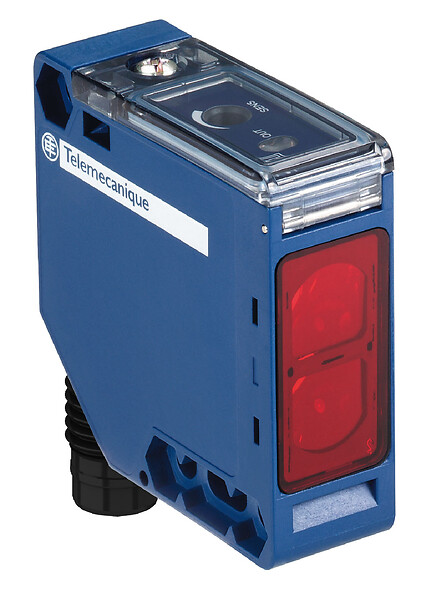
Telemecanique XUK0AKSAM12T Photoelectric Sensor: Technical Overview and Industrial Use
The Telemecanique XUK0AKSAM12T photoelectric sensor is a compact through-beam emitter designed for industrial object detection where stable long-range sensing is required. Built within the XUK family, this sensor is commonly used in automation lines, packaging systems, conveyors, material handling equipment, and machine safety-related detection layouts where an emitter and receiver arrangement provides reliable beam interruption monitoring.
What Is the Telemecanique XUK0AKSAM12T?
The Telemecanique XUK0AKSAM12T is a photoelectric sensor transmitter with an infrared through-beam detection system. In a through-beam setup, the emitter sends a light beam toward a separate receiver. When an object interrupts the beam, the system detects the change. This principle makes the sensor suitable for applications involving moving products, boxes, parts, pallets, or machine components.
This model uses a compact 50 x 50 mm housing with an 18 mm width, making it practical for installations where space is limited but sensing distance still matters. The device uses a plastic housing with PBT enclosure material and a PMMA lens, providing a robust structure for general industrial environments.
Key Technical Features
The XUK0AKSAM12T operates with a 12…24 V DC rated supply voltage and supports 10…36 V DC supply voltage limits. It uses a 3-wire connection and is supplied with a male M12 4-pin connector. The nominal sensing distance is 30 m when used with a compatible receiver, while the maximum sensing distance is listed as 35 m. These specifications make it suitable for long-range detection across conveyor lanes or machine openings.
The sensor includes reverse polarity protection, overload protection, and short-circuit protection. It also supports a switching capacity of up to 100 mA and a switching frequency of up to 250 Hz. The response and recovery delays are rated at 2 ms, supporting fast industrial processes where rapid detection is required.
Environmental Performance
The Telemecanique XUK0AKSAM12T photoelectric sensor is rated IP65, which helps protect it against dust and water jets in demanding production environments. It operates from -25 °C to 55 °C and can be stored from -40 °C to 70 °C. It also carries CE, CSA, and UL certifications, making it appropriate for many international automation projects.
Where This Sensor Is Commonly Used
This sensor is well suited for object presence detection, part counting, conveyor monitoring, packaging verification, and position detection in automated equipment. Because it uses through-beam sensing, it is especially helpful where reflective surfaces, dark materials, or inconsistent product colors may reduce the performance of other photoelectric sensing methods.
Installation Notes
The M12 connector simplifies installation and maintenance because the sensor can be disconnected without rewiring the full assembly. During setup, proper alignment between the emitter and receiver is important. For best performance, the beam path should be kept clean, mechanically stable, and protected from heavy contamination when possible.
For more information about Telemecanique, review compatible industrial automation products and related sensor families.
Telemecanique XUK0AKSAM12T FAQ
What type of sensor is the Telemecanique XUK0AKSAM12T?
It is a photoelectric sensor transmitter using infrared through-beam detection.
What is the sensing distance of XUK0AKSAM12T?
The nominal sensing distance is 30 m when paired with a suitable receiver. The maximum sensing distance is listed as 35 m.
Does this model use an M12 connector?
Yes. It has a male M12 4-pin connector, which supports easier installation and maintenance.
Is XUK0AKSAM12T suitable for harsh environments?
It has an IP65 protection rating and operates from -25 °C to 55 °C, making it suitable for many industrial environments.
What applications are suitable for this sensor?
It is commonly used in conveyors, packaging machinery, object detection systems, machine automation, and long-range beam-break detection.