
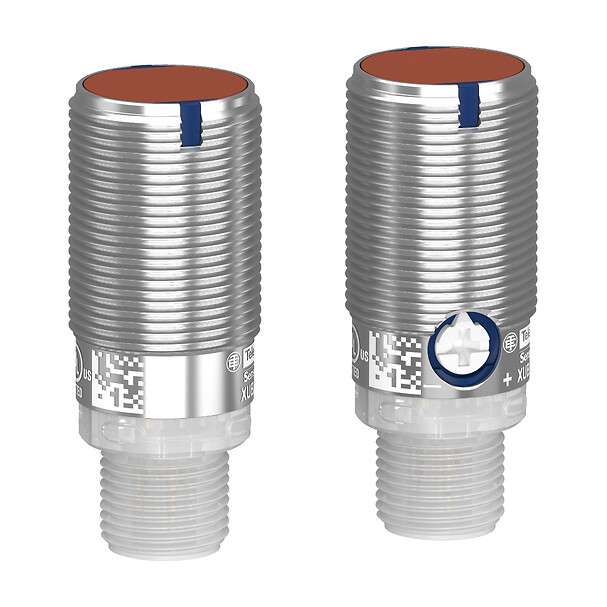
Telemecanique XUB2BPXNM12 Through-Beam Photoelectric Sensor: Long-Range Detection up to 30 m
When a process requires robust detection across wider machine spans—such as pallet conveyors, large packaging lines, or guarded safety corridors—through-beam photoelectric sensing is often the most stable approach. By separating the transmitter and receiver, the system becomes less dependent on target reflectivity and more tolerant of surface variation. The Telemecanique XUB2BPXNM12 through-beam photoelectric sensor is specified as a long-range through-beam system with a rugged cylindrical metal housing and PNP switching.
This technical guide explains the key specifications of the Telemecanique XUB2BPXNM12 through-beam photoelectric sensor, how to design the mechanical and electrical integration, and how to apply commissioning discipline that preserves stability over time.
Product Definition and Core Characteristics
The product datasheet and reference listing specify the Telemecanique XUB2BPXNM12 through-beam photoelectric sensor as:
- Detection system: through-beam system.
- Sensor design: cylindrical M18.
- Material: metal housing.
- Distance class: Smax 30 m (catalog listing).
- Output: discrete, PNP.
- Supply: DC supply circuit type.
- Connection: M12 connector.
- Environmental protection (listing): IP65 / IP67 / IP69K referenced in product listing.{index=44}
These specifications position the Telemecanique XUB2BPXNM12 through-beam photoelectric sensor for long-range industrial detection with strong mechanical durability and washdown-friendly protection classes where required.
Why Through-Beam Is Often the Most Predictable Choice
Through-beam sensing works by creating a direct optical corridor between the transmitter and receiver. Detection is defined by interruption of that corridor rather than by reflection from the target. This offers three practical advantages:
- Material independence: dark, matte, glossy, or irregular targets are all detected as “beam blocked.”
- Long range: suitable for large machine frames and wide conveyor lanes.
- Stable margins: less sensitivity to background reflections compared to reflex or diffuse methods.
For long corridors, stability is still governed by mechanical alignment. That is why M18 cylindrical geometry and metal housing matter: they support rigid mounting and reduce drift over time.
Mechanical Integration: Alignment, Brackets, and Line of Sight
To achieve predictable performance with the Telemecanique XUB2BPXNM12 through-beam photoelectric sensor:
- Use rigid brackets for both transmitter and receiver; vibration on either side can reduce signal margin.
- Protect the optical corridor from accidental obstruction by cables, guards, or product overhang.
- Commission with the real environment: dust, mist, and cleaning cycles can influence optical clarity.
Where washdown is present, the IP69K family reference supports washdown suitability; however, connector tightening and cable strain relief must be disciplined to preserve sealing at the interface.
Electrical Integration: PNP Switching and PLC Governance
PNP discrete output is a common standard in industrial automation. The integration rule is simple: define signal meaning and keep it consistent across stations. For example, specify whether “input ON” means “beam made” or “beam blocked.” Without that governance, troubleshooting becomes slower because different stations behave differently with the same apparent symptom.
Because the Telemecanique XUB2BPXNM12 through-beam photoelectric sensor uses M12 connectivity, replacement can be modular, supporting standardized cordsets and faster maintenance interventions.
Operational Use Cases
- Pallet or tote presence detection on wide conveyors.
- Transfer confirmation at large accumulation zones.
- Gate monitoring where a beam corridor is easy to protect mechanically.
For broader ecosystem guidance and compatible installation patterns, see Telemecanique sensor references.
FAQ
- What detection method does the Telemecanique XUB2BPXNM12 through-beam photoelectric sensor use?
It is specified as a through-beam detection system. - What distance class is referenced?
The listing references Smax 30 m. - What housing format is used?
It is specified as a cylindrical M18 metal design. - What output type is provided?
It is referenced as discrete PNP output. - What is a common commissioning mistake?
Aligning the beam under ideal conditions but not validating margin after guarding, cable routing, and normal production contamination.
With rigid mounting, protected line-of-sight, and clear PLC signal governance, the Telemecanique XUB2BPXNM12 through-beam photoelectric sensor delivers stable long-range detection suitable for high-uptime industrial automation.