
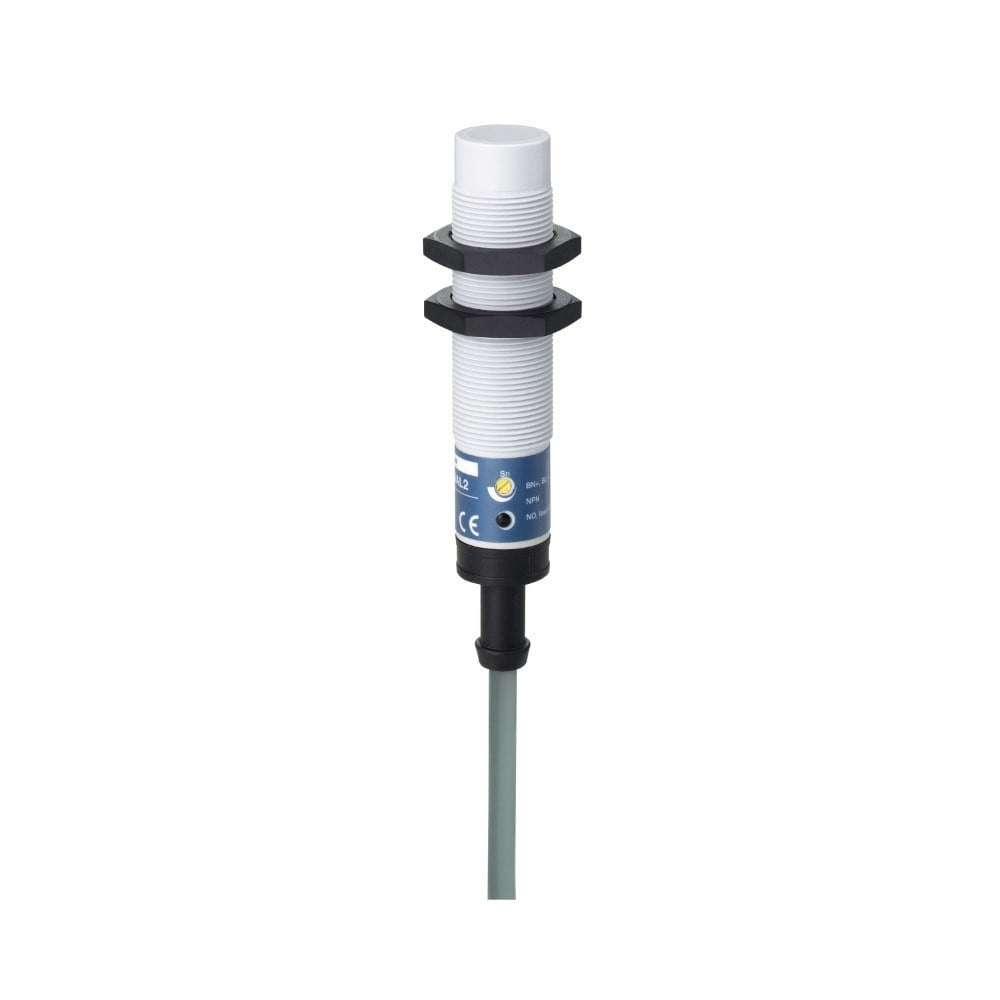
Telemecanique XT218A1FAL2 Capacitive Proximity Sensor: M18 AC Two-Wire Profile
The Telemecanique XT218A1FAL2 capacitive proximity sensor is designed for reliable detection of insulated or conductive materials, where inductive sensing would be limited to metals only. Capacitive technology enables detection of a broader range of targets—such as plastics, paper stacks, liquids through non-metallic walls, or mixed materials—while still providing a simple discrete output for automation logic.
What the XT218A1FAL2 is
The Telemecanique XT218A1FAL2 capacitive proximity sensor is an XT-series cylindrical M18 sensor with a plastic enclosure. It is specified as non flush mountable, with Sn 8 mm, a 2-wire discrete output, and 24…240 V AC supply capability. The unit is delivered with a 2 m cable connection and includes sensitivity adjustment via potentiometer.
Core specifications
- Brand + code + type: Telemecanique XT218A1FAL2 capacitive proximity sensor
- Sensor design: Cylindrical M18, fixed body, size 78 mm
- Material: Plastic enclosure
- Mounting: Non flush mountable
- Nominal sensing distance (Sn): 8 mm
- Output: Discrete, 2-wire, AC, 1 NO
- Supply: 24…240 V AC (50/60 Hz)
- Delay response: 30 ms
- Max switching current: 300 mA
- Protection: IP67 double insulation
- Switching frequency: ≤ 25 Hz
Non-flush mounting: why it is specified
Capacitive sensors can be influenced by surrounding materials because they respond to changes in capacitance. The non-flush requirement on the Telemecanique XT218A1FAL2 capacitive proximity sensor is a practical constraint that helps preserve a stable sensing field. When installed too close to surrounding metal or dense structures, the baseline can shift and cause early switching or reduced usable adjustment range.
Sensitivity adjustment and commissioning discipline
The Telemecanique XT218A1FAL2 capacitive proximity sensor includes a potentiometer adjustment. In commissioning, the objective is to tune sensitivity so the sensor reacts to the intended target and ignores background structures, residue, or product build-up. A disciplined approach is to set sensitivity under real operating conditions (normal humidity, typical product variance, expected contamination patterns) and validate across the full machine tolerance stack.
Where this sensor fits best
- Level detection through plastic or glass walls (where appropriate)
- Presence detection of non-metallic items on conveyors
- Material flow confirmation in chutes and hoppers
- Packaging and assembly lines where target materials vary
Maintenance and stability considerations
Capacitive sensing is sensitive by design, so mechanical and environmental stability matters. If performance drifts, check for product residue on the sensing face, bracket movement, and changes to nearby materials. Use the LED as a quick state check, then confirm that the sensitivity setting remains aligned with the current process conditions.
For broader system consistency across sensor families, review Telemecanique sensor references to align mounting practices and wiring conventions across projects.
FAQ
- What does the Telemecanique XT218A1FAL2 capacitive proximity sensor detect?
It is specified for detection of insulated or conductive materials using capacitive technology. {index=58} - Is XT218A1FAL2 a two-wire AC sensor?
Yes. It is 2-wire with an AC output circuit type and 24…240 V AC supply. - Is the output normally open?
Yes, it is specified as 1 NO. - What is the nominal sensing distance?
Sn is 8 mm. - Is it flush mountable?
No. It is specified as non flush mountable.