
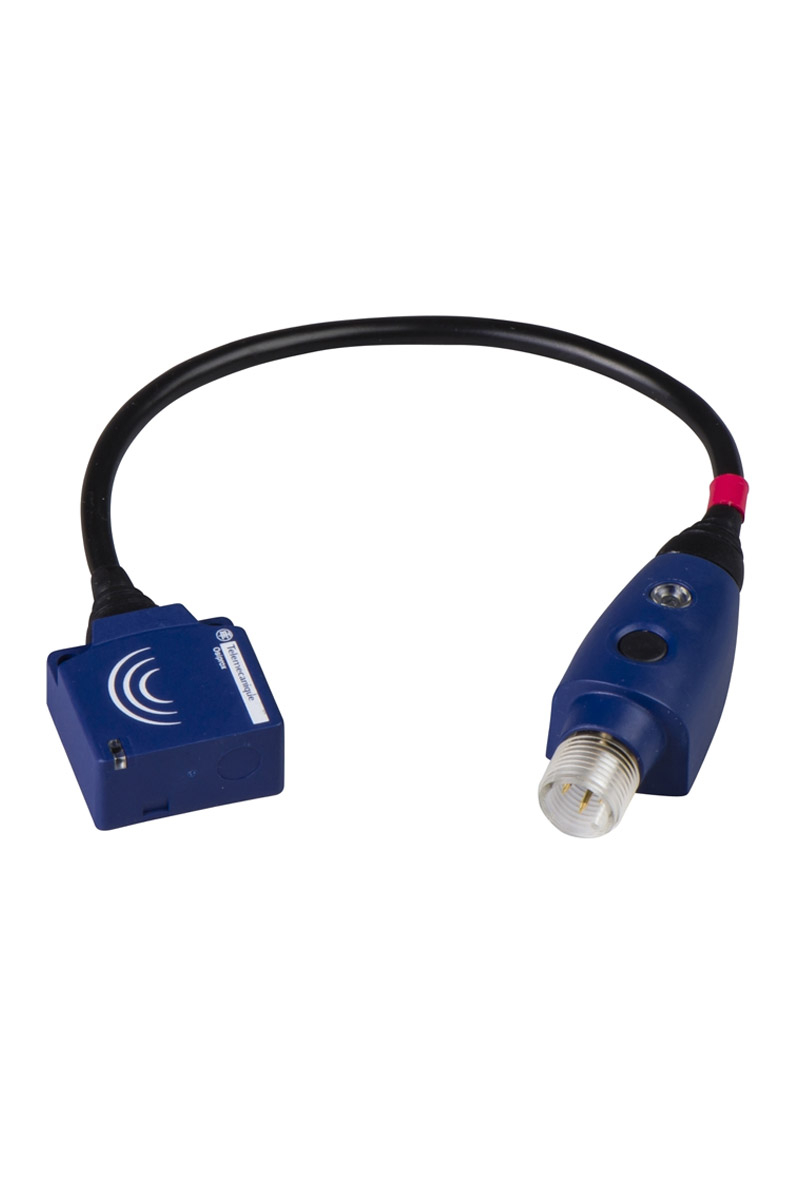
Telemecanique XS9E11RMBL01U20 Ultrasonic Sensor for Industrial Detection Applications
The Telemecanique XS9E11RMBL01U20 Ultrasonic Sensor is designed for reliable object detection in demanding industrial environments where precision and operational stability are essential. Ultrasonic sensing technology has become increasingly important in automated manufacturing systems because it allows accurate detection of solid, liquid, transparent, or irregularly shaped objects without physical contact.
This industrial sensor is widely used in packaging lines, conveyor systems, material handling operations, warehouse automation, and smart factory applications. Thanks to its durable housing and advanced sensing capability, the XS9E11RMBL01U20 delivers consistent performance even in environments affected by dust, humidity, vibration, or changing temperatures.
For engineers and automation professionals seeking dependable industrial sensing technology, this model offers a practical solution for improving process efficiency and minimizing production downtime.
Key Technical Features of the Telemecanique XS9E11RMBL01U20 Ultrasonic Sensor
The Telemecanique XS9E11RMBL01U20 is engineered to support industrial automation systems that require high detection accuracy and dependable long-term operation.
- Ultrasonic sensing technology for non-contact object detection
- Reliable performance with transparent or reflective materials
- Compact industrial housing for integration into automated systems
- High resistance to dust and moisture in industrial environments
- Stable switching performance for production automation
- Suitable for conveyor, packaging, and material handling systems
- Designed for continuous industrial operation
Unlike conventional optical sensors, ultrasonic sensors are less affected by color, lighting conditions, or surface reflectivity. This makes the XS9E11RMBL01U20 especially useful in facilities where environmental conditions can change throughout the production cycle.
Industrial Applications of the XS9E11RMBL01U20 Ultrasonic Sensor
The Telemecanique XS9E11RMBL01U20 Ultrasonic Sensor is commonly integrated into modern industrial automation infrastructure because of its versatility and dependable sensing range.
In packaging facilities, the sensor helps monitor product positioning and detect moving objects on high-speed conveyor systems. In warehouse automation systems, it assists with pallet positioning, object counting, and storage optimization.
Manufacturing plants also use ultrasonic sensors for liquid level detection and presence sensing in automated machinery. Since ultrasonic technology can detect transparent materials effectively, it becomes highly valuable in bottling and pharmaceutical industries.
The sensors compact construction also allows installation in limited spaces where larger industrial sensors may not fit efficiently.
Advantages of Ultrasonic Sensing Technology
Ultrasonic sensors continue to gain popularity because they offer several operational advantages over traditional sensing technologies.
One of the biggest benefits is detection reliability. Optical sensors may struggle with shiny, transparent, or dark-colored surfaces, but ultrasonic sensing remains stable regardless of object color or lighting conditions.
Another major advantage is reduced maintenance requirements. Since the sensor operates without physical contact, wear and tear are minimized over time. This contributes to lower maintenance costs and improved production continuity.
The XS9E11RMBL01U20 is also suitable for harsh industrial environments where dust, moisture, or airborne particles can interfere with standard photoelectric sensors.
Why Industrial Automation Systems Depend on Reliable Sensors
Industrial automation systems rely heavily on accurate data collection. Sensors act as the foundation of automated decision-making processes across production lines and intelligent manufacturing facilities.
A reliable ultrasonic sensor helps reduce operational interruptions while improving machine efficiency. In smart manufacturing environments, precise object detection supports quality control, inventory management, and production optimization.
The Telemecanique XS9E11RMBL01U20 helps operators maintain stable automation performance while minimizing unexpected detection failures that could disrupt manufacturing operations.
For more information about industrial automation technologies and sensors, visit
Telemecanique solutions.
Installation and Maintenance Considerations
Proper installation is essential for maximizing sensor performance. The XS9E11RMBL01U20 should be mounted securely in a position that allows unobstructed ultrasonic wave transmission.
Routine inspections help ensure reliable long-term operation. Industrial facilities should periodically verify cable integrity, mounting stability, and sensor cleanliness to maintain optimal detection accuracy.
Because ultrasonic sensors are designed for non-contact operation, they generally require less maintenance than mechanical detection devices.
Telemecanique XS9E11RMBL01U20 Frequently Asked Questions
What is the main function of the Telemecanique XS9E11RMBL01U20 Ultrasonic Sensor?
This sensor is designed for non-contact object detection in industrial automation systems. It helps detect materials, products, or objects accurately without requiring physical contact.
Where is the XS9E11RMBL01U20 commonly used?
The sensor is widely used in conveyor systems, packaging equipment, warehouse automation, material handling systems, and manufacturing facilities that require reliable object detection.
Can ultrasonic sensors detect transparent materials?
Yes. One of the main advantages of ultrasonic sensing technology is its ability to detect transparent, reflective, or irregularly shaped objects more effectively than many optical sensors.
Why choose an ultrasonic sensor instead of a photoelectric sensor?
Ultrasonic sensors are less affected by lighting conditions, surface color, dust, or reflective materials. This improves reliability in difficult industrial environments.
Is the Telemecanique XS9E11RMBL01U20 suitable for harsh industrial environments?
Yes. The sensor is designed for industrial environments where dust, vibration, and moisture may be present. Its durable construction supports long-term industrial operation.
How does ultrasonic sensing improve automation efficiency?
Accurate object detection helps automation systems operate more consistently, reduces downtime, supports quality control processes, and improves production efficiency across industrial facilities.
Does the sensor require frequent maintenance?
Ultrasonic sensors generally require minimal maintenance because they operate without physical contact. Regular inspections and proper installation are usually sufficient for long-term performance.