
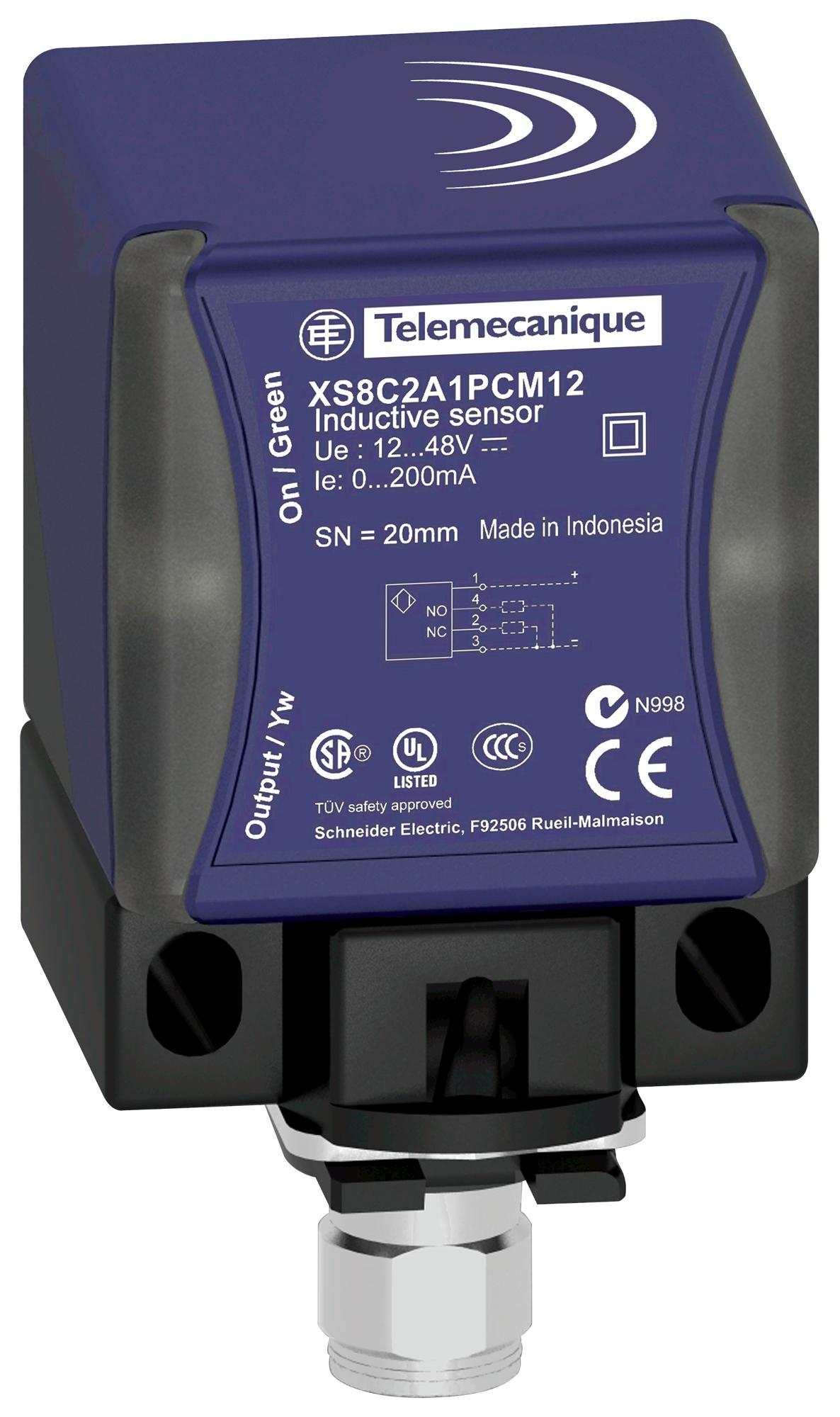
Telemecanique XS8C2A1MAU20 Inductive Sensor Technical Guide
The Telemecanique XS8C2A1MAU20 inductive sensor is developed for industrial environments where accurate non-contact detection of metallic targets is required. Inductive proximity sensors are widely used in modern automation because they deliver dependable operation without requiring direct physical contact with the detected object.
The XS8C2A1MAU20 belongs to the Telemecanique XS series, known for industrial reliability and long operational life. These sensors are frequently integrated into automated machinery, conveying systems, robotic equipment, production cells, and industrial positioning applications.
How the XS8C2A1MAU20 Works
The sensor generates an electromagnetic field from its sensing face. When a metallic object enters this field, the sensor detects the change and switches its output state. This process occurs without contact, reducing wear and helping maintain stable long-term performance.
Because there are no moving mechanical parts involved in the detection process, inductive sensors are highly suitable for repetitive industrial cycles where traditional mechanical switches may wear out more quickly.
Technical Features
- Sensor type: Inductive proximity sensor
- Series: Telemecanique XS8
- Industrial application: Metal object detection
- Mounting style: Industrial machine mounting
- Connection: Industrial cable connection
- Protection rating: IP-rated industrial housing
- Technology: Non-contact sensing
Telemecanique XS8C2A1MAU20 Industrial Usage Areas
The XS8C2A1MAU20 is commonly used in automation systems that require accurate target detection under continuous operation. Production lines often depend on sensors to confirm part presence, machine position, or movement sequencing.
In conveyor systems, the sensor can identify metallic carriers or components moving through the production process. In robotic systems, it may provide positioning feedback for moving assemblies. In packaging machinery, sensors help synchronize process timing and object flow.
Its industrial design allows integration into systems exposed to vibration, repetitive movement, and changing operating conditions.
Benefits of Non-Contact Detection
One major advantage of inductive sensors is reduced mechanical stress. Since the sensor does not physically touch the target, there is less risk of mechanical degradation over time. This supports lower maintenance requirements and more stable automation performance.
Non-contact sensing also improves operational consistency in applications with fast cycling or repetitive movement. This makes inductive sensors a preferred choice across manufacturing industries.
For more information about industrial automation components, visit Telemecanique industrial solutions.
Telemecanique XS8C2A1MAU20 FAQ
What is the Telemecanique XS8C2A1MAU20 used for?
It is used for non-contact detection of metallic objects in industrial automation systems.
How does an inductive proximity sensor operate?
The sensor creates an electromagnetic field and detects changes caused by nearby metal targets.
Can the XS8C2A1MAU20 work in industrial environments?
Yes. It is designed for industrial automation applications where stable and reliable operation is required.
Why are inductive sensors popular in factories?
They provide reliable metal detection without physical contact, helping reduce maintenance and improve operational consistency.
What industries commonly use inductive proximity sensors?
Manufacturing, packaging, logistics, robotics, automotive production, and machine automation industries frequently use these sensors.
Does the XS8C2A1MAU20 require physical contact with the target?
No. The sensor performs detection electronically without touching the metallic object.