
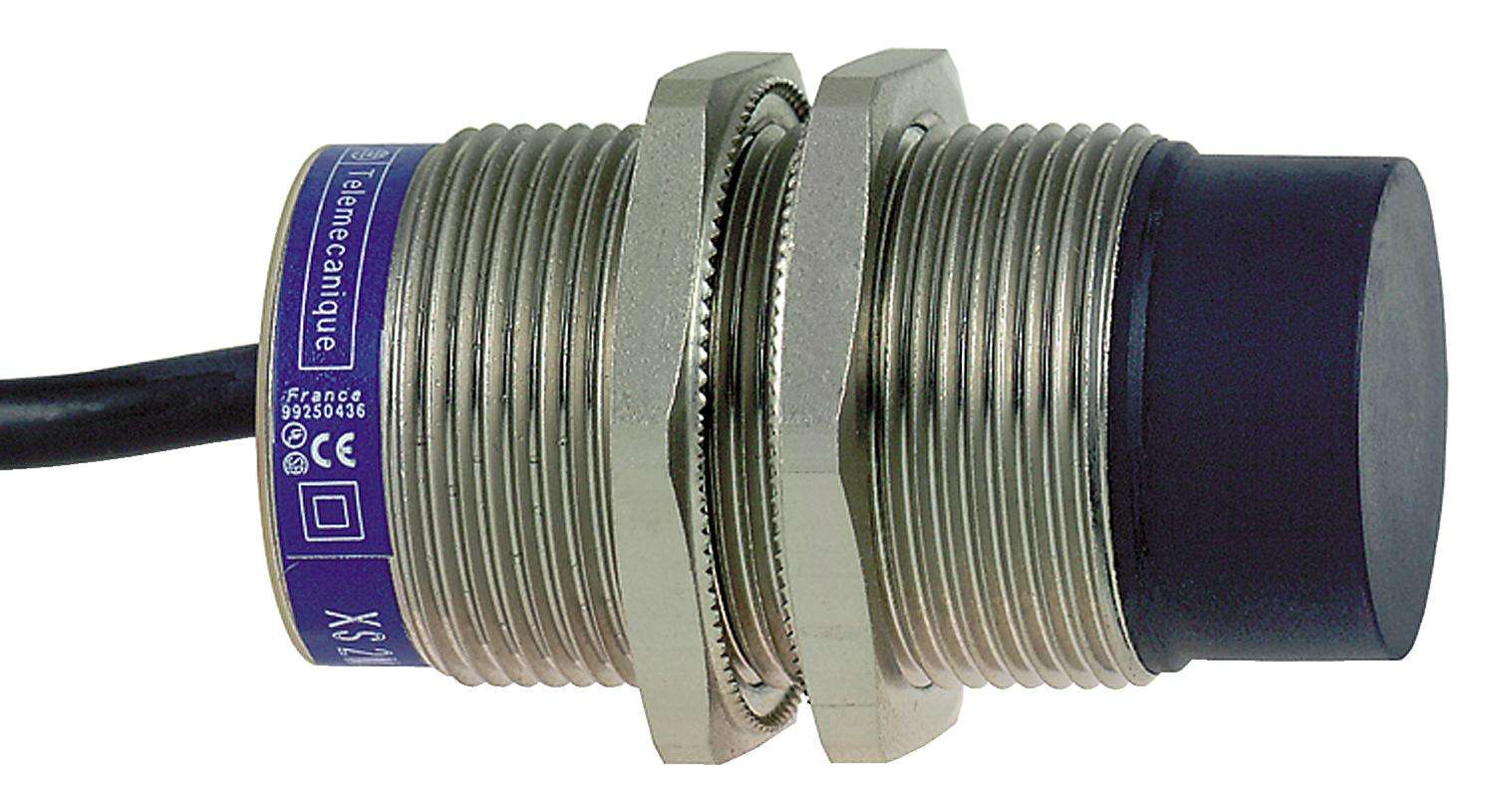
Telemecanique XS630B4PAL2 Inductive Proximity Sensor: DC PNP NO in an M30 Body
The Telemecanique XS630B4PAL2 inductive proximity sensor is a DC, three-wire, PNP device built around a rugged M30 cylindrical format. It is commonly selected when a longer nominal sensing distance is needed in a compact installation footprint, while still retaining a familiar PNP switching model for PLC digital inputs.
Product definition
At its core, the Telemecanique XS630B4PAL2 inductive proximity sensor detects metal targets without physical contact by generating an electromagnetic field at the sensing face. Within the XS6 series concept, it uses a nickel-plated brass enclosure and is intended for general-purpose industrial deployment, including mobile equipment scenarios where electrical protection and mechanical durability are required.
Technical specifications
- Brand + code + type: Telemecanique XS630B4PAL2 inductive proximity sensor
- Design: Cylindrical M30, fixed body, 66 mm length
- Mounting: Non-flush mountable
- Nominal sensing distance (Sn): 22 mm
- Output: Discrete, 3-wire, PNP, 1 NO
- Supply: 12…48 V DC with reverse polarity protection
- Connection: Cable, 2 m length
- Protection: IP68 and IP69K
- Status LED: Yellow LED indicating output state
Choosing NO output: practical logic implications
A normally open output aligns with many standard PLC input conventions: the input transitions active when a metal target is detected at the set operating point. When documenting IO, avoid generic descriptions like “M30 prox.” Instead, write Telemecanique XS630B4PAL2 proximity sensor (PNP NO). This small governance step reduces the most common commissioning issue: installing the right mechanics with the wrong electrical behavior.
Non-flush mounting and mechanical planning
Because the Telemecanique XS630B4PAL2 inductive proximity sensor is non-flush mountable, you should allocate clearance around the sensing area to prevent interference from adjacent metal. This is especially relevant when several sensors are installed side-by-side on a tight fixture. Non-flush designs typically offer more reach, and the installation discipline ensures you actually receive that benefit.
Environmental fit and durability strategy
Protection ratings such as IP68 and IP69K indicate a design intent for harsh environments, including water exposure. Still, high reliability depends on the system, not just the component: cable strain relief, proper gland usage, and keeping the sensing face free of heavy debris all matter. In preventive maintenance routines, visually confirm the LED behavior during actuation and check that the cable jacket remains intact near clamps and moving parts.
Where this sensor is typically used
- Machine guarding and end-stop confirmation using metal target flags
- Packaging and material handling lines requiring longer-range detection
- Fixture presence checks in assembly cells
- Mobile equipment with variable DC rails within rated limits
Procurement clarity and lifecycle control
If your plant uses multiple M30 sensors, establish a naming standard that includes brand, code, and type. For example: “Telemecanique XS630B4PAL2 inductive sensor” as the approved spare. This minimizes the risk of substituting an AC/DC two-wire variant or a normally closed output model during urgent downtime.
To align product families and mounting rules across projects, you can review Telemecanique sensor resources for consistent selection criteria.
FAQ
- What voltage does the Telemecanique XS630B4PAL2 inductive proximity sensor require?
It is rated for 12…48 V DC with reverse polarity protection. - Is the output PNP and normally open?
Yes. It is a 3-wire PNP sensor with 1 NO discrete output function. - Does it use a connector or a cable?
This model uses a 2 m fixed cable connection. - Is XS630B4PAL2 flush mountable?
No. It is non-flush mountable and should be installed with clearance to nearby metal. - What protection rating does it have?
It carries IP68 and IP69K ratings, supporting demanding industrial environments.