
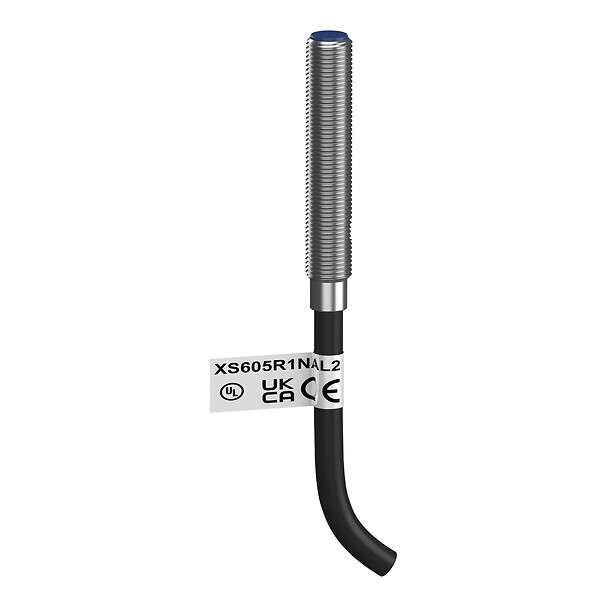
Telemecanique XS605R1NAL2 Inductive Sensor: Miniature M5 Metal Detection with NPN NO Output
In compact automation, sensing points must fit inside small mechanisms without sacrificing reliability. Inductive proximity sensors are frequently the preferred choice for metal detection because they are immune to ambient light and largely tolerant to dust and oil mist. The Telemecanique XS605R1NAL2 inductive sensor is specified as a miniature M5 sensor with a fixed body format designed for close-range detection where space and mechanical stability are critical.
This technical guide explains how the Telemecanique XS605R1NAL2 inductive sensor is specified, what its NPN NO output implies for PLC wiring, and how to achieve repeatable switching behavior through disciplined mechanical integration.
Product Definition and Core Specs
The product reference describes the Telemecanique XS605R1NAL2 inductive sensor as a miniature inductive proximity sensor with:
- Size: cylindrical M5 sensor design.
- Body: stainless steel housing.
- Sensing distance: Sn 1.5 mm.
- Output: discrete, 3-wire, NPN, 1 NO.
- Supply: 12…24 VDC with reverse polarity protection.
- Connection: 2 m cable.
- Protection: IP67.
These points are explicitly listed in the Telemecanique product reference page for XS605R1NAL2. {index=29}
Why Miniature M5 Inductive Sensing Is Used
Miniature inductive sensors deliver reliable metal detection in very small spaces, which makes them suitable for:
- End-position confirmation on miniature slides or pneumatic actuators.
- Presence detection of metal reference pins in fixtures.
- Cam or lever position detection in compact packaging mechanisms.
The tradeoff is a short sensing window. With an Sn of 1.5 mm, the Telemecanique XS605R1NAL2 inductive sensor depends on controlled target approach geometry and rigid mounting.
Mechanical Integration: Controlling the Switching Point
Most perceived “electrical problems” in miniature inductive sensors are mechanical in origin. For stable performance with the Telemecanique XS605R1NAL2 inductive sensor:
- Design a repeatable target path: ensure the metal target enters the sensing zone consistently.
- Use rigid brackets: vibration can shift alignment enough to miss the narrow sensing zone.
- Lock the setting: after commissioning, secure the sensor position to prevent drift.
The product listing indicates quasi flush mountable acceptance; mount strategy should still be validated against the machine’s surrounding metal geometry to avoid detuning effects.
Electrical Integration: NPN NO Output in PLC Systems
The Telemecanique XS605R1NAL2 inductive sensor is specified as NPN, 1 NO, 3-wire. {index=32} In practical PLC terms, NPN outputs typically sink current, which must match the input module’s expected wiring method. A disciplined commissioning approach is to verify the input channel behavior using a known test target and to confirm that wiring polarity aligns with the machine’s input common reference.
Because cable length is 2 m, cable routing inside moving mechanisms must be managed carefully. Avoid pinch points, maintain bend radius, and protect cable entry from repeated flexing. These measures preserve sensor stability over time and reduce intermittent faults.
Operational Value: Making a Small Sensor a Managed Asset
When installed consistently, the Telemecanique XS605R1NAL2 inductive sensor supports predictable maintenance. A recommended practice is to document:
- Target type and distance at commissioning.
- Sensor mounting depth and bracket reference.
- PLC input channel mapping and signal meaning.
For broader ecosystem alignment, connector conventions, and sensor selection logic, reference Telemecanique sensor resources.
FAQ
- What does the Telemecanique XS605R1NAL2 inductive sensor detect?
It detects metallic objects using inductive proximity sensing. - What is the sensing distance?
It is specified with Sn 1.5 mm. - What output type is provided?
It is specified as discrete NPN, 3-wire, 1 NO. - What is the supply voltage range?
It is specified as 12…24 VDC with reverse polarity protection. - What causes most intermittent issues?
Mechanical drift that moves the metal target slightly outside the narrow sensing window.
With controlled geometry and documented commissioning, the Telemecanique XS605R1NAL2 inductive sensor provides reliable miniature metal detection that remains serviceable across the equipment lifecycle.