
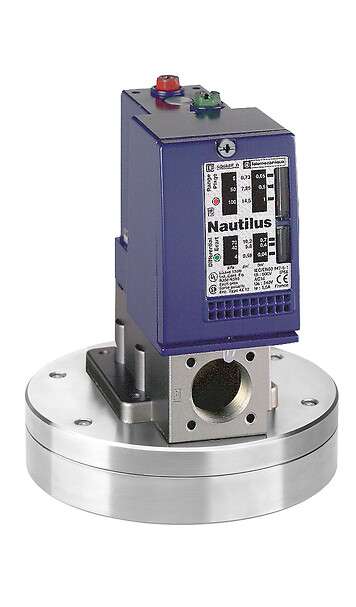
Telemecanique XMLP025BC21V Pressure Transmitter: 25 bar 4–20 mA Technical Overview
The Telemecanique XMLP025BC21V pressure transmitter is built for industrial pressure monitoring where reliability, repeatability, and straightforward PLC integration are priorities. This model is widely searched under keyword combinations such as Telemecanique XMLP025BC21V pressure transmitter, XMLP025BC21V 25 bar 4-20mA sensor, and Telemecanique XMLP025BC21V G1/4 pressure sensor. To keep maintenance records clean, it’s ideal to use the exact structured naming format: Telemecanique + XMLP025BC21V + pressure transmitter.
What a 4–20 mA Pressure Transmitter Solves
In many plants, pressure is not only a measurement—it’s a control variable tied to process stability and safety. A 4–20 mA analogue loop remains a standard because it is robust against electrical noise and supports long cable runs. When paired with a PLC analogue input (or a signal conditioner), the transmitter provides a continuous signal representing the measured pressure.
The 25 bar range is a practical middle-ground for hydraulics, general compressed air systems, water circuits, and process skids that need headroom above typical operating pressures.
Key Technical Characteristics (Quick Spec Table)
| Parameter | Value / Notes |
|---|---|
| Brand + Code + Type | Telemecanique XMLP025BC21V pressure transmitter |
| Pressure range | 0…25 bar |
| Output | Analogue 4–20 mA |
| Supply voltage | Typically 12…24 V DC (within broader limits depending on wiring and load) |
| Process connection | G1/4A (male) |
| Electrical connection | DIN 43650 Type A / EN 175301-803-A (3-pin) |
| Response time | Fast response (commonly specified in milliseconds) |
| Protection rating | IP65 class is typical for this configuration |
Application Fit: Where XMLP025BC21V Makes Sense
Engineers usually choose the Telemecanique XMLP025BC21V pressure transmitter when they need a stable analogue signal for:
- Hydraulic power units: monitoring line pressure, filter conditions, and pump behavior
- Compressed air networks: trend monitoring, leakage analysis, regulator performance validation
- Water and fluid circuits: pump control, differential pressure logic (with multiple sensors), and alarms
- General process skids: any system where pressure stability reflects product quality or safety margin
Because the output is analogue, you can do more than just “OK / Not OK.” You can implement predictive maintenance logic (e.g., rising pressure ripple indicating pump wear) or quality analytics (e.g., pressure curve deviation during a fill cycle).
Installation Considerations: Practical Tips That Prevent Field Issues
- Mechanical stress: Avoid over-torquing and ensure the sealing method matches the fitting standard. If the installation uses adapters, keep them short to reduce vibration leverage.
- Electrical noise: Route loop wiring away from high-power motor cables where possible. Use proper grounding and shielding practice in line with plant standards.
- Scaling in PLC: Document the mapping clearly (e.g., 4 mA = 0 bar, 20 mA = 25 bar). This prevents “mystery offsets” months later.
- Media compatibility: Always confirm compatibility with the measured fluid (air, water, hydraulic fluids, etc.) during design review.
For broader navigation across your sensor catalog and consistent terminology, include this internal reference: Telemecanique sensor.
FAQ: Telemecanique XMLP025BC21V
Is XMLP025BC21V a pressure switch or a transmitter?
It is a pressure transmitter providing a continuous analogue output (4–20 mA), not a simple on/off switching output.
How do I scale the signal in a PLC?
Common practice is to scale 4 mA to the minimum (0 bar) and 20 mA to the maximum (25 bar). Document the scaling and any filtering used.
What is the main benefit of 4–20 mA versus voltage output?
4–20 mA is generally more robust for industrial environments, especially where cable runs are long and electrical noise is present.
What keyword format helps spare-part purchasing?
Use Telemecanique XMLP025BC21V pressure transmitter (Brand + product code + product type). This reduces mismatch risk during procurement.