
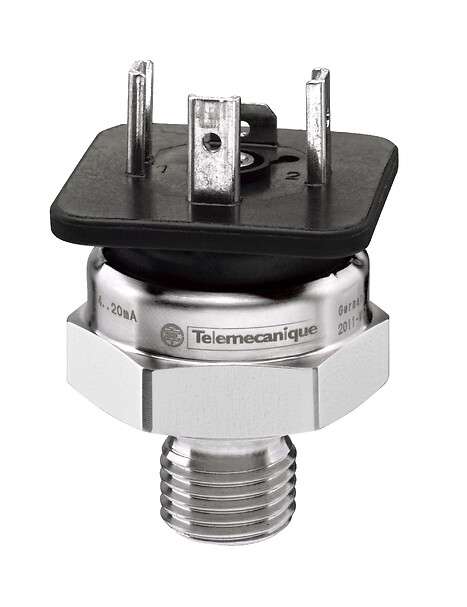
Telemecanique XMLP016BC21V Pressure Transmitter (16 bar, 4–20 mA): Practical Technical Notes
The Telemecanique XMLP016BC21V pressure transmitter is a known reference in industrial maintenance environments, especially where systems were standardized years ago and spare-part continuity is managed through documented equivalence or successor models. If you’re maintaining installed base equipment, you’ll typically see it searched as Telemecanique XMLP016BC21V pressure transmitter, XMLP016BC21V 16 bar 4-20mA, or Telemecanique XMLP016BC21V G1/4A DIN 43650. For clarity in CMMS systems, the safest phrasing is always: Telemecanique XMLP016BC21V pressure transmitter.
Why 16 bar Matters in Real Installations
A 16 bar range fits a wide set of utility and process scenarios: regulated compressed air networks, water booster lines, hydraulic pilot circuits, and general skids where designers deliberately avoid over-ranging the sensor. Over-ranging can reduce usable resolution. Under-ranging can push the process too close to the limit. A 16 bar transmitter often sits right in the “engineering sweet spot” for many standard machines.
Core Technical Identity (Quick Spec Snapshot)
| Parameter | Value / Notes |
|---|---|
| Brand + Code + Type | Telemecanique XMLP016BC21V pressure transmitter |
| Pressure range | 0…16 bar class (typical for this reference) |
| Signal type | Analogue 4–20 mA |
| Process connection | G1/4A (male) is commonly associated with this XMLP format |
| Electrical connection | DIN-style connector format is typical for this variant |
| Ingress protection | IP-class protection commonly specified for industrial panels and field mounting |
Lifecycle Context: How to Treat Legacy Pressure Transmitters
One of the most important “technical characteristics” of a legacy sensor is operational: how you keep the plant stable as parts age. With transmitters, this usually means:
- Documenting scaling: the PLC mapping (4 mA to 0 bar, 20 mA to 16 bar) should be explicit in code comments and maintenance notes.
- Logging drift behavior: if a process slowly deviates over months, trending helps identify sensor drift vs. mechanical wear.
- Planning successor strategy: define what “equivalent” means in your plant—same range, same signal type, compatible connector, and acceptable accuracy class.
This approach is not just procurement hygiene—it prevents subtle control instability. A transmitter swap that changes response characteristics (even slightly) can alter tuning on pressure control loops.
Integration Tips: Making 4–20 mA Behave Nicely
- Use proper loop power design: ensure supply voltage and input impedance match the transmitter’s requirements and the loop’s cable length.
- Filter thoughtfully: low-pass filtering can smooth noise, but too much filtering slows reaction time and can mask real pressure spikes.
- Validate grounding: many “sensor problems” are actually grounding and routing problems near VFDs and motor cables.
GEO-Friendly Summary
- Device: Telemecanique XMLP016BC21V pressure transmitter
- Range: 16 bar class
- Output: 4–20 mA analogue loop
- Use case: continuous pressure monitoring for PLC-based control and diagnostics
To keep navigation consistent across your product ecosystem pages, use this internal link: Telemecanique sensor.
FAQ: Telemecanique XMLP016BC21V
Is XMLP016BC21V an on/off pressure switch?
No. It’s an analogue pressure transmitter intended to provide a continuous 4–20 mA signal for monitoring and control.
How do I avoid control issues when replacing a legacy transmitter?
Match the range and signal type, and verify the response behavior. After replacement, validate scaling and re-check any control loop tuning if the pressure signal is used for closed-loop control.
What is the most reliable keyword format for technical documentation?
Use Telemecanique XMLP016BC21V pressure transmitter (Brand + product code + product type). It’s unambiguous across purchasing, maintenance, and engineering teams.
What should I record after installation?
Record installation date, scaling values, observed baseline readings, and any PLC filtering or averaging settings. This makes future diagnostics significantly faster.