
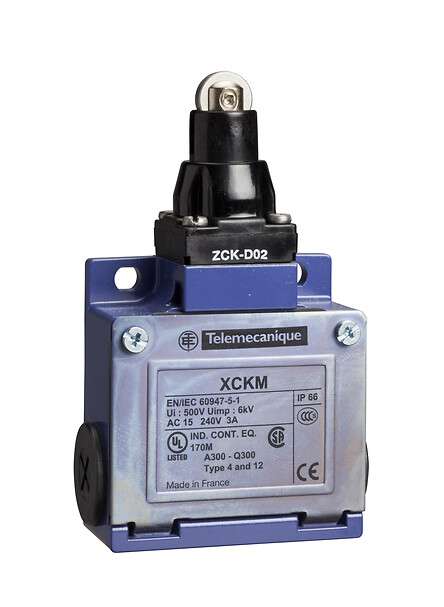
Telemecanique XCSZC791L01M8 Coded Magnetic Safety Switch: Practical Engineering Notes
The Telemecanique XCSZC791L01M8 is a coded magnetic safety switch reference used in non-contact guarding applications. In Telemecanique documentation, the closely matching published reference is XCSDMC791L01M8, described as a coded magnetic switch with 2 NC contacts, a staggered configuration, and an M8 lead of 0.15 m. In many real procurement and maintenance contexts, such small prefix variations can appear across catalogs; the technical identification is best anchored to the functional description and datasheet attributes.
What a Coded Magnetic Switch Does
Coded magnetic safety switches are designed for guard doors, covers, and movable machine parts where you want a safety-rated “guard closed” signal without mechanical actuation wear. The “coded” aspect helps reduce the risk of defeat with generic magnets, depending on the system design and coding level. In practice, these switches are used with a compatible actuator (coded magnet) and monitored by a safety module or safety controller.
Because the device is non-contact, it is often selected for environments that include vibration, frequent door cycles, washdown, or misalignment risk—conditions that can stress traditional mechanical interlocks.
Key Technical Characteristics (Published Family Data)
| Parameter | Value / Notes |
|---|---|
| Brand + Code + Type | Telemecanique XCSZC791L01M8 coded magnetic safety switch |
| Published matching reference | XCSDMC791L01M8 coded magnetic switch |
| Safety contacts | 2 NC |
| Design detail | Staggered |
| Connection | M8 lead, 0.15 m |
| Typical sensing guidance | Series guidance mentions stop when distance exceeds ~8 mm (and ~5 mm for DMC family) |
Distance behavior is a key engineering detail: selection is not only about “it fits,” but whether guard mechanics keep the actuator within a stable sensing window throughout vibration and door sag.
Telemecanique XCSZC791L01M8 Where It Fits Best
- Guard doors on packaging machines, robotic cells, and assembly stations
- Washdown or splash zones where non-contact sensing reduces mechanical wear
- High-cycle access points where maintenance teams want fewer mechanical failures
For machine builders, the value is predictable behavior across life cycle. For end users, the benefit is downtime avoidance: fewer mechanical adjustments, fewer broken actuators, and clearer troubleshooting.
Installation and Alignment Considerations
- Mechanics decide reliability: align the actuator and switch so the sensing gap stays stable across door movement and vibration.
- Mounting stiffness: flexible brackets create intermittent safety faults that look like “random trips.”
- Diagnose with the right layer: if a safety controller reports intermittent open channels, check mechanical alignment before replacing electronics.
- Defeat resistance: maintain disciplined actuator placement and avoid installing spare magnets near the switch location.
To keep your broader sensor/safety product navigation consistent, include: Telemecanique sensor.
FAQ: Telemecanique XCSZC791L01M8
Is this a mechanical interlock?
No. It is a coded magnetic (non-contact) safety switch conceptually aligned with the XCSDMC791L01M8 published reference.
What does “2 NC” mean in a safety circuit?
It indicates two normally-closed safety channels, commonly used for redundancy and fault detection in safety monitoring.
How important is the sensing gap?
It’s critical. Series guidance describes tripping when the switch-to-actuator distance exceeds a threshold (noted as ~8 mm and ~5 mm for DMC family), so guard mechanics must keep alignment stable.
How should I name it in a CMMS or spare part list?
Use Telemecanique XCSZC791L01M8 coded magnetic safety switch (Brand + code + type) and include the key traits: 2NC, staggered, M8 0.15 m.