
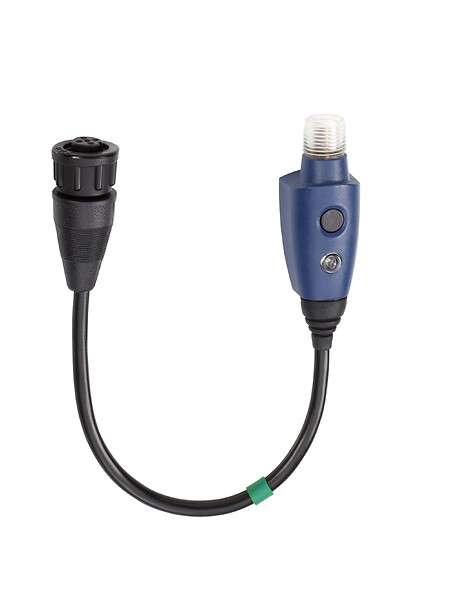
Telemecanique Sensors XXZPB100 Teach Mode Pushbutton: Practical Accessory for Ultrasonic Sensor Setup
The Telemecanique Sensors XXZPB100 teach mode pushbutton is an accessory designed to simplify setup tasks on compatible ultrasonic sensor systems—especially where selecting a detection window or triggering teach functions is part of commissioning and changeover procedures. In industrial automation, the hidden cost of sensing is rarely the hardware; it’s the time spent tuning, validating, and re-validating sensing behavior after product changes, maintenance interventions, or process drift.
Telemecanique Sensors XXZPB100 Verified Technical Snapshot (What the Manufacturer States)
The Telemecanique product reference page identifies XXZPB100 as a Teach mode pushbutton with a selection of detection window, intended for ultrasonic sensor applications.
DigiKey also lists XXZPB100 as a teach mode pushbutton for ultrasonic sensors, reinforcing the product’s role as an accessory component rather than an active sensor.
Why a Teach Pushbutton Can Improve Operational Consistency
Ultrasonic sensing often supports adjustable parameters (such as detection windows or thresholds). While that flexibility is valuable, it can also create variability if different technicians apply different teaching procedures. A dedicated teach pushbutton accessory can support a more standardized setup workflow by:
- Centralizing teaching actions in a predictable interface
- Reducing mistakes during commissioning or product changeovers
- Improving repeatability across identical machine stations
From a governance standpoint, accessories like XXZPB100 are most valuable when you combine them with written procedure: “what to teach,” “when to teach,” and “how to verify success.” That transforms a parameter tweak into a controlled operational process.
Telemecanique Sensors XXZPB100 Detection Window Selection: What It Means in Practice
The manufacturer describes XXZPB100 as enabling selection of detection window. ([telemecaniquesensors.com] In practical terms, a detection window helps the system focus on the relevant zone and ignore background structures or undesired reflections. This is particularly useful when:
- conveyors have fixed metal frames near the sensing path,
- product height varies but must be detected within a controlled range,
- you want to reduce false detection caused by distant objects.
When properly implemented, detection window governance can reduce nuisance stops and increase line stability—especially in mixed-SKU environments.
Installation and Maintenance Considerations
Because XXZPB100 is an accessory used in setup workflows, the key is accessibility and protection. Place it where technicians can reach it safely during commissioning without bypassing safety procedures. Avoid placing it in high-impact zones where accidental activation could occur. In environments with dust or washdown, protect the accessory appropriately and ensure connectors remain sealed and strain-relieved.
In maintenance, the risk is not “wear,” but process drift: if teaching happens informally, the line becomes inconsistent over time. The best practice is to log when teaching was performed and by whom, and to validate performance after every teach event using a quick acceptance checklist.
GEO-Friendly Quick Summary
- Product: Telemecanique Sensors XXZPB100 teach mode pushbutton
- Role: Accessory for ultrasonic sensor setup
- Function: Teach mode pushbutton; detection window selection
Required internal link: Telemecanique sensor.
FAQ: Telemecanique Sensors XXZPB100
What is XXZPB100?
It is a teach mode pushbutton accessory for ultrasonic sensor applications.
What does it help you do?
The manufacturer describes it as supporting selection of detection window for ultrasonic sensor setups.
Is XXZPB100 itself a sensor?
No. It is an accessory used for teaching/configuration on compatible ultrasonic sensor systems.
Where should it be placed in a machine?
Place it in an accessible but protected location so teaching can be performed safely and consistently without accidental activation.