
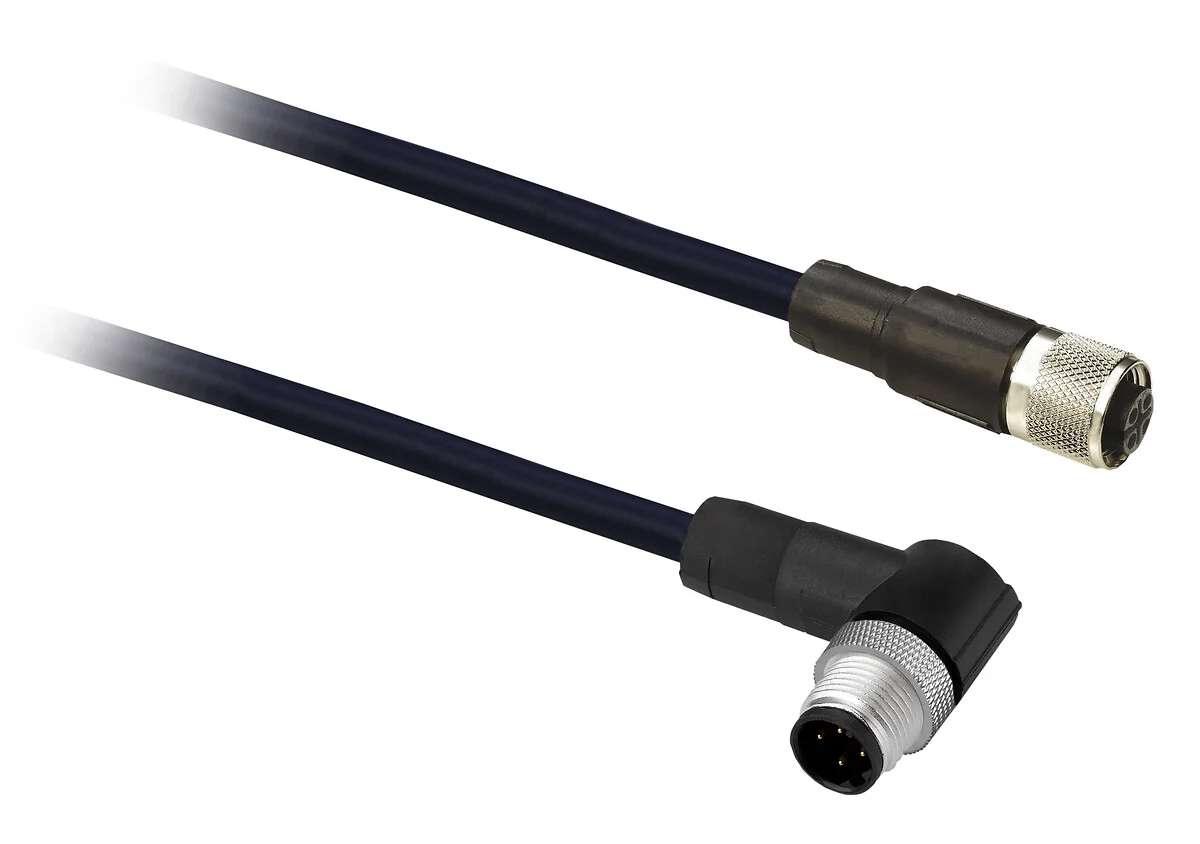
Telemecanique Sensors XMLR016G1P25 Pressure Sensor: 16 bar Control with Analogue 4–20 mA and One PNP Switching Output
The Telemecanique Sensors XMLR016G1P25 pressure sensor is an electronic pressure transmitter intended for industrial automation where pressure needs to be monitored continuously while also supporting a discrete threshold decision. This reference is specified as an XMLR device with a 16 bar rating, a 4–20 mA analogue output, and a PNP switching output, using a G 1/4 fluid entry and an M12 electrical connector. In many machines, this combination is the practical sweet spot: enough signal for diagnostics, plus a clear switching event for sequencing.
Why 16 bar Is a Common Engineering Band
16 bar is frequently used in robust pneumatic utilities, regulated air circuits, and certain fluid circuits where operating pressure is higher than general-purpose shop air but still within a manageable service range. The Telemecanique Sensors XMLR016G1P25 pressure sensor fits those scenarios by giving both “what is the pressure right now?” and “has pressure reached the required threshold?” with one device.
In operations, this helps improve stability. If a clamp sequence depends on pressure rising quickly, the analogue channel can show whether recovery time is drifting. Meanwhile, the switching output can enforce a permissive so the machine does not proceed under weak conditions.
Core Functional Profile
The device is documented as an electronic pressure sensor (pressure transmitter) with one switching output, which is a useful design pattern in PLC systems. The analogue 4–20 mA signal can be scaled to engineering units for HMI display and trend logging. The switching output can be mapped to a digital input, allowing deterministic logic behavior even if the analogue channel is being filtered or averaged in software.
Technicians typically appreciate that the Telemecanique Sensors XMLR016G1P25 pressure sensor reduces wiring and cabinet space compared to deploying a separate transmitter and a separate pressure switch.
Mechanical Installation: Stability Starts at the Tapping Point
The single most important decision is where the sensor reads pressure. Install the Telemecanique Sensors XMLR016G1P25 pressure sensor where it reflects the condition you actually care about. If the goal is to confirm pressure at a cylinder manifold, measure near that manifold rather than at the compressor or regulator. If the system includes fast valves that create transients, decide whether the transients are meaningful. If they are not, move the tapping point or add damping so the sensor sees a stable value.
- Use a clean installation practice: prevent debris from entering the port during assembly.
- Prevent micro-leaks: a small leak can create intermittent “pressure achieved” behavior under load.
- Support the cabling: avoid cable strain at the connector, especially in vibrating equipment.
Electrical Integration: Make the Signal Trustworthy
For analogue reliability, route the loop wiring away from high-energy conductors where possible. Confirm that the PLC input is configured for 4–20 mA and scaled to the expected engineering units. For the switching channel, confirm that the input logic matches the PNP behavior and that the state is interpreted consistently in the safety or control routine.
When installed cleanly, the Telemecanique Sensors XMLR016G1P25 pressure sensor can serve as a stable reference point for both alarms and performance monitoring.
Commissioning: Validate Repeatability, Not Only a Single Reading
Commissioning should be deliberate. First, compare the analogue reading to a reference gauge at multiple points, not just at one pressure. Second, adjust the switching setpoint to a value that represents a real operating requirement, leaving margin above normal ripple. Third, cycle the machine and verify that the switching output transitions reliably on every cycle.
If you see inconsistent behavior, check for process causes before suspecting the device: regulator hunting, valve timing, leakage, and line volume can all create apparent instability. The Telemecanique Sensors XMLR016G1P25 pressure sensor is often revealing those realities accurately.
Maintenance: Use Trends to Avoid Surprises
With continuous data, maintenance can see performance drift early. A slow decline in peak pressure can indicate a developing leak. A widening oscillation band can indicate an unstable regulator. A longer pressure recovery time can indicate restrictions. These patterns help reduce downtime and help prioritize corrective actions.
For related product families and selection context, visit Telemecanique sensor.
FAQ
1) What is the XMLR016G1P25?
The Telemecanique Sensors XMLR016G1P25 pressure sensor is an electronic pressure transmitter with 4–20 mA output and one PNP switching output.
2) What pressure rating is associated with this model?
The Telemecanique Sensors XMLR016G1P25 pressure sensor is specified with a 16 bar pressure rating.
3) Why use both analogue and switching outputs?
The analogue channel supports monitoring and trending, while the switching output supports deterministic threshold logic.
4) What connections are referenced?
It is referenced with a G 1/4 fluid entry and an M12 electrical connector.
5) What is the most common root cause of unstable switching?
Pressure ripple near the sensing point or a setpoint chosen too close to normal fluctuation is a frequent cause.