
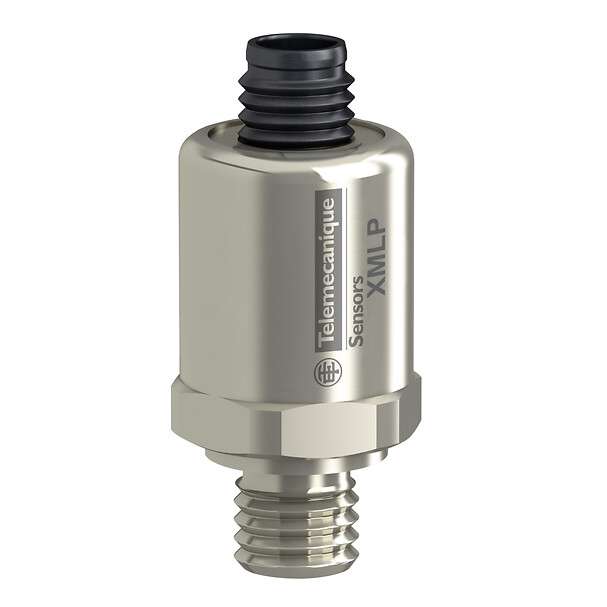
Telemecanique Sensors XMLP600BD21F Pressure Transmitter: 0–600 bar Continuous Measurement for Very High-Pressure Systems
The Telemecanique Sensors XMLP600BD21F pressure transmitter is associated with very high-pressure monitoring where continuous visibility supports both performance and risk management. In 0–600 bar environments—high-pressure hydraulic presses, test benches, and specialized forming applications—transients, peaks, and shock events are part of the operating reality. A transmitter helps teams see those events, not just infer them after a failure.
What XMLP600BD21F Is Referenced To Provide
The Telemecanique Sensors XMLP600BD21F pressure transmitter is referenced in distributor descriptions as a 600 bar pressure transmitter with 4–20 mA output, a G 1/4A male process connection, and an M12 electrical connection. This profile fits industrial analog standards and supports reliable signal transmission to PLC analog inputs.
Why Very High-Pressure Monitoring Is Different
At very high pressure, peak events are often more critical than steady-state pressure. A cycle may run correctly at nominal pressure but create damaging peaks during valve switching. Continuous measurement allows those peaks to be identified and addressed. It also supports condition monitoring: if peak levels climb over time, it can indicate a change in valve timing, oil condition, or mechanical wear.
Using the Telemecanique Sensors XMLP600BD21F pressure transmitter as a trend input helps convert those observations into actionable improvements. Instead of replacing components after repeated failures, teams can tune the process and reduce stress.
Installation: Protect the Measurement and the Hardware
Very high-pressure installations demand strong mechanical discipline. Ensure the pressure port and any adapters are rated appropriately for the system and that sealing practice matches the fitting strategy. Keep the installation clean: debris can damage valves and can also create measurement artifacts if the tapping point becomes restricted.
On the electrical side, maintain robust cable routing and strain relief. High-pressure systems often sit near heavy power equipment; separating analog cabling from high-power wiring reduces interference. This is especially important when trend data is used for diagnostics, because a noisy signal can look like process instability.
Telemecanique Sensors XMLP600BD21F Commissioning: Validate Scaling and Watch for Spikes
Commissioning should validate that the PLC scaling reflects the correct range and that the signal correlates with a trusted reference method if available. Then observe the signal during real machine cycles. The key question is not only “Is the value correct?” but also “Does the trend show spikes that match known process events?” If spikes are unexpected, investigate valve timing and hydraulic shock behavior.
Once the Telemecanique Sensors XMLP600BD21F pressure transmitter is producing stable data, it can support practical alarms: high peak alarm, abnormal spike frequency alarm, and slow drift alarms. These are the alarms that prevent costly downtime.
Maintenance: Treat Trends as Evidence
When a high-pressure system shows abnormal behavior, continuous data can reduce guesswork. If baseline pressure drops, suspect leakage or pump performance. If spikes increase, suspect switching dynamics. If oscillation increases, suspect air entrainment or unstable control. Continuous measurement turns maintenance from reactive to analytical.
For broader product context, review Telemecanique sensor.
Telemecanique Sensors XMLP600BD21F FAQ
1) What is XMLP600BD21F?
It is a very high-pressure transmitter used for continuous measurement and diagnostics in high-pressure systems.
2) What range is referenced?
It is referenced for 0–600 bar.
3) What output is referenced?
It is referenced with a 4–20 mA analog output.
4) What connections are referenced?
It is referenced with a G 1/4A male process port and an M12 electrical connector.
5) Why are pressure spikes important to monitor?
Spikes can indicate hydraulic shock and can accelerate wear or trigger failures even when nominal pressure looks normal.