
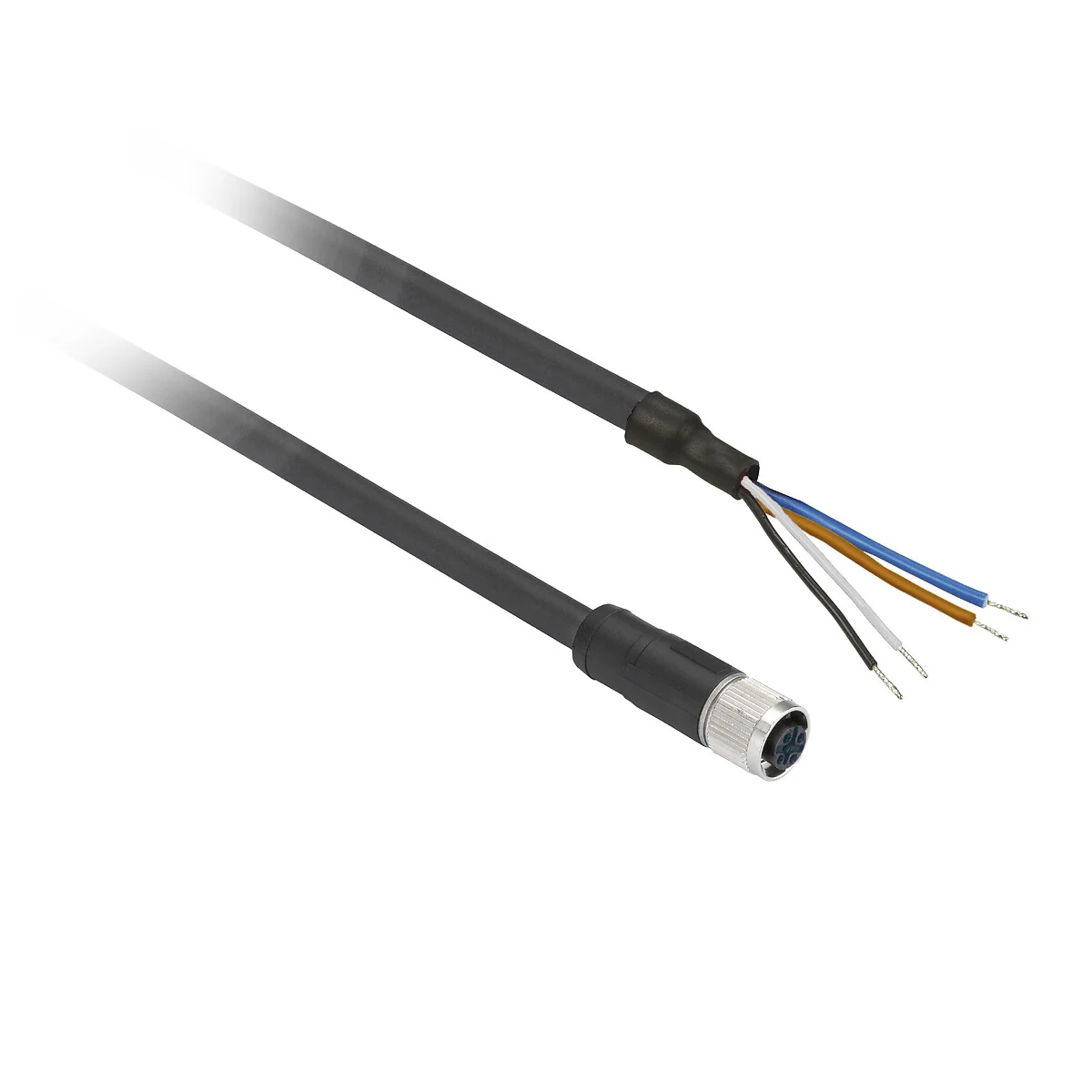
Telemecanique Sensors XMLGM01D21 Pressure Transmitter: 4–20 mA (2-Wire) Measurement for Process-Grade Monitoring
The Telemecanique Sensors XMLGM01D21 pressure transmitter sits in the XM electronic pressure sensor family and is intended for continuous monitoring in industrial control and supervision systems. Where an electromechanical switch is ideal for discrete “threshold logic,” a transmitter supports deeper operational intelligence: trending, control stability, and early fault detection.
Use a clean keyword structure for consistent indexing: Telemecanique Sensors XMLGM01D21 pressure transmitter (Brand + product code + product type). Common variants include XMLGM01D21 4-20 mA pressure sensor and G1/4A DIN 3852-E pressure transmitter.
Verified Technical Characteristics
Telemecanique’s product datasheet summaries indicate XMLGM01D21 is an electronic pressure transmitter (XMLG naming in the XM range) with a G 1/4A (male) process connection conforming to DIN 3852-E, a 4…20 mA analogue output in a 2-wire configuration, and stated compatibility with fluids such as air, hydraulic oil, corrosive fluids, and water in the listed temperature classes.
- Type: pressure transmitter (electronic pressure sensor)
- Output: 4…20 mA, 2 wires
- Port: G1/4A male, DIN 3852-E
- Media (examples): air, hydraulic oil, corrosive fluids, fresh water (within stated temperature ranges)
Telemecanique Sensors XMLGM01D21 Why “2-Wire 4–20 mA” is Operationally Efficient
A 2-wire transmitter is attractive because the same two conductors carry both power and signal current. This can simplify wiring on large machines and distributed skids, reducing cabinet congestion and installation time. From a reliability standpoint, current-loop signals are resilient to voltage drop and can be monitored for loop integrity, which supports faster fault isolation when a cable is damaged or a terminal loosens.
Media Compatibility: The Engineering Discipline Behind “Works in the Field”
XMLGM01D21 is presented for use with several media types, including hydraulic oil and corrosive fluids (within the published thermal envelope). That does not mean every fluid is automatically safe. Best practice is to validate:
- Seal material compatibility with your chemical profile,
- temperature cycling and whether the sensor sees peaks beyond nominal,
- cleaning agents used in washdown or CIP processes.
This “compatibility governance” is the difference between a transmitter that lasts years and one that becomes an intermittent maintenance story.
Telemecanique Sensors XMLGM01D21 Installation Notes: Protect the Signal and Protect the Sensing Element
- Mounting location: choose a point that represents the process, not a turbulent corner of the piping.
- Pulsation control: if pumps or compressors create spikes, use proper damping and avoid direct mechanical shock to the sensing element.
- Cable management: keep analogue loops away from VFD motor lines; use proper grounding strategy to reduce induced noise.
- PLC scaling: standardize scaling templates so every XMLGM01D21 loop is commissioned the same way across machines.
Required internal link: Telemecanique sensor.
FAQ: Telemecanique Sensors XMLGM01D21
Is XMLGM01D21 a switch or a transmitter?
It is described as a pressure transmitter (electronic pressure sensor) with analogue output.
What output does XMLGM01D21 use?
The listing specifies 4…20 mA in a 2-wire configuration.
What is the process connection standard?
It uses a G 1/4A (male) connection conforming to DIN 3852-E.
Can it be used with multiple media types?
The product listing references compatibility with media such as air, hydraulic oil, corrosive fluids, and water within stated temperature ranges; always validate seal compatibility for your exact chemical profile.