
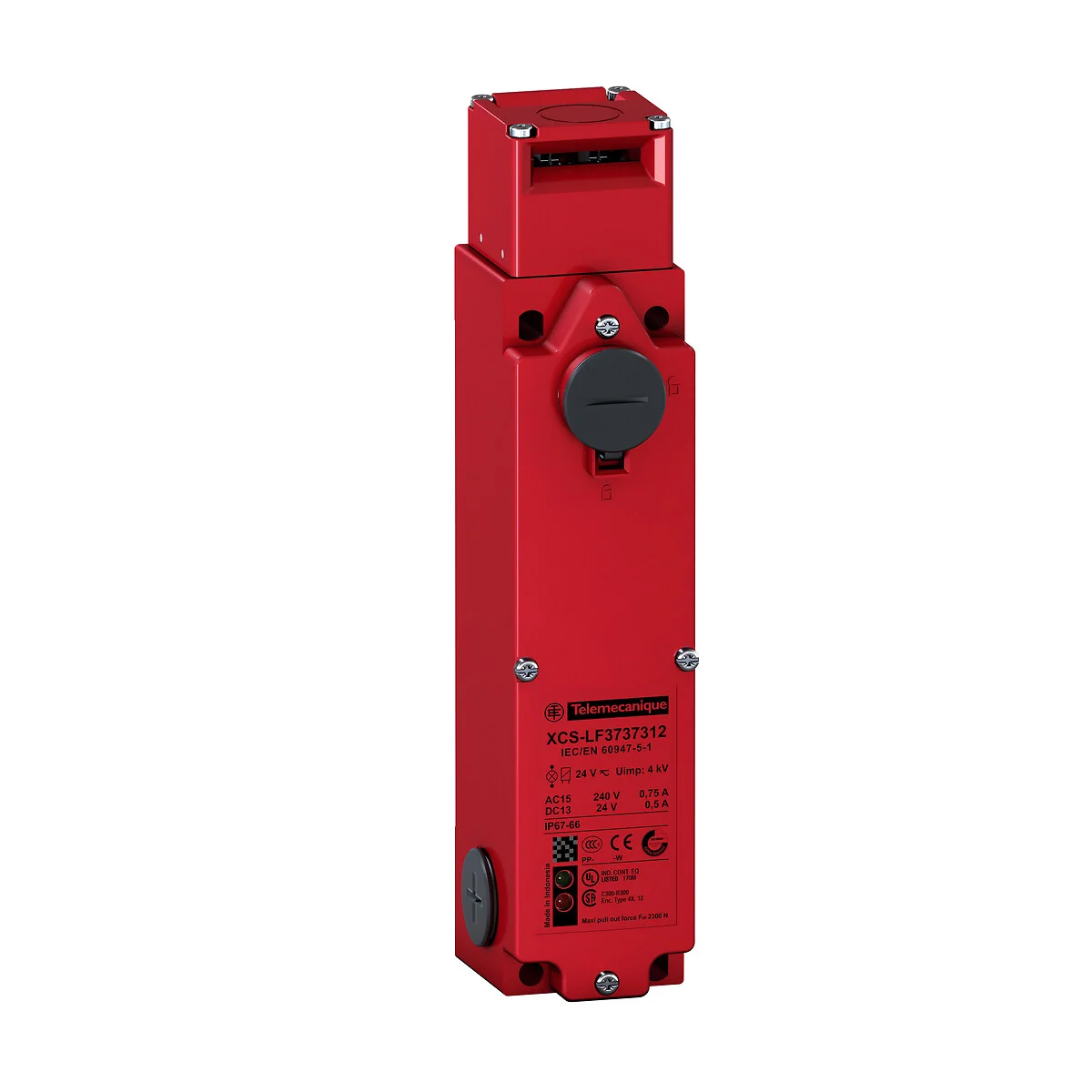
Telemecanique Sensors XCSZ02 Actuator Key: Wide-Fixing Straight Actuator for Metal XCS Interlocks
The Telemecanique Sensors XCSZ02 actuator key is an actuating key with a wide fixing arrangement designed for use with metal, key-operated safety interlock switches in the XCS range. In guard monitoring, the actuator key is not a minor accessory; it is the mechanical component that defines alignment, repeatability, and long-term stability. If the actuator drifts, the safety circuit becomes unreliable even if the switch is perfectly healthy.
Why “Wide Fixing” Is a Practical Advantage
The primary distinction of the Telemecanique Sensors XCSZ02 actuator key is its wide fixing concept. In real machine installations, actuator movement is often caused by vibration, repeated door slams, and gradual loosening of fasteners. A wider fixing footprint typically provides better resistance to rotation and creep on the guard surface, especially when the door is lightweight or when the mounting plane is not perfectly flat.
This matters on high-use doors—such as those opened for cleaning, jam clearing, or format changes—where actuator stability is directly tied to line uptime. A wide fixing actuator can reduce re-alignment work over the service life of the machine.
Typical Use with Metal XCS Safety Interlock Switches
XCSZ02 is described for use with metal key-operated safety switches and is cited as compatible with common XCS families such as XCSA, XCSB, XCSC, and XCSE, and also referenced alongside slim families in some catalog descriptions. The key point operationally is that actuator references are chosen to match the switch family and the door geometry, rather than mixing parts based on appearance.
Mechanical Installation: Getting the Basics Right
A stable interlock system is built on three mechanical fundamentals: door behavior, actuator positioning, and head entry alignment. With the Telemecanique Sensors XCSZ02 actuator key, aim for a straight insertion path and a rigid actuator bracket. If the actuator approaches at an angle, it can rub at the head entry and cause intermittent states. Over time, rubbing also creates wear marks that are a useful diagnostic clue during maintenance.
- Door stop discipline: Use a repeatable mechanical stop so the door closes to the same position every time.
- Rigid mounting: Mount the actuator to a stable section of the door, not to a flexible cover plate.
- Fastener control: Use appropriate hardware to prevent loosening in vibration environments.
Telemecanique Sensors XCSZ02 Commissioning: Proving Margin, Not Only Function
Commissioning should demonstrate that the system works with a healthy margin. After mounting XCSZ02, verify that the guard-closed state is stable during normal closure and also during gentle closure. Then open the door slightly and confirm the safety circuit transitions reliably. Repeat across multiple cycles. If results vary, correct the mechanical alignment rather than trying to “accept” borderline behavior.
It is also wise to test after the machine has been running, because vibration and temperature changes can reveal marginal installations. The goal is to ensure the Telemecanique Sensors XCSZ02 actuator key remains correctly positioned through realistic operating conditions.
Service and Maintenance: Fast Checks That Save Time
When an interlock begins to misbehave, technicians often suspect wiring. In many cases, the faster win is mechanical: check whether the actuator has shifted on the door, whether hinge wear has introduced sag, and whether the door closes consistently. Wide fixing helps reduce drift, but it does not eliminate the need for periodic inspection in high-cycle environments.
For related switch and sensor solutions, visit Telemecanique sensor.
Telemecanique Sensors XCSZ02 FAQ
1) What is Telemecanique Sensors XCSZ02?
It is a wide-fixing actuating key used with XCS safety interlock switches for guard and door monitoring.
2) Why choose a wide-fixing actuator?
It can improve mounting stability and reduce the likelihood of actuator creep or rotation on the door surface.
3) What causes most intermittent issues?
Door sag, actuator shift, and misaligned insertion paths are the most common causes.
4) How should I validate the installation?
Cycle the door repeatedly, verify consistent engagement feel, and confirm stable state changes with small door openings.
5) Does wide fixing eliminate maintenance?
No. It reduces drift risk, but hinges, stops, and fasteners still require routine checks on high-use doors.