
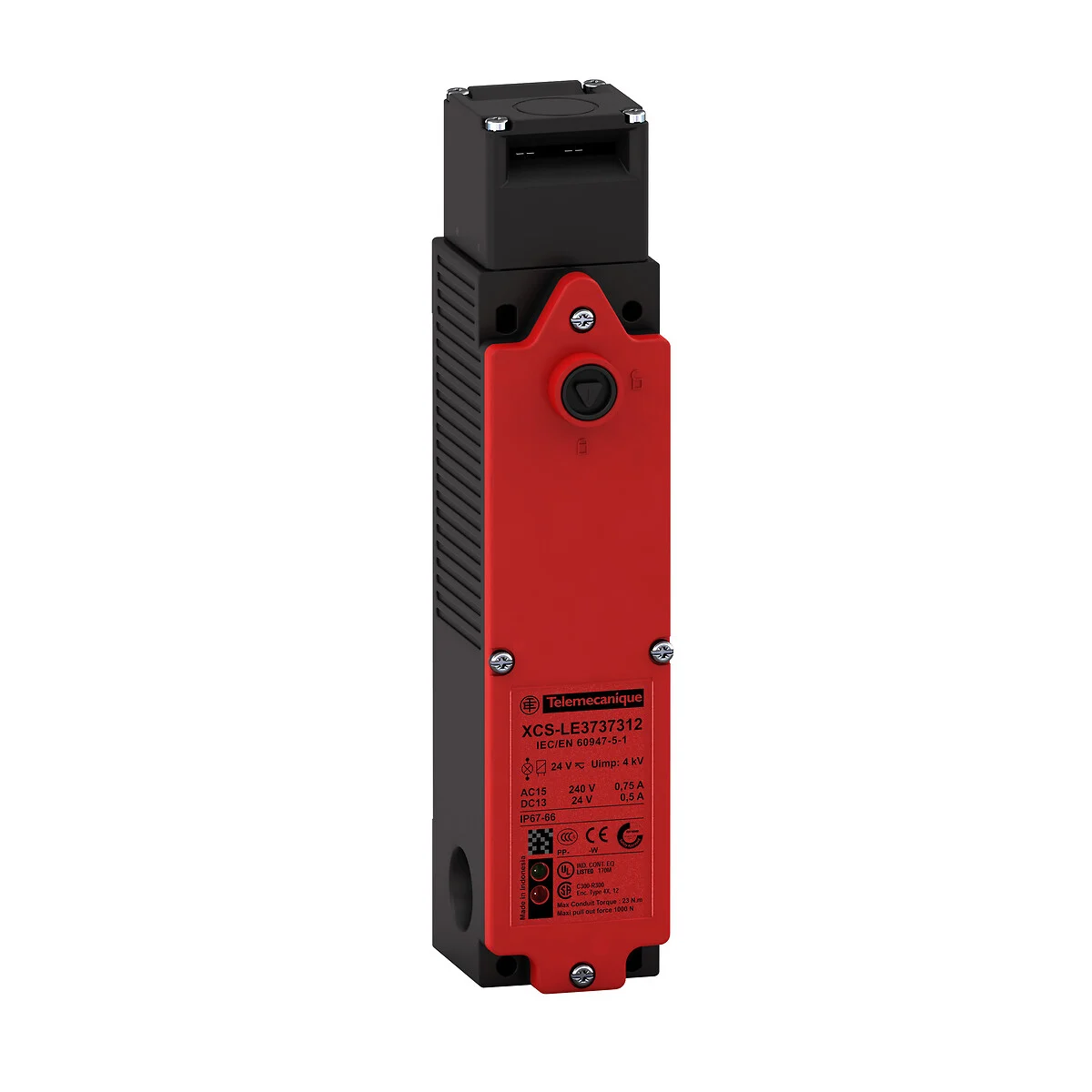
Telemecanique Sensors XCSZ01 Actuator Key: Straight Actuator for Metal XCS Safety Interlock Switches
The Telemecanique Sensors XCSZ01 actuator key is a straight actuator designed to work with metal-body safety interlock switches in the XCS ecosystem. In practical terms, it is the mechanical “mate” that allows a guard door to physically engage the switch head and deliver a clear guard-closed or guard-open state within a safety circuit. When technicians say an interlock “isn’t seeing the door,” very often the root cause is not the switch itself, but the actuator key alignment or fixation. That is why choosing the correct actuator reference matters from day one.
What the Telemecanique Sensors XCSZ01Is Used For
The Telemecanique Sensors XCSZ01 actuator key is intended for metal safety interlock switch families such as XCSA, XCSB, XCSC, and XCSE, depending on the switch configuration. It is described as a straight actuator for metal switches, which is important because actuator geometry is not interchangeable across all bodies and heads. A straight actuator is commonly selected when the guard door closes with a clean, direct approach path and the actuator can enter the switch head without side loading.
Typical applications include hinged guard doors on packaging machines, access panels on assembly cells, and fixed guarding on conveyor zones where the door travel is predictable. If the door closes on a consistent line and does not twist, a straight actuator is usually the simplest and most stable approach.
Telemecanique Sensors XCSZ01 Why “Straight” Geometry Matters
In the field, the actuator shape determines how forgiving the system is to door sag, hinge wear, and operator handling. A straight actuator like XCSZ01 generally performs best when the door is mechanically stable and the insertion path is repeatable. When a door droops even a few millimeters over time, the actuator can begin to rub on the head entry, creating nuisance trips or intermittent states. That is not a product flaw; it is a mechanical system drifting out of tolerance.
For that reason, the Telemecanique Sensors XCSZ01 actuator key should be installed with attention to hinge quality, bracket stiffness, and fastener retention. In high-cycle doors, consider using locking hardware and periodic re-torque checks on the actuator mounting screws.
Installation Practices That Prevent Downtime
- Use a rigid mounting surface: Avoid thin sheet-metal tabs that flex during door closure.
- Keep the insertion path straight: The actuator should enter the head smoothly without forcing.
- Set a consistent door stop: A hard mechanical stop reduces overtravel shock into the interlock.
- Prevent actuator shift: Use appropriate fasteners and washers to keep the actuator from creeping over time.
After mounting, close the guard slowly ten times. The “feel” should be identical each time. If the guard must be pushed sideways for the actuator to engage, the alignment is marginal and should be corrected before production starts.
Commissioning Checks That Build Confidence
A good commissioning routine validates both function and margin. First, confirm the safety controller or circuit sees a stable closed state with the guard fully closed. Next, open the guard slightly and confirm the circuit reacts consistently at the intended point. Repeat this test after multiple door cycles. If results vary, the most likely causes are door sag, actuator bracket twist, or fasteners loosening.
Maintenance: What to Inspect First
If the interlock state becomes unstable months later, start with mechanics. Inspect hinge wear, actuator looseness, and any witness marks that show rubbing at the head entry. Many “electrical” faults are actually mechanical alignment issues that progressively worsen. Re-aligning the Telemecanique Sensors XCSZ01 actuator key often restores stability without replacing the switch.
For related sensor and switch solutions, visit Telemecanique sensor.
Telemecanique Sensors XCSZ01 FAQ
1) What is the XCSZ01?
It is a straight actuator key intended for Telemecanique Sensors XCS safety interlock switches used on guards and doors.
2) Which switch bodies is it associated with?
It is described as a straight actuator for metal switches in the XCS range and is referenced for use with common metal XCS families such as XCSA/XCSB/XCSC/XCSE depending on configuration.
3) What is the most common installation mistake?
Mounting the actuator on a flexible bracket or allowing a misaligned insertion path that forces the actuator into the head.
4) Why can nuisance trips appear after weeks of operation?
Door sag, hinge wear, and fasteners loosening can shift alignment by a few millimeters and create intermittent engagement.
5) How do I confirm alignment quickly?
Close the door slowly multiple times and verify the engagement feels identical and the safety state changes consistently.