
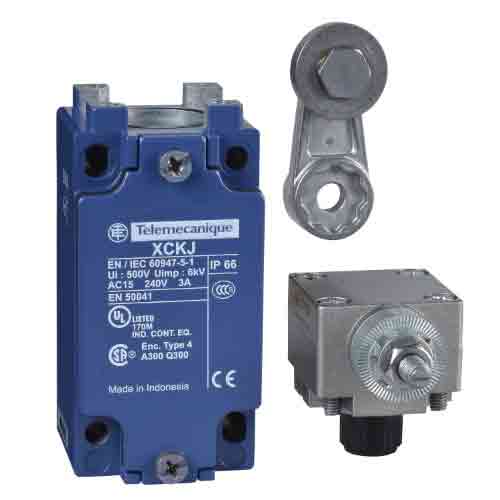
Telemecanique Sensors XCSPA791 Safety Interlock Switch: Compact Plastic 2NC Interlock for Guard Doors
The Telemecanique Sensors XCSPA791 safety interlock switch is a compact plastic safety switch used to monitor guards and access doors on industrial machines. It is specified with a key operated turret head, 2 NC contact composition, and slow-break operation, with 1 entry tapped Pg 11 for cable gland installation. This combination is typical of guard applications where a clear, repeatable electrical state is required when the guard is closed and the actuator key is fully engaged.
Telemecanique Sensors XCSPA791 Where a Compact Interlock Is the Right Choice
Not every guard requires a large housing or complex locking function. Many access doors simply need reliable position monitoring as part of a machine safety circuit. In these cases, a compact interlock can simplify installation: less space required, fewer mechanical conflicts with door hardware, and easier replacement during maintenance.
XCSPA791 is often selected for smaller doors, removable panels, and covers where the actuator can be guided into the head reliably. Compact interlocks are also used where multiple doors exist on one machine and a consistent, standardized switch footprint helps maintenance teams carry fewer spares.
What the Specification Means in Practical Terms
The 2 NC contact configuration is widely used in safety circuits because an open circuit can represent either a guard open condition or a wiring fault, depending on the safety architecture. With slow-break operation, the contact transition follows the mechanical motion of the actuator withdrawal. In commissioning, it is important to confirm the control system interprets the transition correctly and that the guard opens far enough to create a clear, stable “open” state rather than hovering near the switching point.
The Pg 11 cable entry is relevant for gland selection and sealing discipline. In many plants, the reliability of a safety switch is determined by installation details: correct gland matching, proper tightening, and cable strain relief that prevents movement from pulling on the termination area.
Telemecanique Sensors XCSPA791 Mechanical Installation: Alignment and Door Behavior
The actuator key must enter the head consistently. The two most common failure patterns in the field are:
- Door sag over time: hinges wear and the key approaches at an angle, leading to rubbing and inconsistent engagement.
- Loose actuator mounting: repeated door slams or vibration can shift the actuator bracket by a few millimeters.
To avoid these problems, mount the switch body to a rigid frame member, use stable hinges, and keep the actuator bracket short and stiff. During installation, close the guard slowly and confirm the actuator enters smoothly without forcing. If the guard must be “pushed” into position for the switch to engage, the alignment is marginal and should be corrected before production starts.
Telemecanique Sensors XCSPA791 Wiring and Cable Management
With a Pg 11 entry, choose a gland that matches the cable diameter and environment. In high-use doors, cable fatigue near hinges is a common problem. The best preventive measure is to route the cable with a controlled loop and sufficient bend radius, and to ensure strain relief is present so door motion does not translate into repeated bending at the entry point.
Telemecanique Sensors XCSPA791 Commissioning: How to Build Confidence
After installation, test the guard under realistic handling: close it quickly, close it gently, and close it with the typical operator motion. Confirm the state changes are consistent. Then open the guard slightly and confirm the safety system responds as expected. Repeat multiple times. This helps detect borderline alignment where the switch is right at the edge of its operating position.
Maintenance: What to Inspect Before Replacing Parts
If nuisance trips occur, inspect hinge wear, actuator fasteners, and the door frame for movement. Then inspect the cable for strain, abrasion, and conductor fatigue near the hinge. These checks solve most issues without needing to replace the switch.
For related solutions and a wider family view, see Telemecanique sensor.
Telemecanique Sensors XCSPA791 FAQ
1) What type of device is XCSPA791?
It is a compact plastic safety interlock switch used for guard door monitoring with a key operated actuator concept.
2) What contacts are specified?
It is specified with 2 normally closed (2NC) contacts.
3) What contact operation is specified?
It is specified with slow-break, simultaneous operation.
4) What cable entry is specified?
It is specified with one entry tapped for Pg 11 cable gland.
5) What causes most intermittent behavior?
Door sag, actuator shift, and cable strain are the most frequent causes—alignment and cable management are key.