
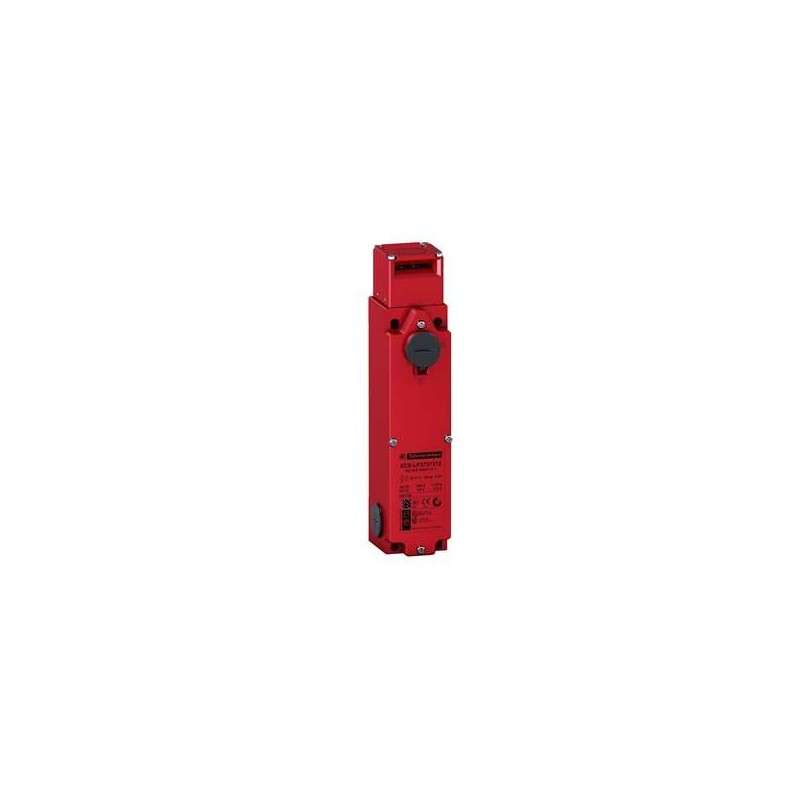
Telemecanique Sensors XCSLF2525312 Solenoid Interlock Safety Switch: Slim Metal Interlock for High-Use Guards
The Telemecanique Sensors XCSLF2525312 solenoid interlock safety switch is intended for industrial guard doors that need controlled access and dependable long-term operation. The XCSLF family is typically selected when the environment is demanding or when mechanical robustness is prioritized. A slim metal body helps the switch fit into tight guard frames while offering a sturdy mechanical base that resists vibration and everyday impacts.
Telemecanique Sensors XCSLF2525312 Why Choose a Metal Slim Interlock
Many guard systems fail in practice not because the safety logic is wrong, but because the guard hardware drifts: hinges wear, doors sag, and brackets flex. A metal housing can help maintain mounting stability over time, especially on guards that are opened frequently. The slim format also matters. A bulky interlock can force awkward mounting positions, which increases the likelihood of misalignment. A slim body supports a cleaner approach path for the actuator and reduces the temptation to “make it fit” with improvised brackets.
Technical Characteristics in Plain Language
Telemecanique Sensors XCSLF2525312 is described as a metal safety switch in the XCSLF slim design with slow-break contact operation, a 24 V solenoid concept, and 3 entries tapped M20. Product data sheets for the reference provide the formal characteristics and wiring expectations used in machine documentation.
Slow-break contact behavior is relevant because it defines how the electrical state changes as the actuator is withdrawn. In commissioning, it helps to confirm that the guard stop sequence and the contact transition timing match the machine’s control expectations.
Telemecanique Sensors XCSLF2525312 Mechanical Integration: Keep the Actuator Path Consistent
Solenoid interlocks require a predictable, straight actuator approach. If the actuator enters at an angle, friction increases, engagement becomes inconsistent, and nuisance faults appear. The most effective installation habits are straightforward:
- Rigid mounting: mount the body to a stable part of the frame, not a flexible cover.
- Hinge quality: replace worn hinges early; hinge drift is a primary cause of interlock misalignment.
- Actuator bracket stability: avoid long cantilever brackets that can twist.
A practical check used by experienced technicians is “smooth closure.” Close the guard slowly—if the actuator catches, rubs, or requires extra force, alignment needs correction before production begins.
Wiring with M20 Entries and Strain Relief
Three M20 entries support structured wiring routes, particularly on large machines where multiple safety devices share a common cable path. However, the reliability outcome depends on gland selection and cable management. Mismatched cable diameter, poor tightening, and lack of strain relief can all undermine sealing and create intermittent signals.
On doors that open many times per shift, cable fatigue near the hinge area is common. The most effective prevention is to route cables with a controlled loop, maintain a safe bend radius, and use protective sleeving where abrasion is possible.
Commissioning: Confirm Lock/Unlock Behavior Under Real Use
Commissioning should go beyond a simple continuity check. It should confirm that:
- The guard-closed signal is stable across repeated cycles.
- The guard remains locked during hazardous phases when locking is required by the machine design.
- Unlocking occurs only when the machine reaches the defined safe state.
It is also wise to test with real operating conditions—machine vibration, heat, and normal operator handling—because that is where borderline mechanical alignment issues show up.
Maintenance: What to Inspect First
If a fault occurs, start with mechanics: check actuator alignment, looseness, and hinge sag. Next inspect the cable route for strain, broken conductors, and jacket damage. Most recurring faults are corrected by stabilizing alignment and cable routing rather than replacing the switch.
For additional Telemecanique options and family overview, see Telemecanique sensor.
Telemecanique Sensors XCSLF2525312 FAQ
1) What is Telemecanique Sensors XCSLF2525312 used for?
It is used for guard monitoring with solenoid-based access control, supporting controlled opening of industrial guards.
2) What housing style is associated with XCSLF?
XCSLF is associated with a slim metal safety switch design.
3) What supply voltage is specified for the solenoid concept?
This reference is specified for 24 V.
4) What cable entry is specified?
It is specified with three M20 tapped entries.
5) What causes most service issues?
Misalignment (door sag, actuator shift) and cable strain near hinges are the most frequent causes.