
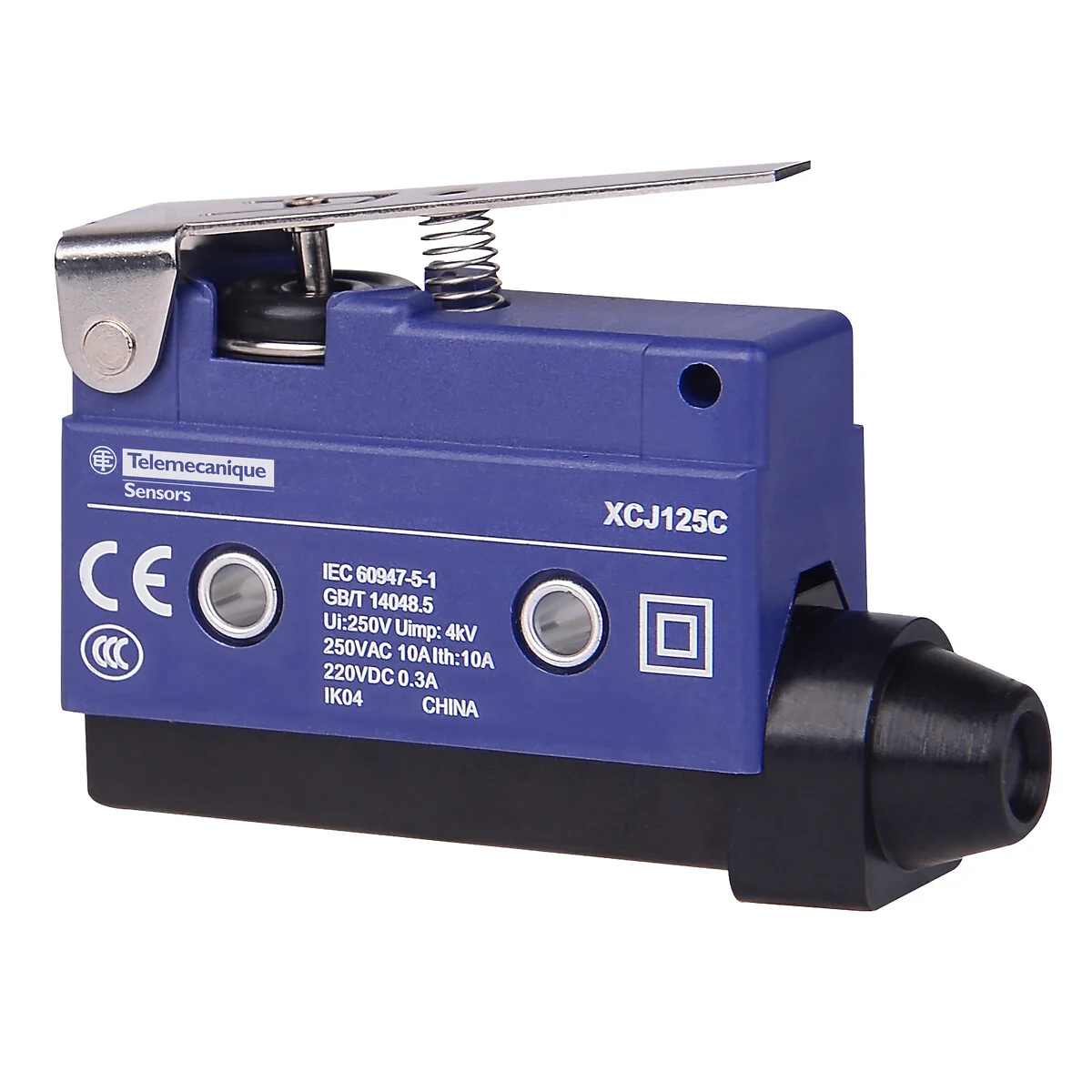
Telemecanique Sensors XCJ126C Limit Switch: Long Flat Lever Plunger for Stable End-Position Detection
The Telemecanique Sensors XCJ126C limit switch is designed for light to medium duty automation where a longer actuator lever can simplify mechanical engagement. It uses a fixed body with a plunger head and a spring return steel lever plunger that is long and flat. This actuator geometry can be advantageous when the machine needs a broader contact zone or when the striker position varies slightly across cycles.
In many production environments, designers value mechanical solutions that are straightforward to validate. The Telemecanique Sensors XCJ126C limit switch offers snap-action switching and a vertical approach strategy, helping engineers create repeatable end-of-travel signals without adding complexity to the control layer.
Why a Long Flat Lever Plunger Can Be a Practical Choice
A longer lever increases the effective target area for actuation. This can reduce sensitivity to small alignment tolerances or minor path variation. In other words, the actuator helps “catch” the striker more reliably, especially when the mechanism is guided but not perfectly rigid.
For maintenance documentation and spare strategies, standard naming such as Telemecanique Sensors XCJ126C limit switch supports clear identification across teams and facilities.
Telemecanique Sensors XCJ126C Technical Characteristics
- Product type: Limit switch for light to medium duty applications
- Body type: Fixed
- Head type: Plunger head
- Movement: Linear operating head movement
- Actuator: Spring return lever plunger steel, long and flat
- Switch actuation: On end
- Approach: Vertical approach, 1 direction
- Contacts: Snap action
- Electrical connection: Screw-clamp terminals
- Cable entry: Flexible rubber cable gland (typical outer diameter 8.5–10.5 mm)
- Protection: IP40
- Design validation context: Shock and vibration references are commonly used during commissioning checks
Application Patterns
The Telemecanique Sensors XCJ126C limit switch is often used when a long lever reduces the need for tight striker tolerances. Common applications include:
- Conveyor stops and end plates where the moving element does not land perfectly square every cycle
- Packaging slides and actuated gates where a broader engagement surface improves consistency
- Light material handling mechanisms where small mechanical drift may occur over time
- General automation assemblies where designers want a forgiving actuation interface
Mounting and Alignment Guidance
Even with a more tolerant lever, engineering discipline still matters. For stable performance:
- Mount rigidly: A stiff bracket prevents the trip point from shifting under load.
- Control striker force: Use a contact profile that avoids hammering the lever.
- Set consistent travel: Ensure the striker produces adequate actuation travel without excessive overtravel.
- Avoid side loading: Keep contact axial as much as possible; side forces can change lever behavior over time.
When building a consistent sensor policy across equipment, it is often useful to review related options via Telemecanique sensor so that actuator styles match machine families and maintenance preferences.
Electrical Integration and Control Logic
The Telemecanique Sensors XCJ126C limit switch is typically wired into PLC discrete inputs using screw-clamp terminals. For robust operation:
- Use proper conductor preparation: Clean terminations reduce long-term intermittent faults.
- Maintain cable integrity: Ensure the gland seals around the cable jacket and provides strain relief.
- Consider debounce: If the mechanism vibrates near the trip point, use PLC input filtering to avoid chatter.
Preventive Maintenance and Troubleshooting
Preventive checks should include mounting tightness, lever condition, and switching repeatability. A practical method is to actuate slowly and confirm the state change occurs at the expected mechanical location. If the Telemecanique Sensors XCJ126C limit switch appears inconsistent, check the striker geometry and bracket rigidity first—these are common sources of drift.
Telemecanique Sensors XCJ126C FAQ
1) What actuator type does XCJ126C use?
XCJ126C uses a spring return steel lever plunger that is long and flat.
2) What is the approach direction for XCJ126C?
It is intended for vertical approach in one direction with on-end actuation.
3) Why choose a long lever instead of a short lever?
A long lever can increase actuation tolerance and make engagement easier when alignment varies slightly.
4) What wiring style is supported?
It uses screw-clamp terminals, supporting straightforward installation and servicing.
5) What is a common first diagnostic step if the input is intermittent?
Verify striker alignment, travel margin, and mounting rigidity before replacing the switch.