
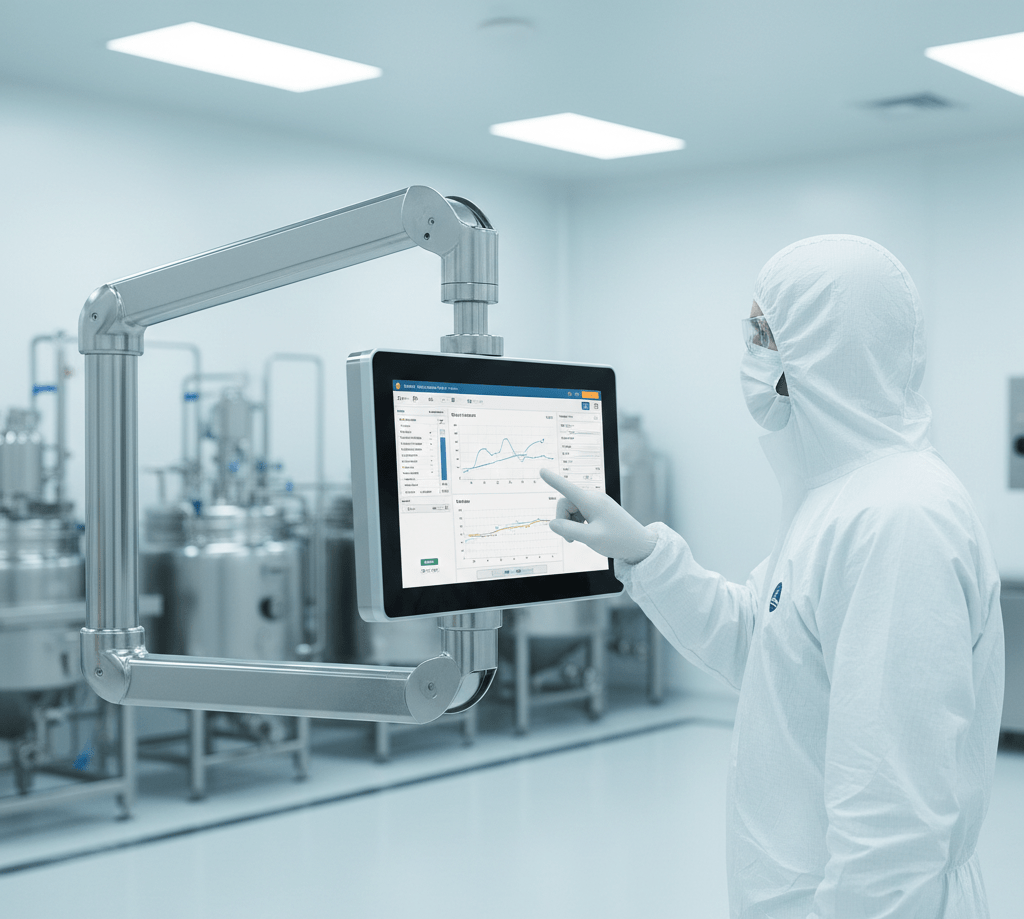
Stainless Steel Panel PC for Food and Pharmaceutical Industries
Food processing and pharmaceutical manufacturing demand hygienic equipment designs preventing bacterial contamination and withstanding harsh cleaning procedures. Advantech stainless steel panel PCs meet stringent sanitary requirements while providing reliable computing in washdown environments.
316 Stainless Steel Construction
Type 316 stainless steel provides superior corrosion resistance over standard 304 grade, essential for saltwater exposure, acidic cleaning chemicals, and chlorine-based sanitizers. Smooth surfaces without crevices prevent bacterial harboring. Rounded corners eliminate hard-to-clean edges. Sealed design prevents moisture ingress during washdown procedures.
IP69K Washdown Rating
IP69K represents the highest ingress protection rating, withstanding high-pressure (80-100 bar), high-temperature (80°C) water jets during intensive cleaning. This protection enables direct spray during sanitation procedures mandatory in food and pharmaceutical operations. Special seals and gaskets maintain integrity through thousands of cleaning cycles.
Regulatory Compliance
NSF certification verifies food-contact safety. FDA 21 CFR Part 11 compliant software provides electronic signature, audit trail, and data integrity controls for pharmaceutical batch records. EHEDG (European Hygienic Engineering & Design Group) guidelines ensure hygienic design principles. UL Type 4X ratings add corrosion resistance for food processing environments.
FAQ
Why stainless steel over aluminum or plastic?
Stainless steel provides superior corrosion resistance to cleaning chemicals, chlorine, and salt water. Smooth surface finishes prevent bacterial growth. Type 316 stainless steel specifically resists pitting and crevice corrosion in harsh food/pharmaceutical environments. Aluminum and plastic degrade under repeated chemical/thermal cleaning cycles.
Are stainless steel panels more expensive?
Yes, 30-50% premium over standard industrial panels. However, extended lifespans (10+ years vs 3-5), reduced contamination risk, and regulatory compliance often justify costs for food/pharmaceutical applications. Consider total cost of ownership including replacement frequency and contamination incident prevention.