
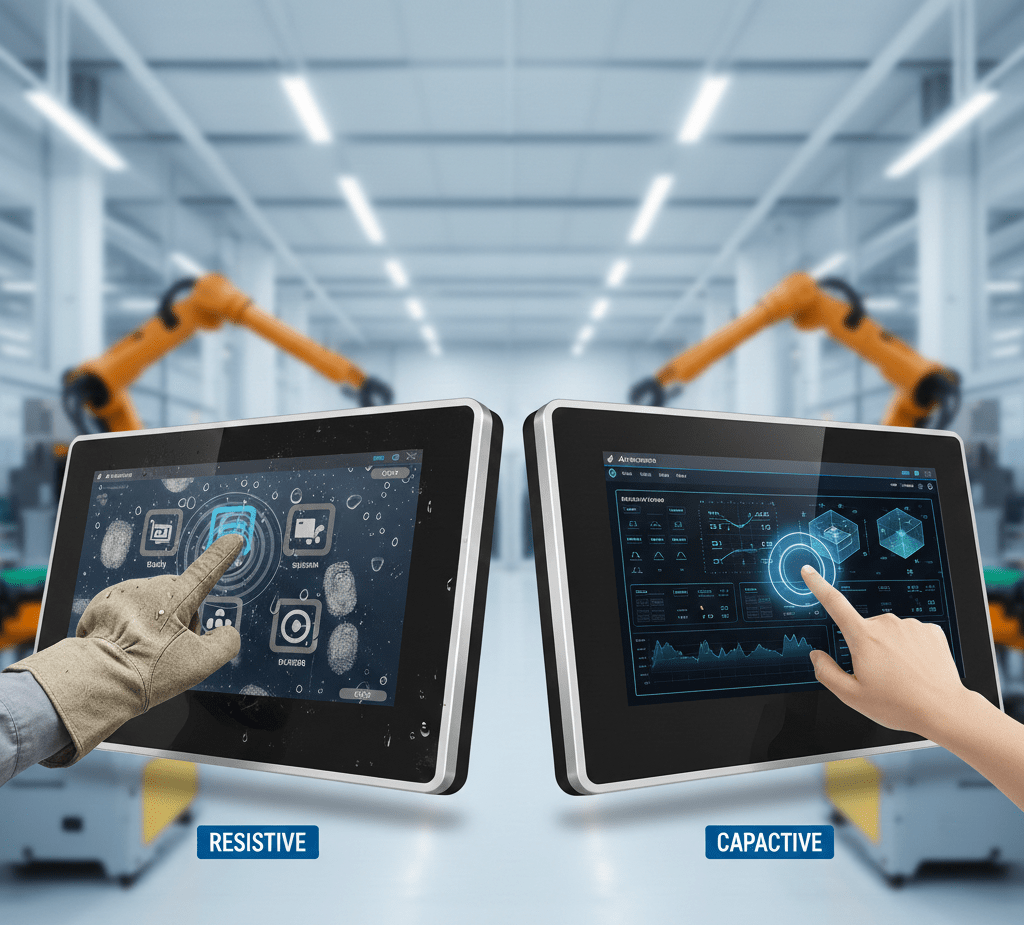
Resistive vs Capacitive Touchscreen Industrial Panel Comparison
Touch technology selection significantly impacts industrial panel PC usability and reliability. Advantech offers both resistive and projected capacitive touchscreens, each with distinct advantages for specific applications.
Resistive Touchscreen Advantages
Pressure-activated detection works with any object – gloved hands, styli, or tools. Thick work gloves pose no challenges. Chemical and moisture resistance suits harsh environments. Lower cost makes resistive technology economical for large deployments. Proven reliability in extreme temperatures (-30°C to 70°C). Excellent for food processing, chemical plants, and outdoor installations.
Capacitive Touchscreen Benefits
Superior optical clarity (90% light transmission vs 75% resistive) provides brighter, sharper images. Lighter touch response reduces operator fatigue during extended use. Multi-touch gestures (pinch, zoom, rotate) enhance user experience. Scratch-resistant glass surfaces outlast resistive overlays. Ideal for control rooms, clean environments, and modern HMI designs.
Industrial Capacitive Enhancements
Standard consumer capacitive screens fail with gloves or moisture. Industrial variants employ thicker cover glass, advanced controllers, and glove-detection algorithms enabling thin-glove operation. Water rejection prevents false touches from screen moisture. Enhanced EMI filtering maintains functionality in electrically noisy environments.
Application-Based Selection
Choose resistive for: thick gloves, harsh chemicals, wet processes, extreme temperatures, outdoor installations, minimal training requirements. Choose capacitive for: superior optical quality, multi-touch interfaces, modern aesthetics, light glove operation, reduced operator fatigue. Mixed deployments use appropriate technology per location.
FAQ
Can capacitive screens work with gloves?
Industrial capacitive supports thin gloves (latex, nitrile, thin cotton). Thick leather or insulated gloves typically prevent detection. Resistive technology required for heavy glove applications. Some operators prefer bare hands with capacitive for optimal responsiveness despite glove compatibility.
Which technology is more durable?
Capacitive glass surfaces resist scratching better than resistive overlays. However, resistive handles physical abuse (impacts, sharp objects) better through flexible overlay. Capacitive glass can crack from impacts. Choose based on dominant wear mechanism – abrasion favors capacitive, impacts favor resistive.