
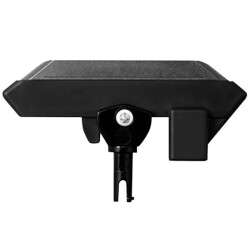
Panasonic DH5684K2 Miniature Inductive Sensor: Field Experience and Technical Analysis
The gap between a sensor’s published specification and its behaviour on an actual production floor can be surprisingly wide. Response time figures measured on a clean laboratory bench mean little when the sensor is mounted next to a servo motor on a high-speed pick-and-place machine. The Panasonic DH5684K2 Miniature Inductive Sensor is a model that consistently bridges this gap, delivering performance in real conditions that aligns with what is promised on paper.
Why the Panasonic DH5684K2 Earns Repeat Orders
Ask a maintenance engineer at a Dutch automotive supplier or a Belgian food processing plant which miniature inductive sensor they stock as standard and the Panasonic range frequently appears in the answer. Part of this loyalty is earned through reliability, but an equally important factor is predictability. Knowing exactly how a Panasonic DH5684K2 behaves — how it responds to borderline targets, how it ages, what its failure mode looks like — reduces diagnostic time when something does eventually go wrong.
The Panasonic DH5684K2 tends to fail gracefully. Unlike some competing designs where internal component degradation produces erratic output signals before complete failure, the Panasonic DH5684K2 typically maintains stable output until degradation crosses a defined threshold, at which point it ceases switching rather than producing unreliable signals.
Sensing Range and Target Considerations
The nominal sensing distance for the Panasonic DH5684K2 is specified for a standard target under controlled conditions. In practice, the target material, surface finish and approach angle all influence the effective switching point. For the Panasonic DH5684K2, it is good practice to commission the sensor at 80% of the nominal range, leaving margin for target variability and environmental drift.
For surface mount sensor applications, target stability matters. A target that vibrates or oscillates near the switching boundary will cause rapid on/off cycling that increases both the mechanical and electrical stress on the sensor output stage. The Panasonic DH5684K2’s output protection circuitry handles typical load switching without issue, but installation design should aim to keep targets well within or well outside the detection zone at all times.
Connectivity and System Integration
The Panasonic DH5684K2 in cable-exit configuration uses PUR outer jacketing on its standard lead. PUR cable offers better resistance to mechanical abrasion and a wider chemical resistance profile than PVC alternatives, making it the preferred choice for machine tool and robotic applications. Connector versions use standard M8 or M12 circular connectors, simplifying cable replacement without disturbing the sensor mounting position.
For system integrators building standard machine modules that will be replicated across multiple customer sites, the Panasonic DH5684K2’s stable model code and Panasonic’s commitment to long production runs reduce the risk of forced redesign due to component obsolescence — a genuinely costly disruption that affects smaller sensor manufacturers far more often.
For procurement and technical support in the Netherlands and the European market, Panasonic Sensor is the designated resource for Panasonic industrial sensing products, with full technical documentation available online.
Troubleshooting Guide
When a Panasonic DH5684K2 appears to be malfunctioning, a systematic approach identifies the root cause quickly. First, verify supply voltage at the sensor connector — not at the control panel, but at the sensor itself. Voltage drop across long cable runs or corroded connectors can take the supply outside the operating range. Second, confirm output polarity matches the PLC input module specification. Third, check whether the LED indicator responds to target approach; if the indicator works but the PLC input does not register, the fault is in the wiring between the sensor and the control cabinet, not the sensor itself.
Frequently Asked Questions (FAQ)
What is the switching frequency of the Panasonic DH5684K2?
Switching frequency varies by model but typical figures for standard Miniature Inductive Sensor units range from 500 Hz to several kHz. This is more than sufficient for the majority of industrial conveyor and positioning applications. High-speed counting applications should verify the specific figure in the product datasheet against the maximum target pass rate.
Is there a version of the Panasonic DH5684K2 suitable for ATEX-rated environments?
Standard Panasonic DH5684K2 variants are not ATEX certified. For hazardous area installations, Panasonic’s intrinsically safe product variants or ATEX-rated alternatives from specialised manufacturers should be considered. Always consult zone classification documentation before specifying sensors for potentially explosive atmospheres.
How does mutual interference affect nearby Panasonic DH5684K2 units?
When multiple sensors of the same type are mounted in close proximity, their detection fields can interact and cause false triggering. Panasonic’s recommended minimum separation distance for adjacent sensors of the same model is specified in the installation guide. Where the mechanical layout requires closer spacing, alternating sensor models with different operating frequencies can eliminate the mutual interference problem.
Does Panasonic offer a longer warranty for the DH5684K2 model?
Standard warranty terms apply across Panasonic’s industrial sensing product range. Extended warranty or long-term supply agreement options are available through authorised distributors for high-volume OEM customers. Contact the relevant authorised Panasonic distributor for commercial terms applicable to your specific procurement volume.