
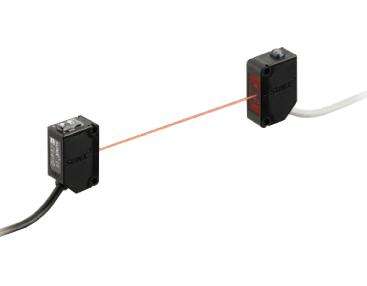
Panasonic CX-L411-P-Z Photoelectric Sensor: Technical Data, Applications and Practical Guidance
Industrial automation engineers working in Europe’s manufacturing heartland — from the Netherlands’ high-tech machinery sector to Germany’s automotive supply chain — understand that the components they specify today will define maintenance costs and production stability for years ahead. The Panasonic CX-L411-P-Z Photoelectric Sensor is specified with this long-term view in mind: a product engineered for consistent performance, backed by a manufacturer with a proven track record in industrial sensing technology.
Product Classification and Specification Overview
The Panasonic CX-L411-P-Z belongs to Panasonic’s long-range photoelectric sensor product category, designed for industrial applications requiring remote detection. The product code follows Panasonic’s structured naming convention where each segment identifies housing dimensions, sensing range, output configuration and cable specification. Understanding this convention allows engineers to interpret datasheet values and compare alternatives within the same product family efficiently.
Supply voltage for the Panasonic CX-L411-P-Z covers the standard 10–30 V DC range used in European control panels. The current consumption under load is modest, making it compatible with multi-channel input cards without demanding oversized power supplies. Protection features include reverse polarity and output short-circuit protection, both of which reduce the consequences of wiring errors during commissioning.
Environmental and Mechanical Durability
The Panasonic CX-L411-P-Z Photoelectric Sensor carries an IP67 ingress protection rating as standard, confirming dust-tight construction and resistance to temporary immersion. The housing material is selected for resistance to the chemicals commonly encountered in target industries — cutting fluids, hydraulic oil, mild alkalis and acidic cleaning compounds used in food-grade facilities.
Vibration and shock resistance are validated according to IEC 60068 test methods, ensuring the sensor maintains its specified performance after exposure to the mechanical environments found in stamping presses, vibrating conveyors and pneumatic machinery. These are not theoretical specifications; they reflect the conditions the Panasonic CX-L411-P-Z is expected to encounter in normal service.
Deployment Scenarios Across European Industry
The Panasonic CX-L411-P-Z appears across a remarkably wide range of production environments. In the Netherlands, where precision manufacturing and high-technology assembly are significant industrial activities, this model provides the combination of small physical footprint and reliable switching that modern machine designs require.
Medical Device Manufacturing: Clean-room compatible materials and repeatable switching characteristics suit the Panasonic CX-L411-P-Z to medical device assembly and packaging applications where traceability and process consistency are regulatory requirements.
Printing and Converting Machinery: Web guidance systems, register mark detection and substrate edge sensing are typical applications in the printing industry where the Panasonic CX-L411-P-Z’s response speed and stable output contribute to print quality.
Chemical Processing Equipment: Material compatibility and IP sealing make the Panasonic CX-L411-P-Z a viable option for level detection, valve position feedback and pump running confirmation in chemical handling equipment.
Full technical resources and product availability for the Panasonic CX-L411-P-Z are accessible through Panasonic Sensor, the dedicated Panasonic sensing resource for the European market.
Procurement and Inventory Considerations
For maintenance departments managing a large installed base of the Panasonic CX-L411-P-Z, setting a minimum stock level proportional to the number of installed units reduces repair lead times. Panasonic’s commitment to long production runs for catalogue items reduces the risk of forced substitution with alternative models. Where substitute models must occasionally be used, verifying dimensional compatibility and output specification against the original Panasonic CX-L411-P-Z specification prevents installation surprises.
Frequently Asked Questions (FAQ)
What is the output hysteresis of the Panasonic CX-L411-P-Z?
Hysteresis is typically expressed as a percentage of the nominal sensing distance and is specified in the product datasheet. It defines the separation between the switch-on and switch-off points. A well-defined hysteresis band prevents chatter at the detection boundary and is particularly important for targets that approach and retract slowly.
How is the Panasonic CX-L411-P-Z affected by strong magnetic fields?
Strong external magnetic fields from permanent magnets or high-current conductors can affect the performance of inductive sensor variants. Maintaining the separation distances recommended in the installation guide minimises this risk. Photoelectric variants are unaffected by magnetic fields. Consult the product datasheet for specific immunity ratings.
Can the Panasonic CX-L411-P-Z operate in a vacuum environment?
Standard versions are not rated for vacuum environments. Cable outgassing and housing pressure differentials in vacuum conditions can degrade sensor performance and sealing integrity. Special vacuum-compatible variants exist in Panasonic’s extended product range for applications requiring this capability.
What is the correct tightening torque for the mounting nut on the Panasonic CX-L411-P-Z?
Recommended tightening torque is specified in the product installation guide and typically falls between 15 Nm and 25 Nm for standard M12 or M18 threaded housings. Exceeding this torque can crack the housing or damage the internal assembly. Under-tightening allows the sensor to rotate during machine vibration, shifting the sensing direction.