
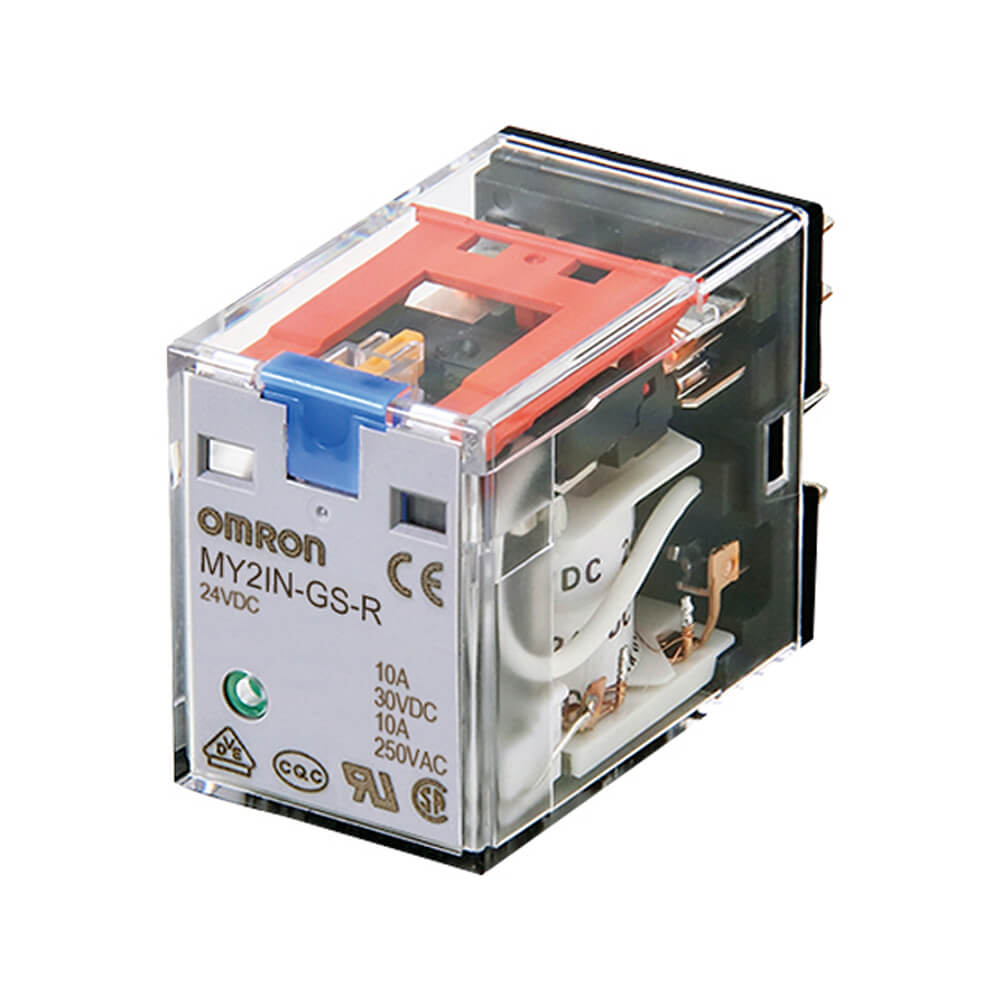
Omron MY4-GS-R DC48 General Purpose Relay Technical Overview
The Omron MY4-GS-R DC48 general purpose relay is an industrial electromechanical relay engineered for control panels, automation systems, signal switching, and machine interface applications. As part of Omron’s well-known MY series, this relay is designed to deliver stable switching performance, simplified maintenance, and flexible multi-contact operation in demanding industrial environments.
The relay operates with a 48 VDC coil and features a 4PDT contact configuration, allowing one relay coil to manage four independent changeover circuits simultaneously. This design makes the Omron MY4-GS-R DC48 relay suitable for applications that require coordinated switching between multiple control signals, indicators, auxiliary outputs, or safety-related functions.
Main Technical Specifications of Omron MY4-GS-R DC48
The Omron MY4-GS-R DC48 plug-in relay uses a 14-pin socket-based construction and provides four changeover contacts. Its contact structure supports flexible circuit integration for industrial automation and electrical control systems. The relay is rated for a switching current of up to 6 A under suitable operating conditions.
The 48 VDC coil voltage is commonly used in specialized industrial control systems and certain telecommunications or infrastructure applications where higher DC control voltages are preferred. The relay’s design supports reliable operation while maintaining compatibility with industrial control cabinet standards.
In addition to its electrical performance, the relay includes a transparent housing and mechanical operation indicator. These features improve visibility during maintenance and help technicians quickly confirm relay status without requiring additional diagnostic equipment.
Advantages of the 4PDT Contact Configuration
The 4PDT design is one of the most important characteristics of the Omron MY4-GS-R DC48 general purpose relay. With four independent changeover contacts available, engineers can control several circuits simultaneously using one relay coil.
This configuration is especially useful in industrial systems where multiple outputs must react together in a synchronized sequence. Instead of installing multiple individual relays, one 4PDT relay can simplify panel design and reduce wiring complexity.
For example, one contact may control a status indicator, another may activate an alarm signal, a third may interface with a PLC input, and a fourth may manage an auxiliary control function. This flexibility makes the relay highly adaptable across different automation scenarios.
Maintenance-Friendly Plug-In Design
The Omron MY4-GS-R DC48 industrial relay is designed with maintenance efficiency in mind. Because it is a plug-in relay, it can be removed and replaced quickly when installed with a compatible socket. This helps minimize production downtime and simplifies routine service procedures.
The transparent casing allows visual inspection of the relay mechanism, while the built-in mechanical indicator confirms whether the relay coil is energized. These practical features are valuable in industrial environments where fast diagnostics and operational visibility are important.
For more information about industrial relay solutions and compatible Omron components, visit Omron industrial automation products.
Typical Applications of Omron MY4-GS-R DC48
The Omron MY4-GS-R DC48 general purpose relay is commonly used in industrial automation systems and control applications where reliable multi-contact switching is required. Typical application areas include:
- Industrial control cabinets
- Automation systems
- Machine interface circuits
- Signal distribution systems
- Alarm and monitoring applications
- Conveyor and packaging equipment
- Electrical switching systems
- Auxiliary motor control circuits
- Process automation panels
Its compact footprint and versatile contact arrangement make it suitable for installations where space efficiency and flexible switching functions are important.
Important Selection Considerations
Before selecting the Omron MY4-GS-R DC48 relay, engineers should evaluate the required coil voltage, switching load characteristics, environmental conditions, and compatibility with the relay socket. Proper installation practices help improve long-term reliability and operational stability.
Users should also verify that the relay is applied within its rated electrical limits and that the selected contact arrangement matches the intended control strategy. Correct relay selection contributes to safer and more efficient control system operation.
Frequently Asked Questions
What is the Omron MY4-GS-R DC48 used for?
The relay is used in industrial automation systems, machine control panels, signal switching applications, and electrical control circuits that require multiple synchronized contacts.
What coil voltage does this relay operate with?
The Omron MY4-GS-R DC48 uses a 48 VDC coil designed for compatible industrial DC control systems.
What does 4PDT mean on this relay?
4PDT stands for Four Pole Double Throw, meaning the relay contains four independent changeover contacts controlled by a single coil.
What is the rated current of the relay?
The relay is generally rated for switching currents up to 6 A under appropriate operating conditions.
Does the relay include a visual indicator?
Yes. The relay includes a mechanical operation indicator and transparent housing for easy visual inspection.
Why are plug-in relays useful in control panels?
Plug-in relays simplify maintenance because they can be replaced quickly without disconnecting the panel wiring when used with compatible sockets.
Where is the Omron MY4-GS-R DC48 commonly installed?
It is commonly installed in automation cabinets, machine control systems, electrical switching panels, and industrial process equipment.
Can this relay interface with PLC systems?
Yes. The relay can be used alongside PLC systems for signal isolation, output switching, and auxiliary control functions.
Why is a transparent relay housing beneficial?
The transparent housing allows technicians to visually inspect internal relay movement and operating status during maintenance procedures.
What should engineers check before installation?
Engineers should verify coil voltage compatibility, load current requirements, socket compatibility, and environmental operating conditions before installation.