
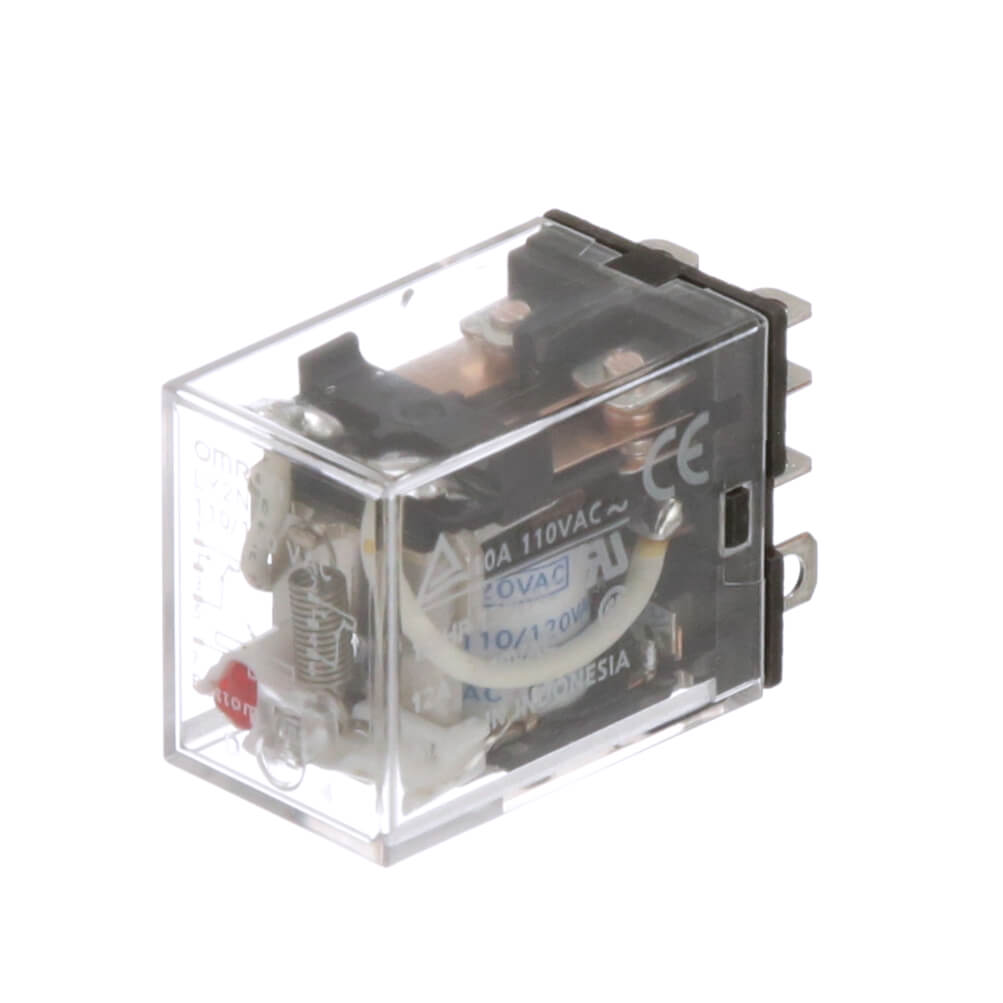
Omron LY2N 100/110VDC General Purpose Relay Technical Guide
The Omron LY2N 100/110VDC general purpose relay is an electromechanical plug-in relay designed for industrial control systems that use high-voltage DC control circuits. As part of the Omron LY family, it is widely associated with dependable switching, practical socket installation, and flexible control panel integration.
This relay is built as a 2-pole DPDT relay, giving it two independent changeover contacts. This allows one relay to perform two switching actions at the same time. In real control systems, this can be useful for signal routing, control interlocking, alarm switching, status feedback, or separating two electrically independent circuits while using one coil command.
Technical Overview
The Omron LY2N 100/110VDC general purpose relay is intended for circuits using a 100/110 VDC coil. This distinguishes it from more common low-voltage DC models such as 12 VDC or 24 VDC versions. A 100/110 VDC relay may appear in specialized industrial panels, DC control cabinets, utility equipment, railway-related controls, power systems, and legacy automation designs where DC control voltage is already present.
The relay family is known for plug-in terminals, socket mounting, and LED operation indication on LY2N models. The LED indicator gives visual confirmation when the relay coil is energized, helping maintenance teams identify whether the control signal has reached the relay. This is a simple feature, but in live troubleshooting it can significantly reduce diagnostic time.
DPDT Contact Configuration
The DPDT layout is one of the main reasons engineers select the Omron LY2N 100/110VDC general purpose relay. With two changeover contacts, the relay can control two outputs, switch between two circuit paths, or provide both load control and auxiliary feedback. This makes it more versatile than a single-pole relay while remaining compact enough for dense control panels.
In many applications, one pole may be used to switch the main control circuit while the second pole sends a confirmation signal to an indicator, PLC input, alarm module, or monitoring device. This type of dual action is common in industrial control design because it supports both function and visibility.
Use in DC Control Systems
DC coil relays behave differently from AC coil relays. A DC coil requires correct polarity when the relay includes polarity-sensitive features such as LED indication or suppression components. For that reason, wiring should always follow the official terminal diagram for the exact relay and socket combination.
The Omron LY2N 100/110VDC general purpose relay is best suited to control environments where the available command voltage is 100/110 VDC. It may be selected for panel upgrades, equipment repair, replacement work, or new designs where compatibility with an existing DC control bus is required.
Installation Considerations
Socket mounting is one of the practical strengths of the LY2N format. A socket-based relay can be removed and replaced faster than a hardwired relay, reducing downtime during maintenance. In industrial facilities, this can improve service efficiency and help technicians restore equipment operation more quickly.
When selecting this relay, users should verify coil voltage, contact load, socket type, ambient conditions, insulation requirements, and the nature of the connected load. Inductive loads such as coils, solenoids, and actuators can generate voltage spikes, so suppression may be needed depending on the application.
For related Omron relay components and compatible industrial parts, see Omron relay product options.
FAQ
What is the Omron LY2N 100/110VDC general purpose relay designed for?
It is designed for switching and control applications in systems where a 100/110 VDC coil voltage is required. It is commonly associated with industrial panels, DC control circuits, and equipment maintenance applications.
Is this relay the same as the 100/110VAC version?
No. The contact arrangement may be similar, but the coil type is different. The 100/110VDC version is intended for DC control voltage, while the 100/110VAC version is intended for AC control voltage.
What does the LY2N structure indicate?
LY2N generally refers to a two-pole LY relay with an operation indicator. The relay provides DPDT switching and is commonly used with plug-in socket mounting.
Why is DPDT useful?
DPDT switching allows two independent circuits to be controlled at the same time. This is useful when one signal must operate two related control functions.
Does polarity matter for this relay?
For DC coil relays with LED indicators or suppression elements, polarity can matter. Users should always follow the wiring diagram for the exact model and socket.
Can this relay be used in automation panels?
Yes. It is suitable for automation and control panels when the coil voltage, contact rating, and socket arrangement match the application requirements.
What should be checked before replacement?
Check the coil voltage, contact form, terminal layout, socket compatibility, load rating, and whether the existing relay includes LED or suppression features.