
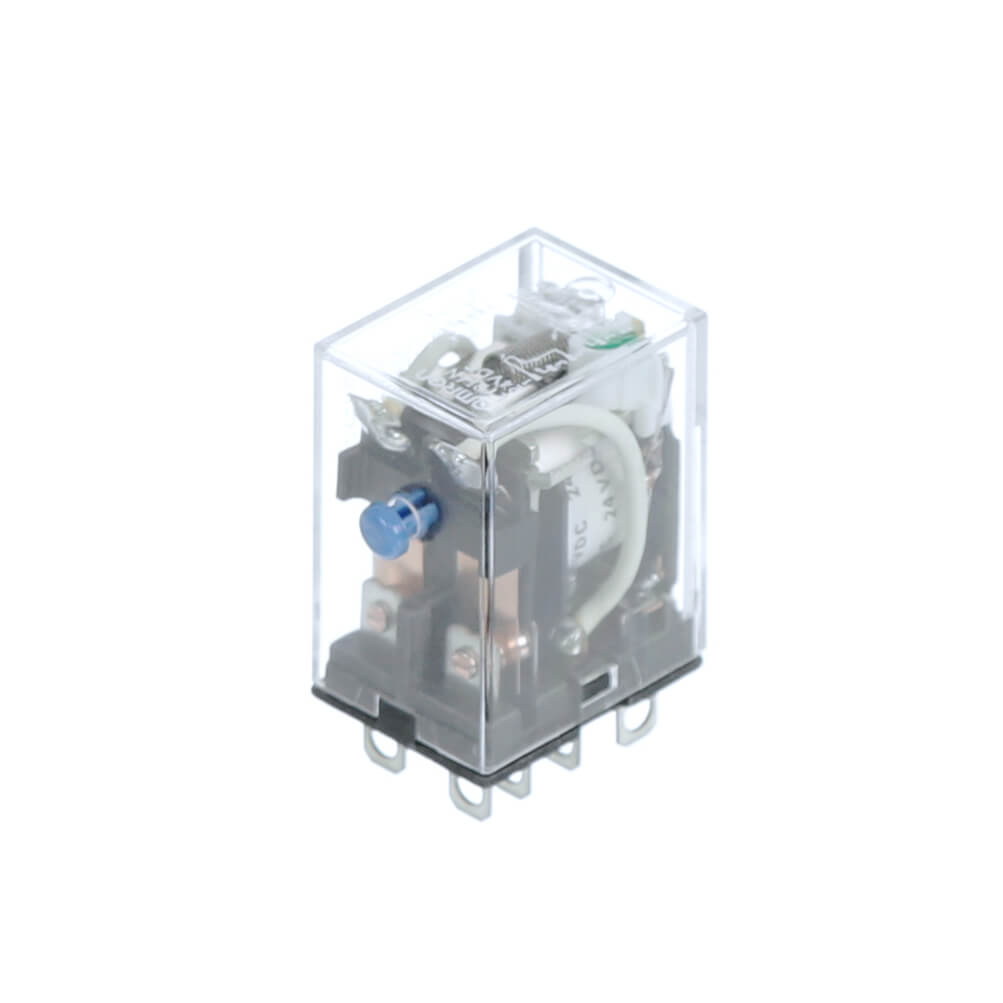
Omron LY2I4N 24VDC General Purpose Relay: Technical Overview and Practical Application Guide
The Omron LY2I4N 24VDC general purpose relay is a compact electromechanical relay designed for control panel, automation, and industrial switching applications where a dependable 24 VDC coil is required. It belongs to Omron’s LY relay family, a widely used series known for plug-in installation, clear visual status indication, and practical serviceability in electrical control systems.
This relay is built with a DPDT contact configuration, meaning it provides two changeover contacts. In practical terms, one relay can control two separate circuits or switch two signal paths at the same time. This makes the Omron LY2I4N 24VDC general purpose relay useful in machine control, interface panels, auxiliary switching, signal isolation, alarm circuits, and control logic applications.
Key Technical Characteristics
The relay uses a 24 VDC coil, making it suitable for many industrial control cabinets where 24 VDC is the standard control voltage. It has a rated carry current of 10 A, which allows it to handle a broad range of control and switching duties when applied within its specified limits. The contact material is AgSnIn, a silver tin indium alloy selected for reliable switching performance in demanding relay applications.
A useful feature of this model is its LED indicator. The indicator helps maintenance teams confirm coil energization quickly without using test equipment. The relay also includes a test button, which is valuable during commissioning, troubleshooting, and manual circuit verification. Its transparent case allows technicians to visually inspect the relay mechanism, helping reduce diagnostic time inside control panels.
Plug-In and Solder Terminal Flexibility
The Omron LY2I4N 24VDC general purpose relay supports plug-in and solder terminal use. In panel environments, plug-in relay installation is especially practical because the relay can be replaced without disturbing the wiring on the socket. This helps reduce downtime and supports cleaner maintenance routines. For more permanent assemblies or specific design requirements, solder terminal compatibility may also be useful.
Because this relay is a 2-pole device, it is often selected when designers need more switching flexibility than a single-pole relay can provide, while still keeping the installation compact. The DPDT layout can be used for control interlocking, polarity switching, signal routing, or separating control and indication circuits.
Where This Relay Is Commonly Used
The Omron LY2I4N 24VDC general purpose relay is commonly found in automation cabinets, machine control systems, packaging equipment, conveyor controls, HVAC control panels, process equipment, and electrical interface circuits. It is especially relevant where a PLC output or control signal needs to switch a separate load or provide electrical isolation between control electronics and field devices.
Its 24 VDC coil voltage aligns well with modern industrial automation architecture. Many sensors, PLC outputs, safety interfaces, and control power supplies operate at 24 VDC, which makes this relay easy to integrate into existing systems without additional voltage conversion.
Why the Test Button Matters
The test button is more than a convenience feature. During commissioning, engineers can manually confirm downstream circuit behavior before final automation logic is active. During maintenance, technicians can use the test function to verify connected loads, signal lamps, auxiliary circuits, or interlocks. This can shorten troubleshooting time and improve service confidence.
However, manual testing should always be performed according to the machine’s safety procedures. A relay test button can energize connected circuits, so the surrounding equipment state must be understood before use.
Selection Considerations
Before selecting the Omron LY2I4N 24VDC general purpose relay, confirm the coil voltage, contact rating, load type, socket compatibility, ambient conditions, and required approvals for the final installation. Resistive and inductive loads behave differently, so relay selection should account for inrush current, arc suppression, switching frequency, and expected service life.
For related relay options and compatible Omron components, see Omron relays.
FAQ
What is the Omron LY2I4N 24VDC general purpose relay used for?
It is used for switching and isolation in industrial control circuits. Typical applications include automation panels, machine control systems, PLC interface circuits, alarm circuits, auxiliary switching, and control signal routing.
What does DPDT mean on this relay?
DPDT means double pole double throw. The relay has two independent changeover contacts, allowing it to switch two circuits at the same time or route signals between normally open and normally closed paths.
Why is the 24 VDC coil important?
A 24 VDC coil is widely used in industrial automation because many PLCs, sensors, and control power systems operate at 24 VDC. This makes the relay easier to integrate into modern control cabinets.
Does this relay include a status indicator?
Yes. The relay includes an LED indicator, allowing users to see when the coil is energized. This is helpful during troubleshooting and routine maintenance.
What is the benefit of the test button?
The test button allows manual operation of the relay for inspection, commissioning, and fault diagnosis. It helps verify connected circuits without relying only on automated control logic.
Is this relay suitable for high-current loads?
It has a rated carry current of 10 A, but suitability depends on the exact load type, voltage, switching frequency, and electrical environment. Always compare the application requirements with the official relay ratings.
Can this relay be replaced easily?
Yes, when used with a compatible plug-in socket, the relay can generally be replaced without rewiring the base. This supports faster maintenance and cleaner panel service.
What contact material does this model use?
The Omron LY2I4N 24VDC general purpose relay uses AgSnIn contact material, which supports reliable switching performance in suitable control and power relay applications.