
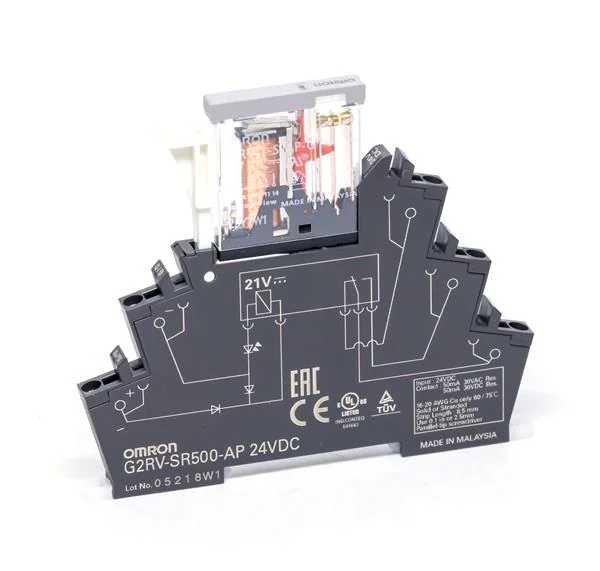
Omron G2RV-SR500-AP 230VAC Relay Socket Guide
The Omron G2RV-SR500-AP 230VAC relay socket is a slim I/O relay designed for industrial panels that use 230VAC control voltage. It provides compact relay interfacing, clean signal separation, and reliable micro-load switching in automation environments where panel space and maintenance visibility are important.
Technical Overview
This version is rated for 230VAC input. The rated current is approximately 7.3 mA at 50 Hz and 8.4 mA at 60 Hz, with power consumption around 1.7 VA. The relay has an SPDT contact structure and belongs to the AP micro-load range, using Ag alloy contacts with Au plating.
Where It Fits in Automation Panels
The Omron G2RV-SR500-AP 230VAC relay socket is often selected for European-style 230VAC control panels, machine automation systems, signal transfer circuits, PLC interface wiring, and auxiliary control logic. Its slim housing supports high-density DIN rail layouts, while the Push-In Plus terminal system helps reduce wiring time and improve consistency.
Maintenance and Reliability Benefits
The transparent case allows technicians to visually inspect the relay contact area. The integrated operation indicator supports faster fault finding when checking whether a control signal is present. These details are valuable in production environments where downtime must be minimized and panel diagnostics should be straightforward.
For more information about Omron automation equipment, visit Omron product resources.
FAQ
What is the Omron G2RV-SR500-AP 230VAC relay socket used for?
It is used for compact relay interfacing and micro-load signal switching in 230VAC industrial control circuits.
Is this relay suitable for small signal applications?
Yes. The AP contact version is specifically intended for micro-load use and includes gold-plated contact material.
Does it support easy wiring?
Yes. The Push-In Plus terminal design helps simplify wiring and supports efficient panel assembly.
Can it replace any 230VAC relay?
Not automatically. The input voltage, contact rating, load type, wiring method, and panel standards must be checked before replacement.