
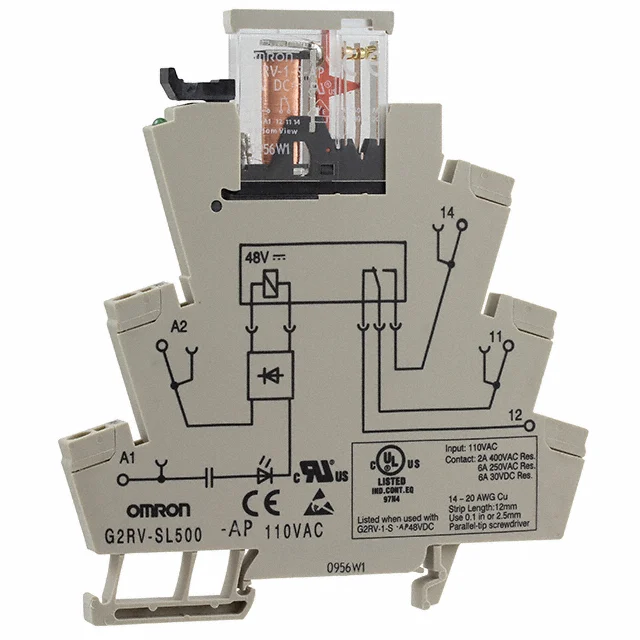
Omron G2RV-SL500-AP 110VAC Relay Socket
The Omron G2RV-SL500-AP 110VAC relay socket is a slim relay and socket solution designed for industrial control panels, machine automation, and interface wiring. It is suitable for systems using a 110 VAC control voltage and requiring compact relay installation.
Technical Overview
This model is part of Omron’s G2RV slim relay family. It is commonly described as a slim relay socket unit with SPDT switching and push-in terminal connection. The contact rating is generally associated with 6 A class relay switching, making it suitable for control and signal circuits rather than direct heavy-duty power loads.
Why It Is Used in Control Panels
The Omron G2RV-SL500-AP 110VAC helps panel builders reduce wiring time and improve cabinet organization. Push-in terminals make conductor insertion easier, while the slim body allows multiple relay units to be installed in a compact row. This is useful in PLC panels, machine control systems, and process automation cabinets.
For more Omron product details, visit Omron automation and relay components.
Operational Considerations
Because this model uses a 110 VAC coil, it should only be applied in circuits designed for that voltage. The relay should be matched with the correct load type, protection components, wiring standard, and installation environment. It is especially useful where technicians need visible, organized, and service-friendly relay interfaces.
FAQ
What is Omron G2RV-SL500-AP 110VAC?
It is a slim relay socket unit designed for 110 VAC control circuits in industrial automation panels.
What is the main advantage of this model?
Its slim structure and push-in wiring design help save panel space and simplify installation.
Can it be used in PLC control panels?
Yes. It is commonly used as an interface relay in PLC-based automation systems.
Is this suitable for signal switching?
Yes. It is suitable for control and signal switching when the circuit remains within the relay’s rated values.
What should be checked before use?
Confirm coil voltage, contact load, wiring type, terminal compatibility, installation temperature, and safety requirements.