
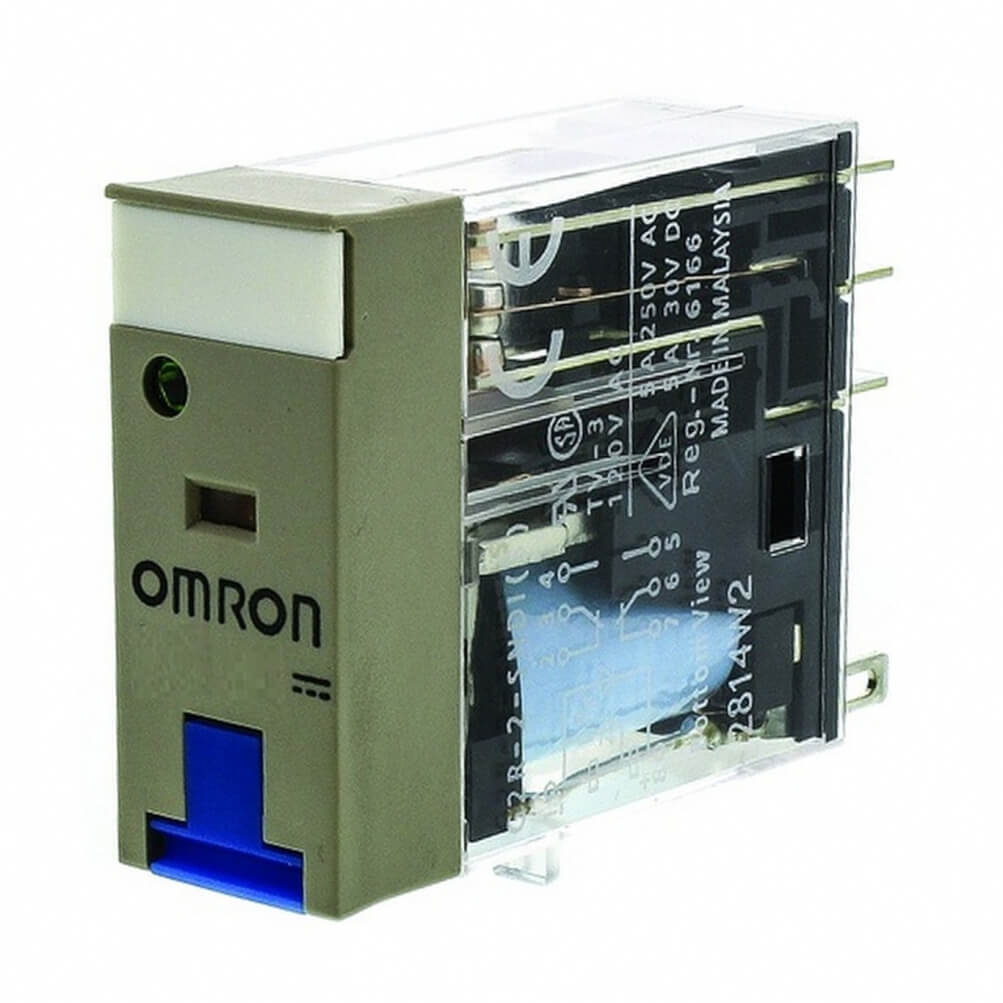
Omron G2R-2-SNI 12VDC (S) Relay Socket: Technical and Practical Guide
The Omron G2R-2-SNI 12VDC (S) relay socket is a plug-in general-purpose relay designed for DC control circuits. It is often used in automation panels where 12 VDC control voltage is available from a power supply, PLC output module, or auxiliary control system.
Omron G2R-2-SNI 12VDC (S) Main Technical Features
This model has a 2-pole DPDT contact form, plug-in terminal structure, LED operating indicator, mechanical operation indicator, and latching lever style test function. Its contact rated load includes 250 VAC 5 A resistive load and 30 VDC 5 A resistive load, making it versatile for control-level switching.
The 12 VDC coil version is especially practical where DC logic and panel control are already standardized. It helps create a clean interface between low-voltage control signals and switched loads.
Use in Automation Panels
The Omron G2R-2-SNI 12VDC (S) relay socket is commonly used with PLC outputs, sensor circuits, auxiliary machine controls, and interposing relay applications. Its socket mounting supports fast replacement, while the visible indicators help technicians understand relay status without removing the component.
To review more Omron-related product options, visit Omron industrial components.
Why Choose a 12VDC Relay?
Many compact machines and control systems operate on 12 VDC because it is simple, safe, and widely supported by industrial power supplies. This relay fits naturally into those environments and provides electrical separation between the control side and switched circuit.
Omron G2R-2-SNI 12VDC (S) FAQ
What is the coil voltage of this relay?
The coil voltage is 12 VDC.
Can it switch both AC and DC loads?
Yes, within its rated limits. It is specified for resistive AC and DC loads, including 250 VAC and 30 VDC ratings.
What does the LED indicator show?
The LED indicates coil energization, helping users see whether the relay has received its control signal.
Is this suitable as an interposing relay?
Yes. It is commonly used as an interposing relay between PLC outputs and field devices, provided the load remains within the relay rating.